Through the seracs to the ridge
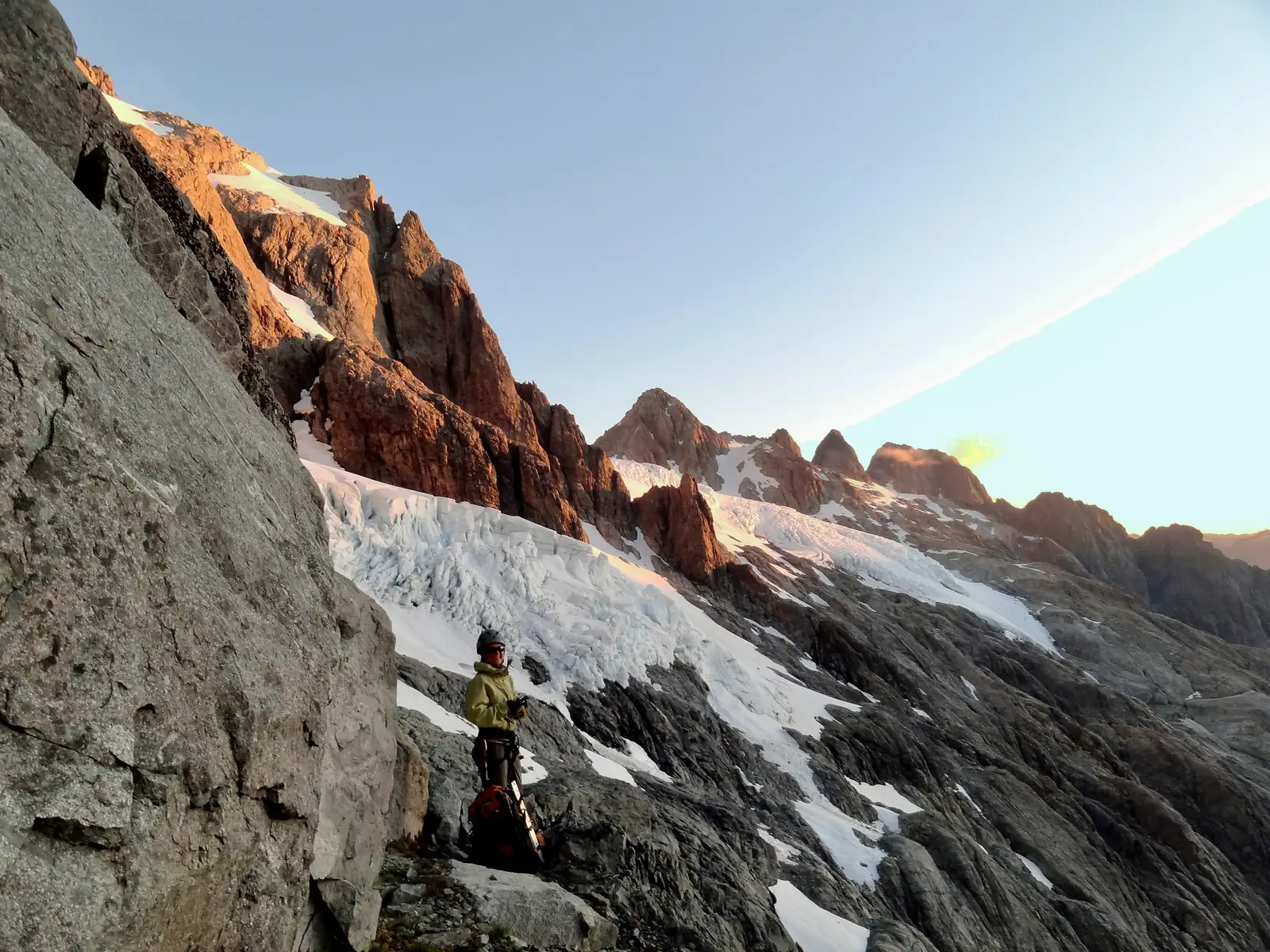
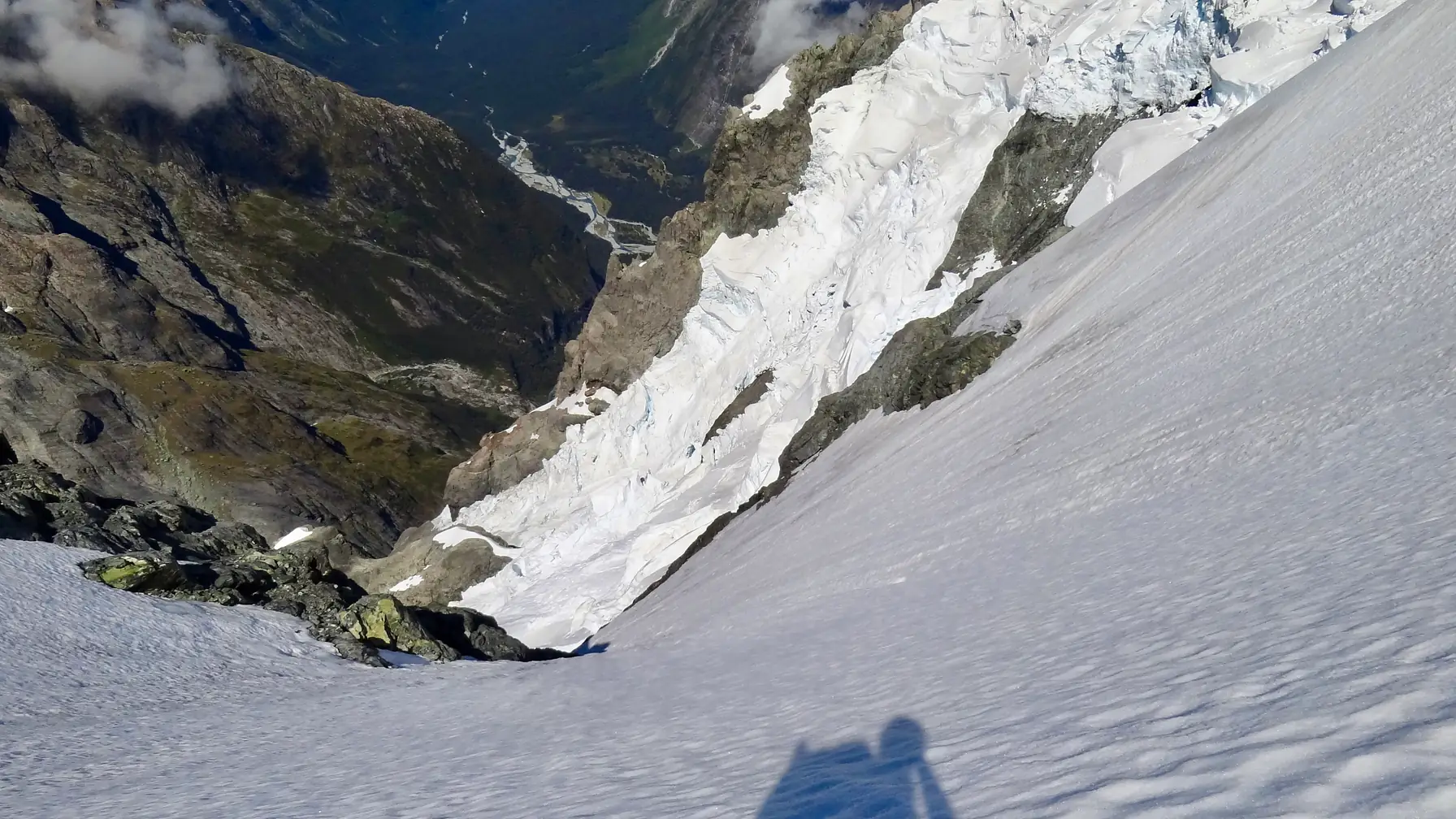
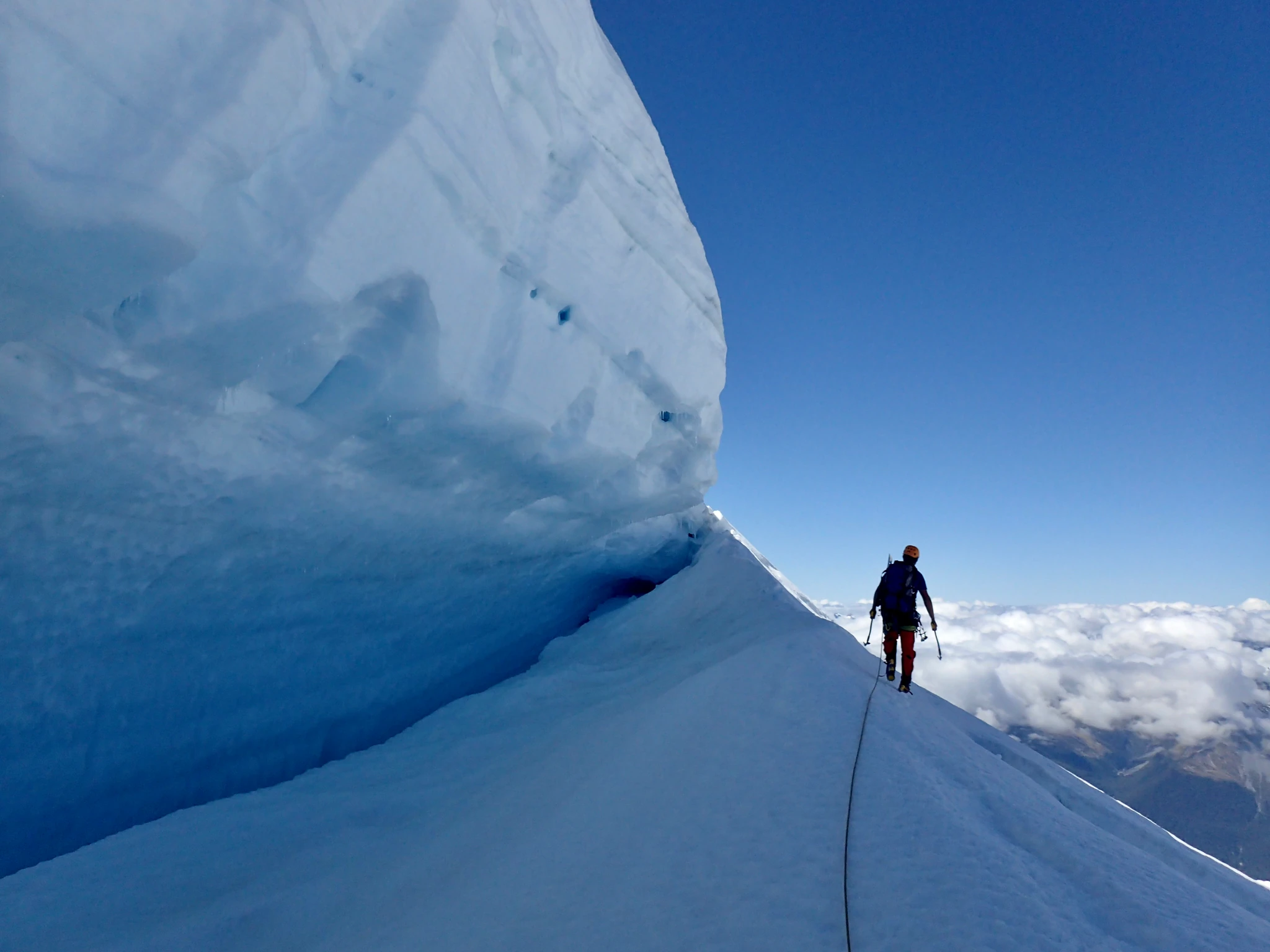
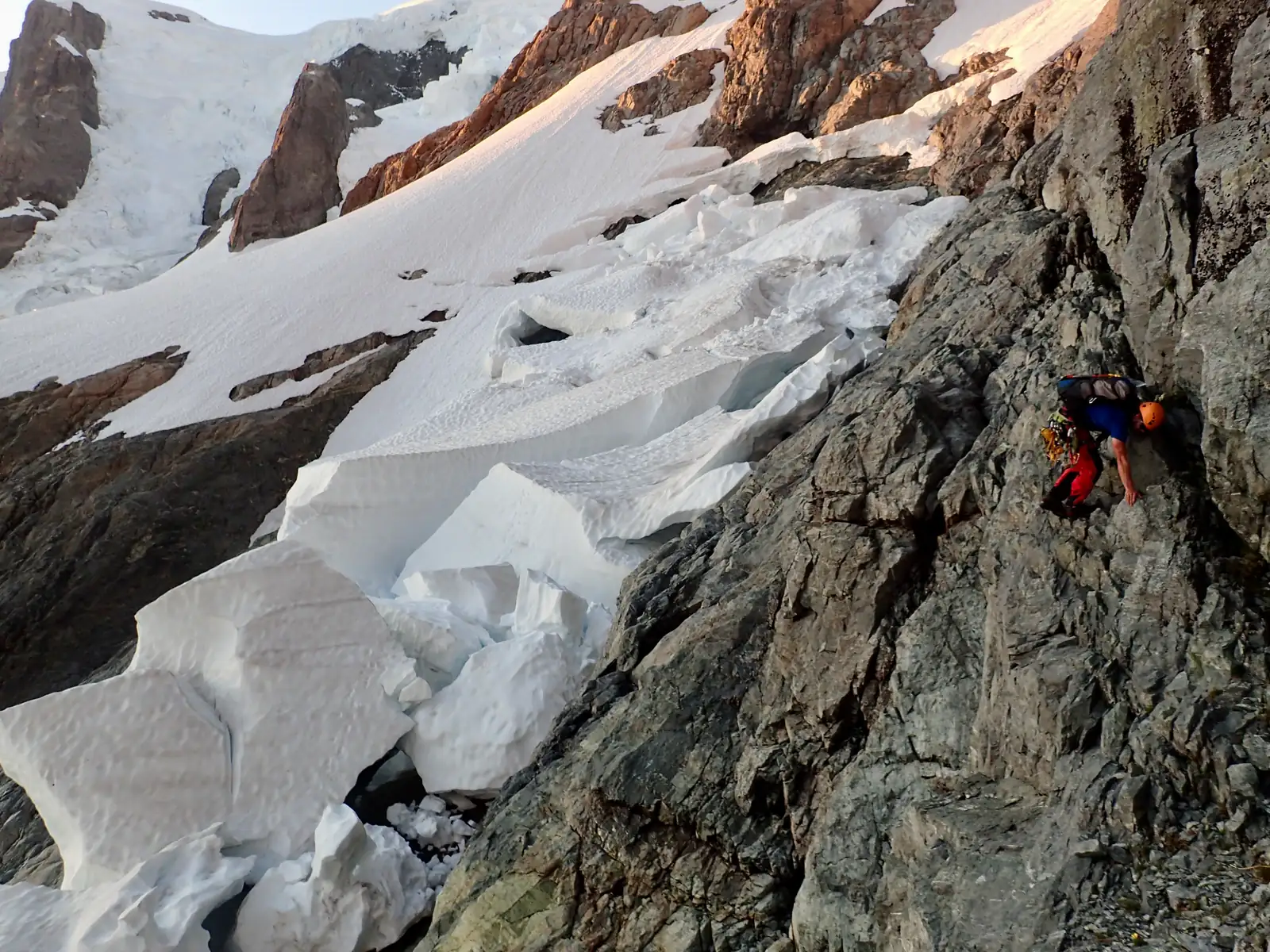
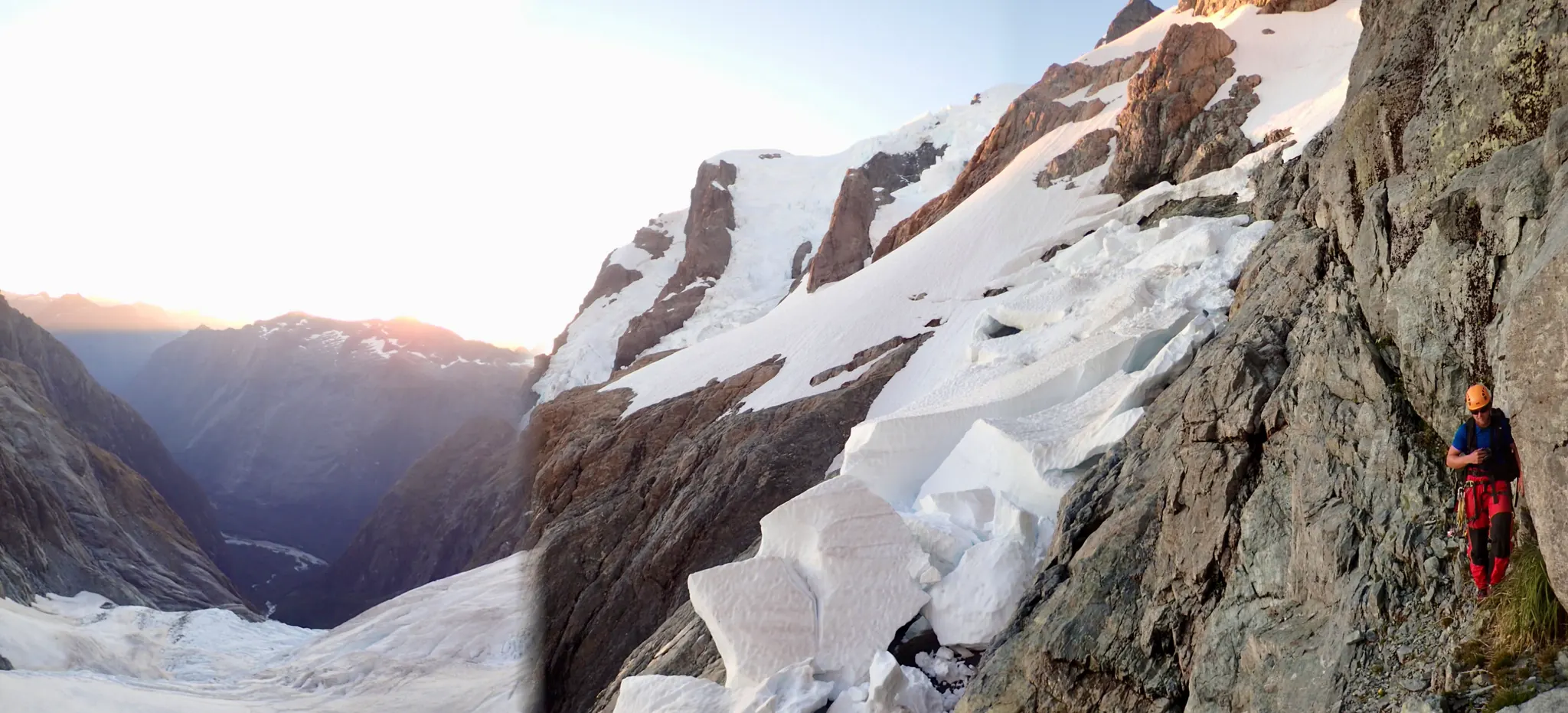
To reach Tutoko’s ridge, we had to climb over seracs. We’d spotted that band of broken ice the day before.
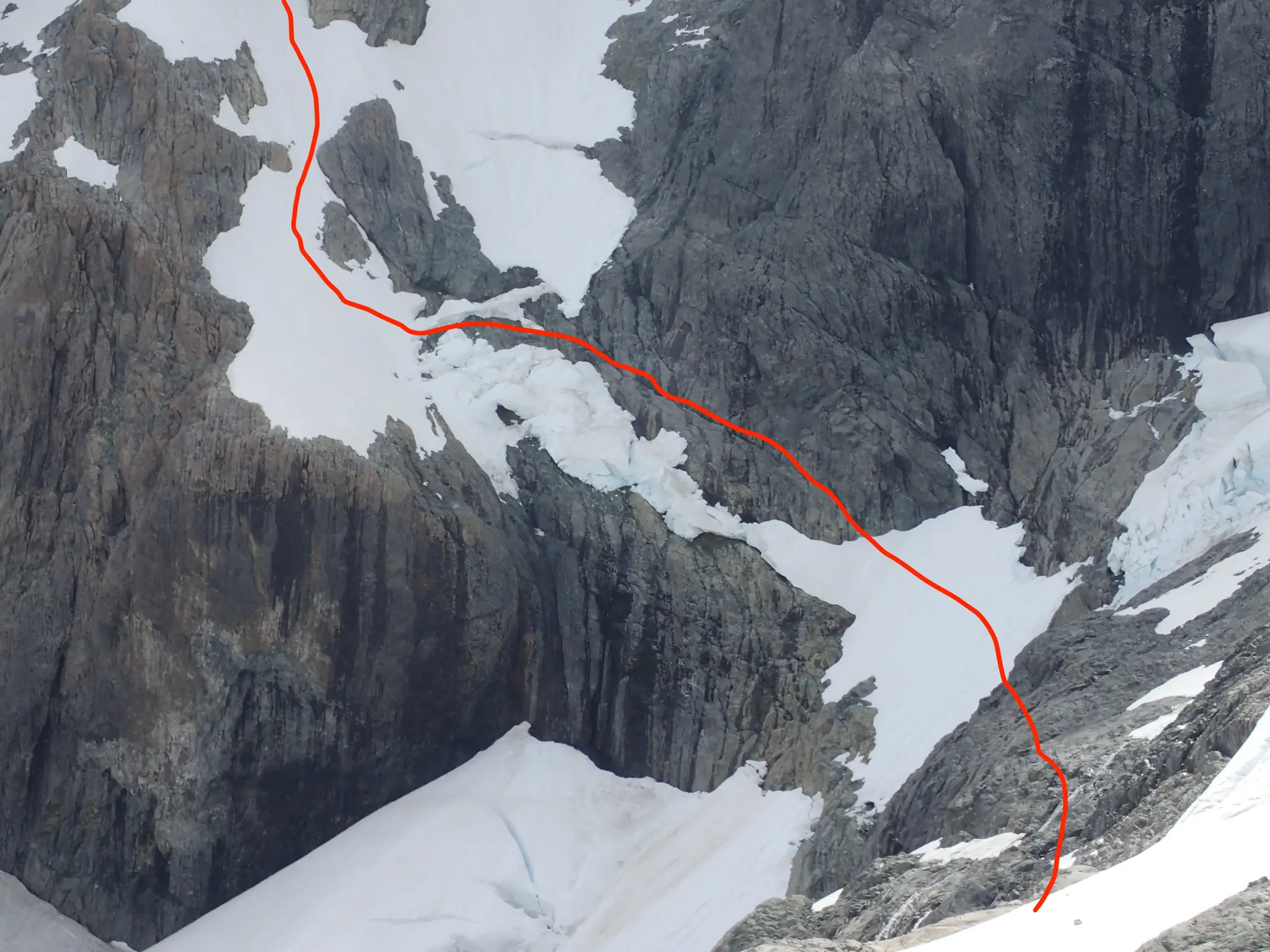
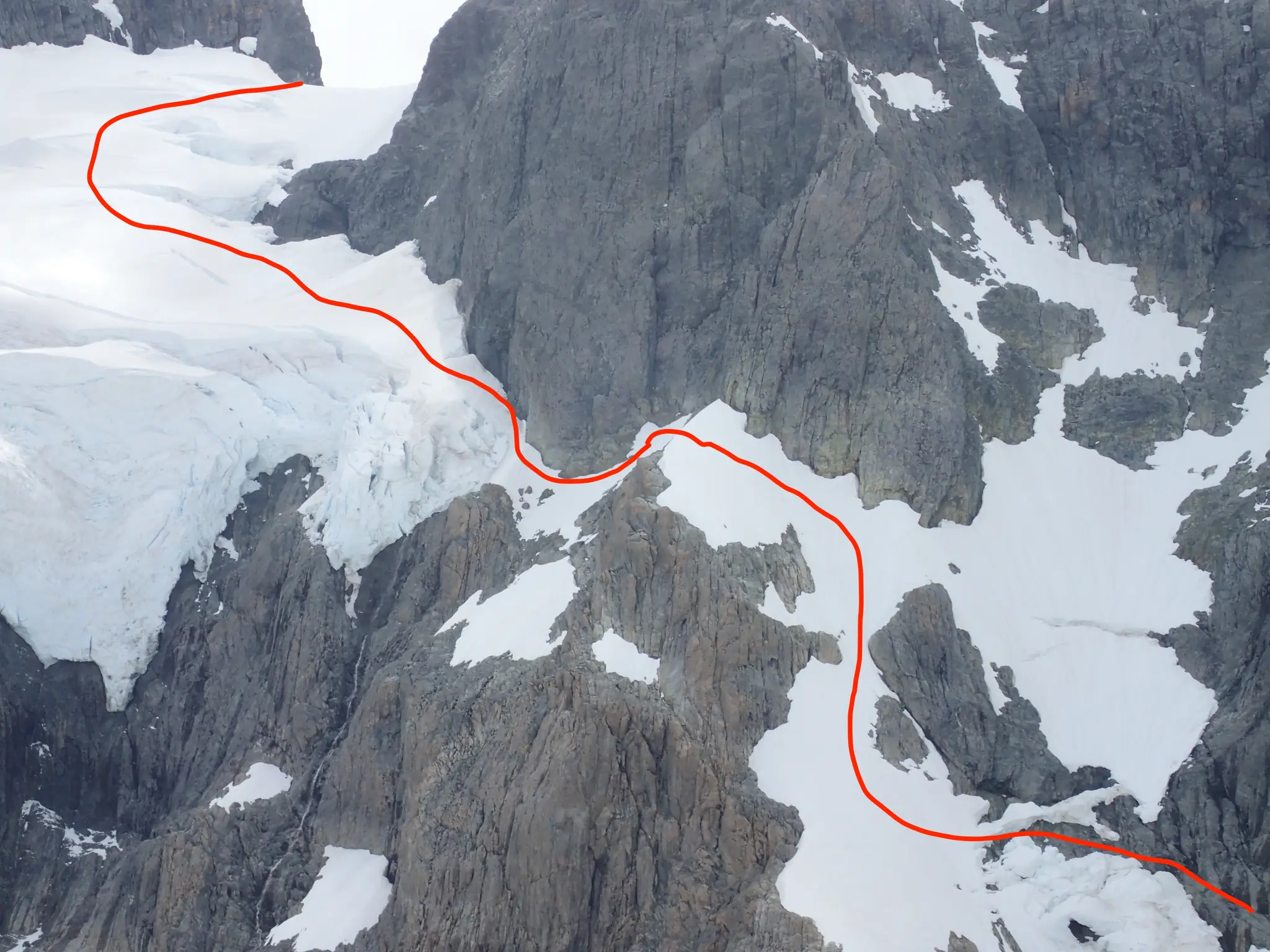
We left the tent around six. By headtorch light, we covered the first, fairly easy part of the route. Then we stood beneath the seracs. They were enormous! We approached them very cautiously. Climbing over those giants was exhilarating.
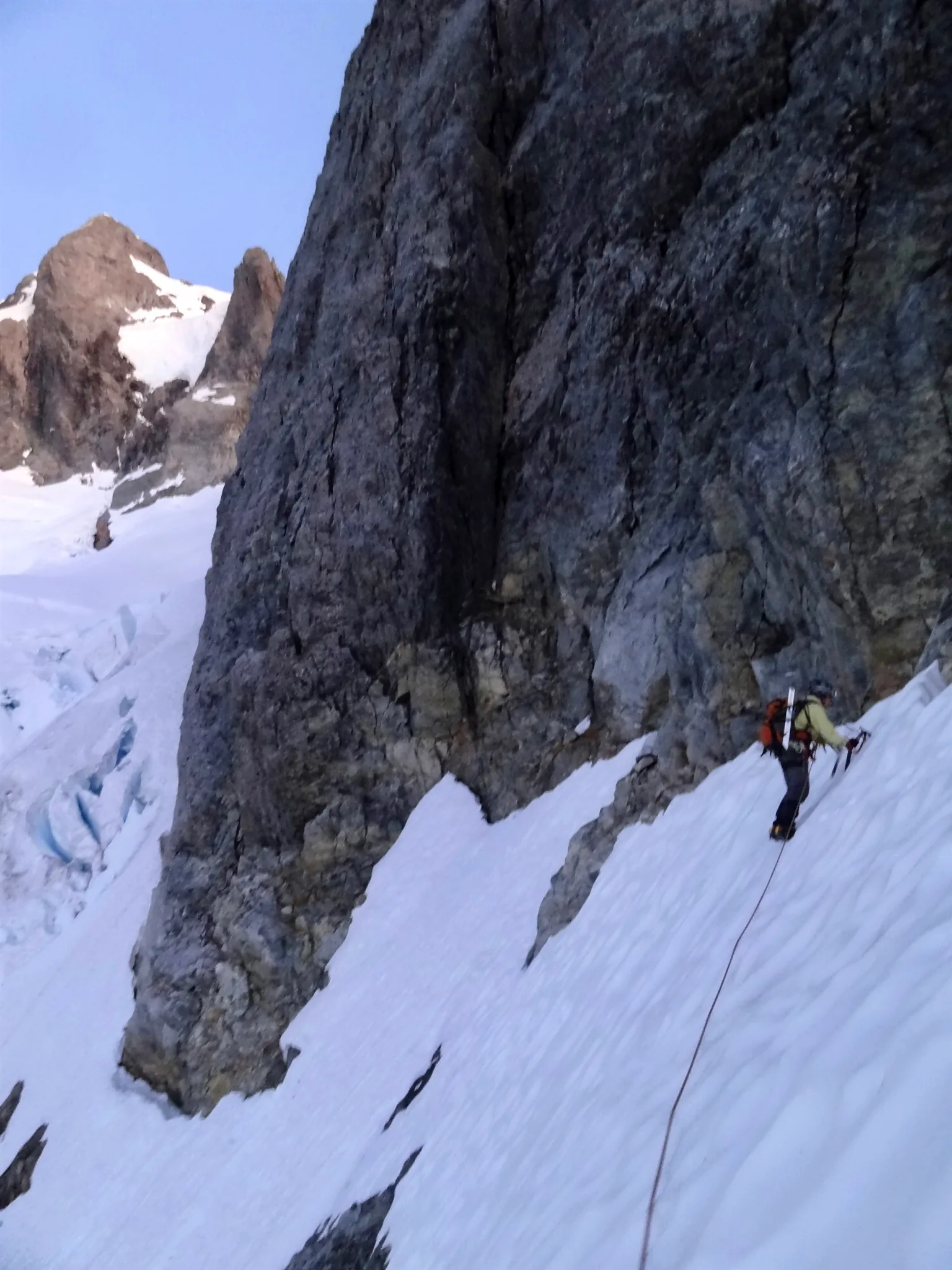
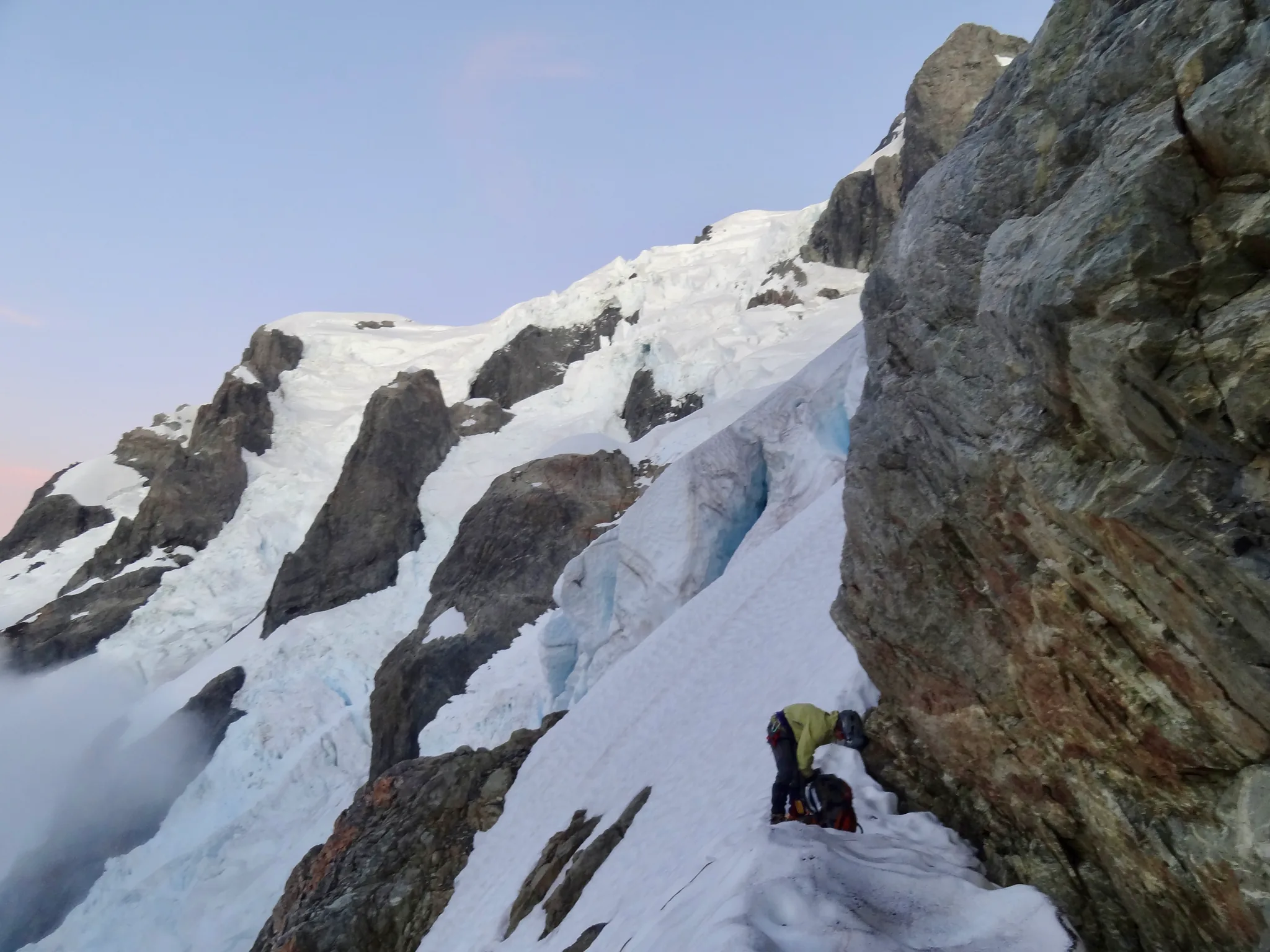
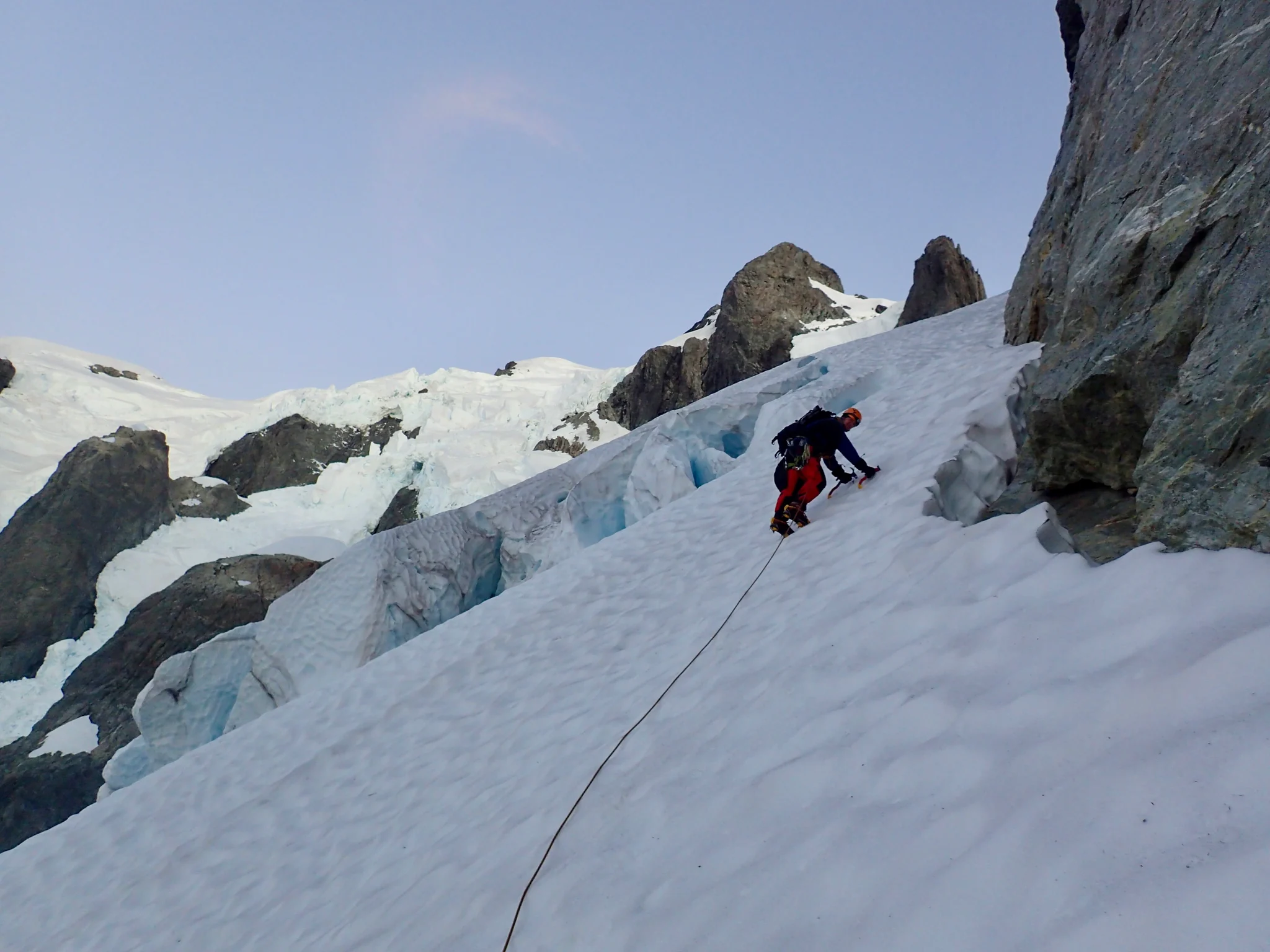
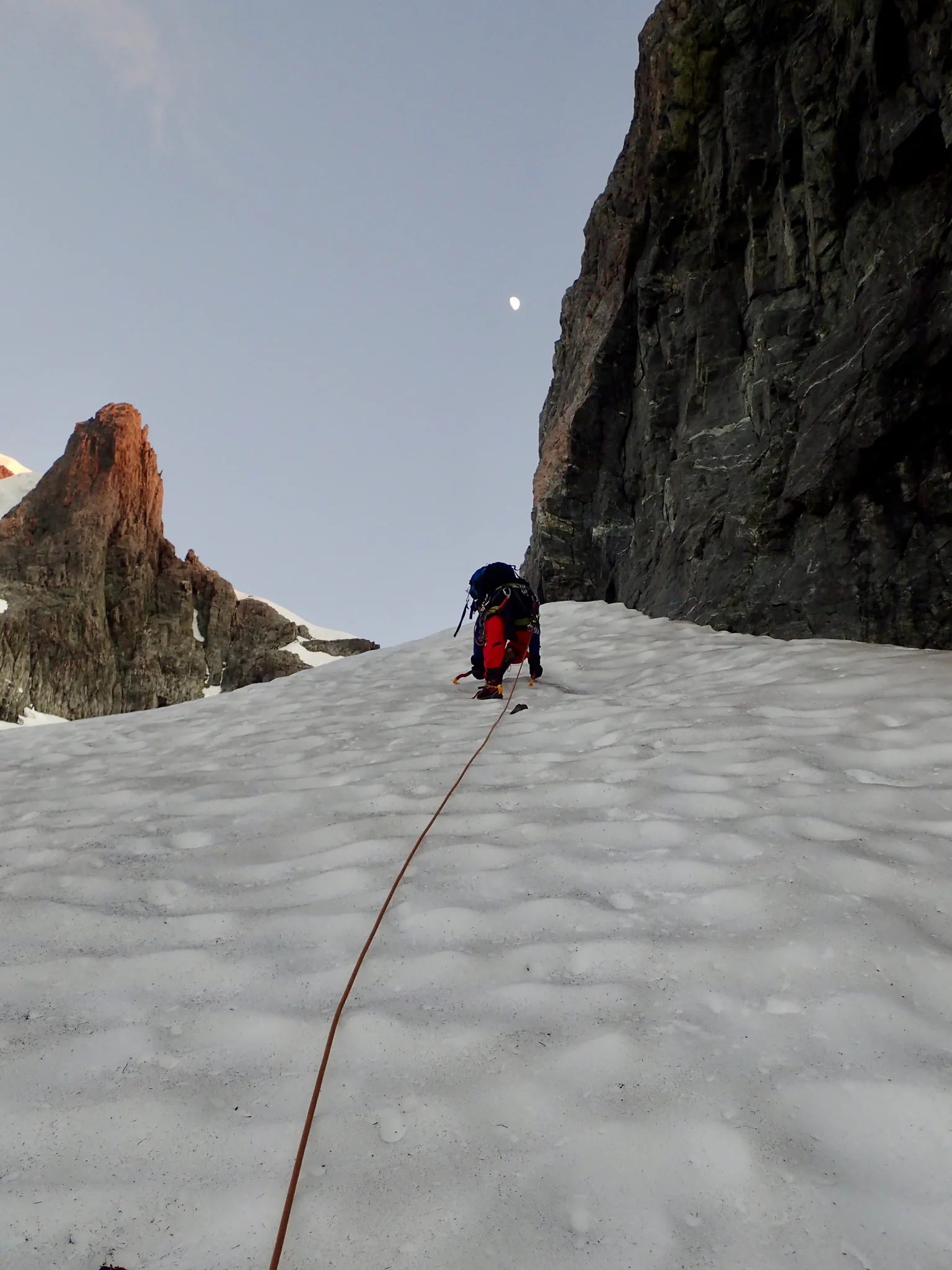
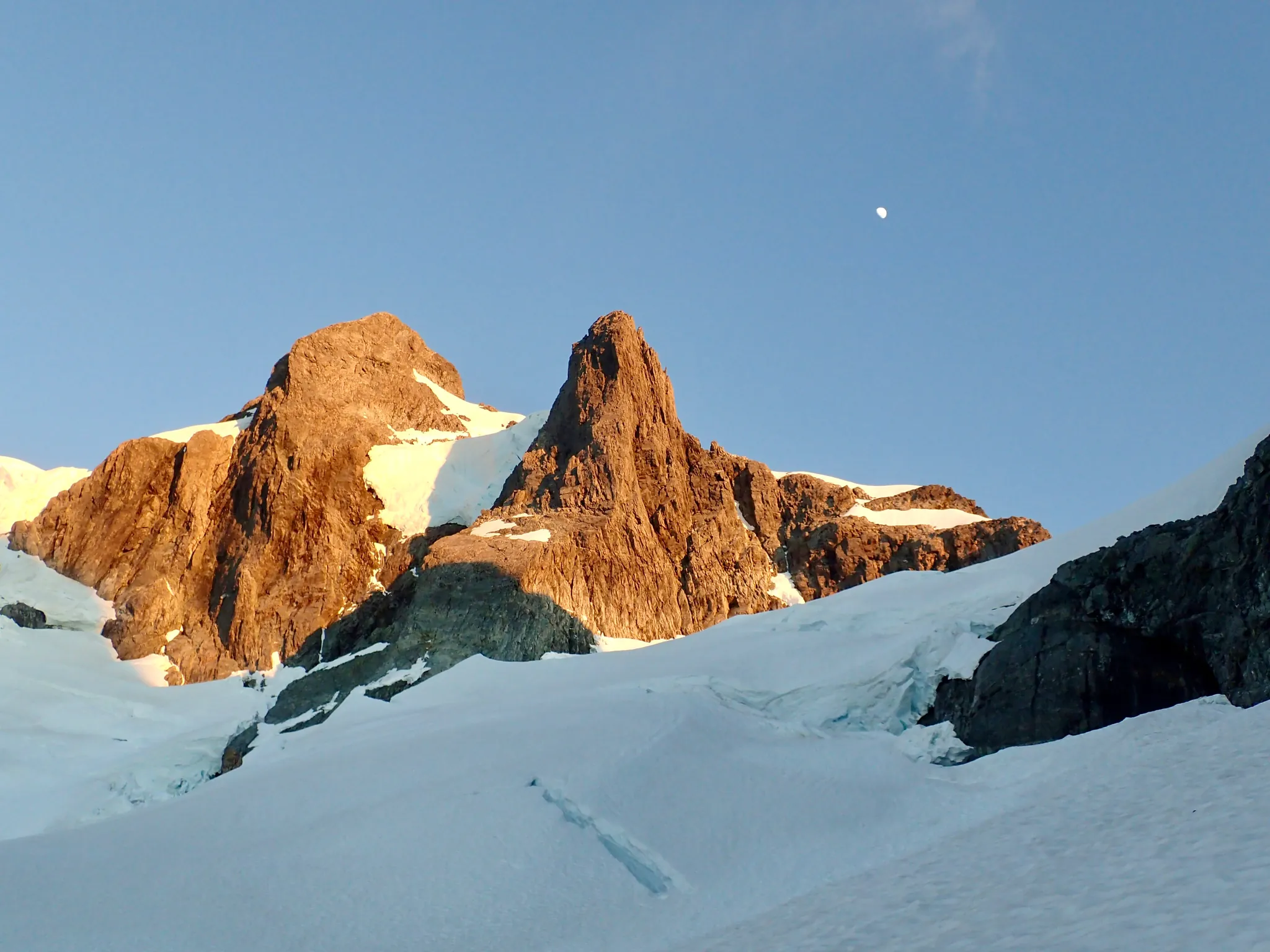
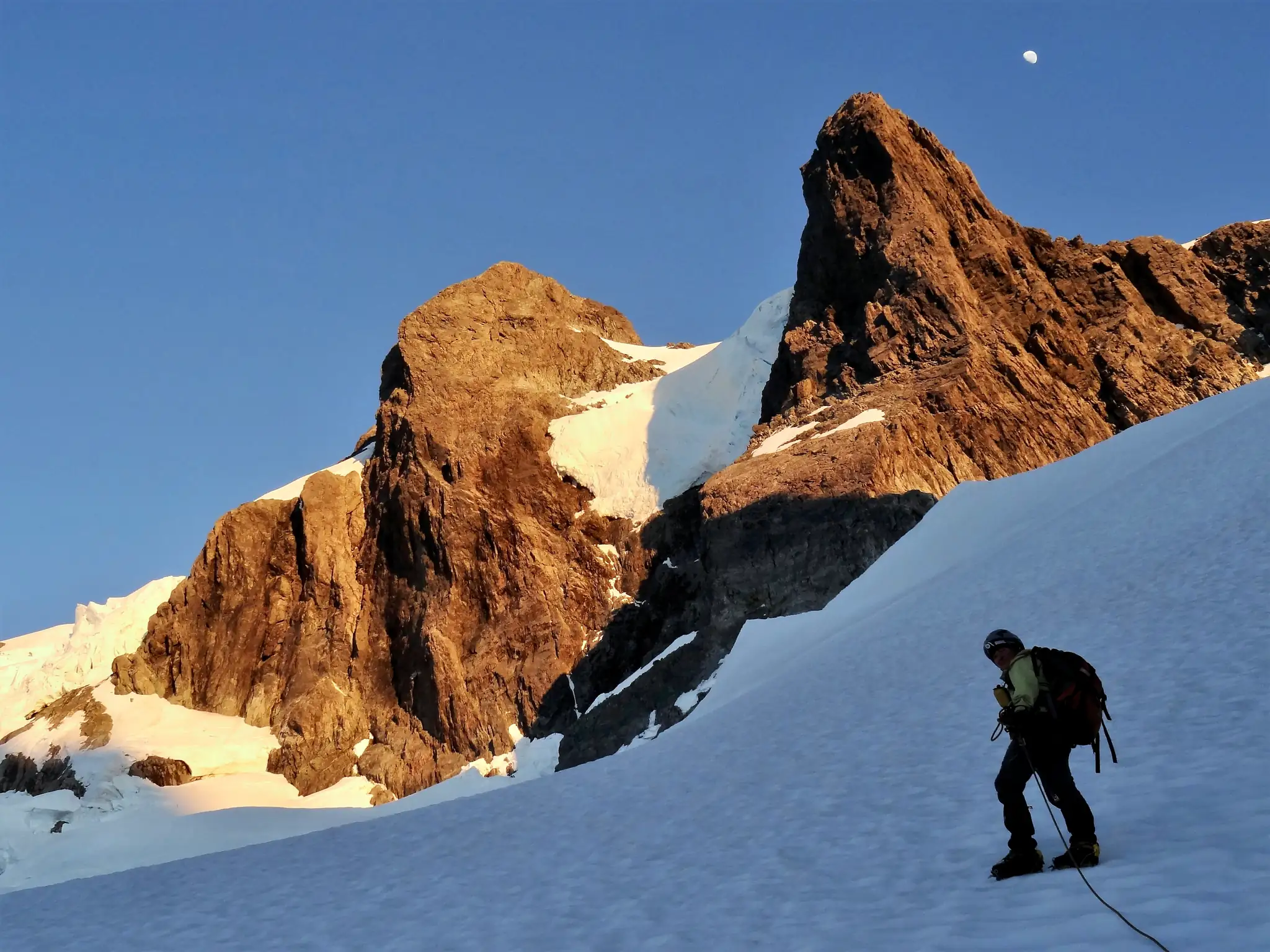
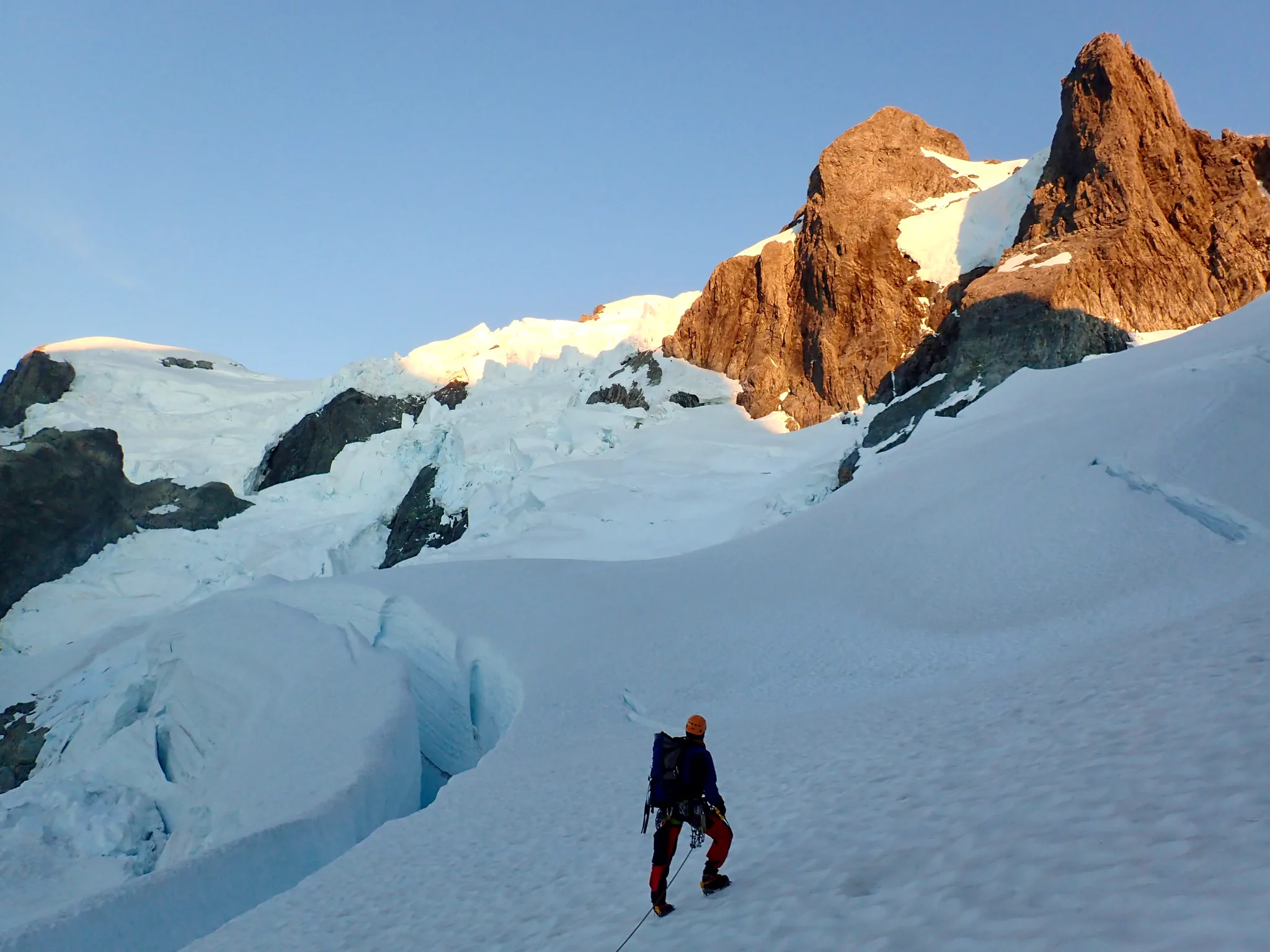
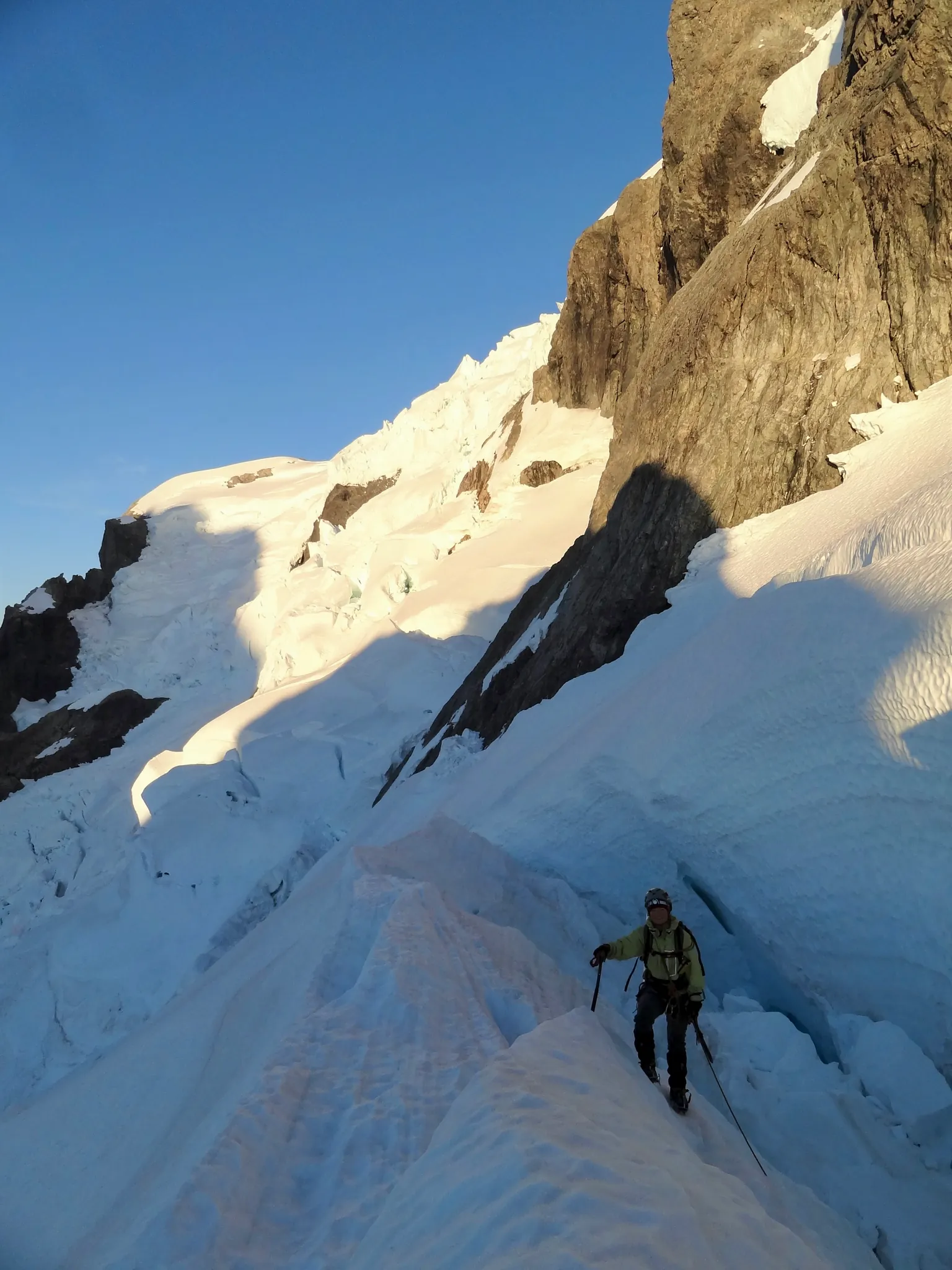
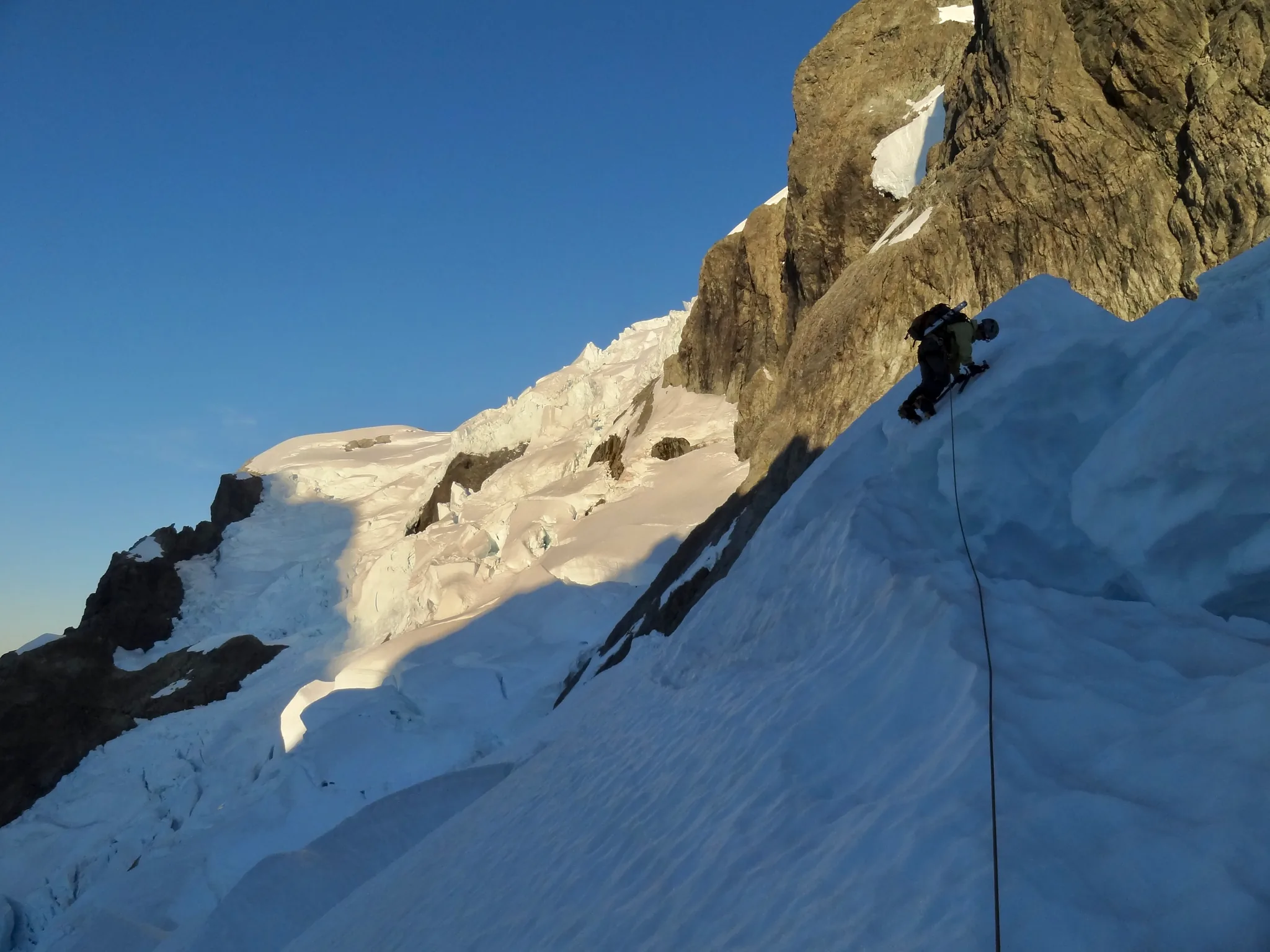
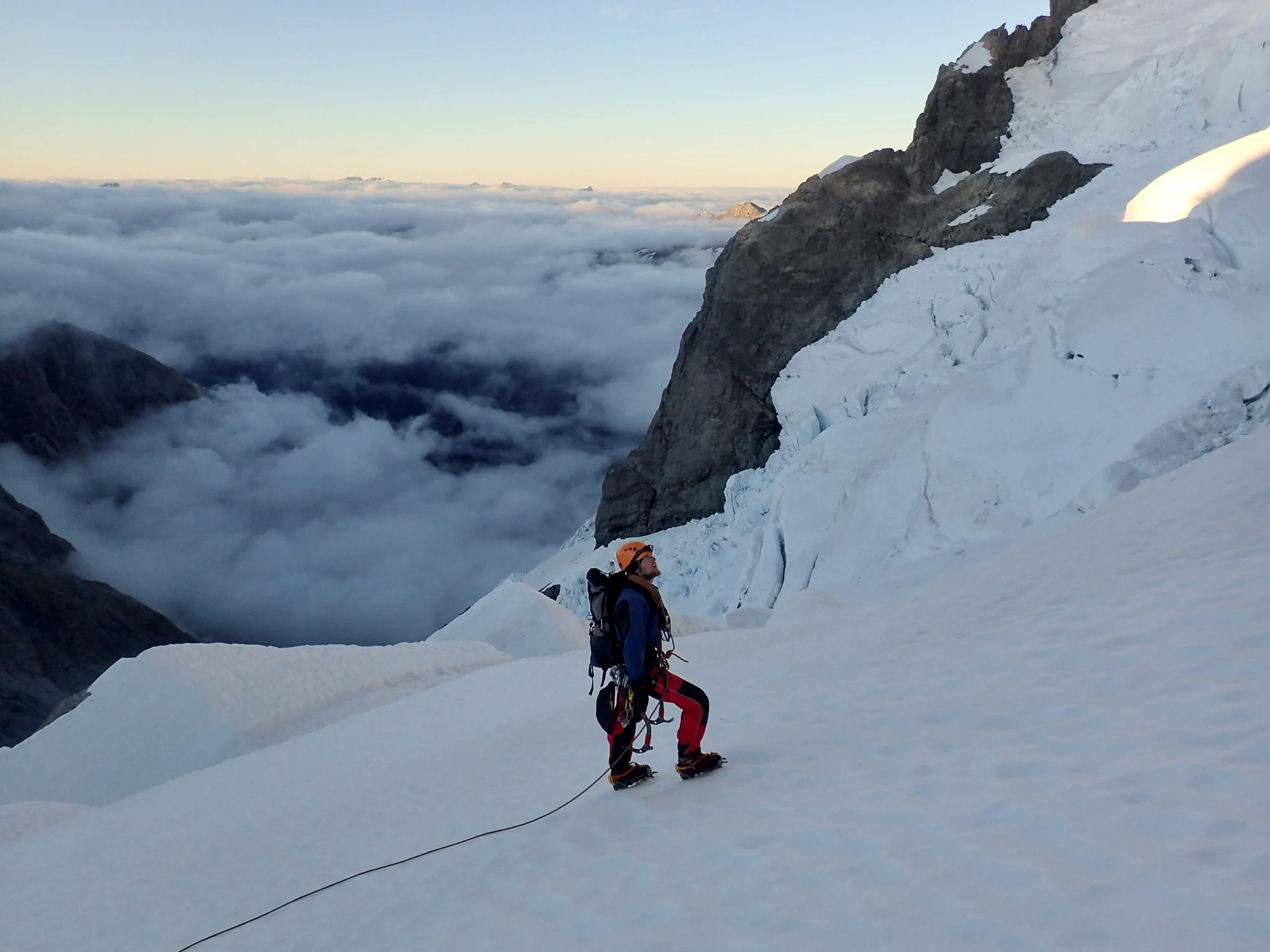
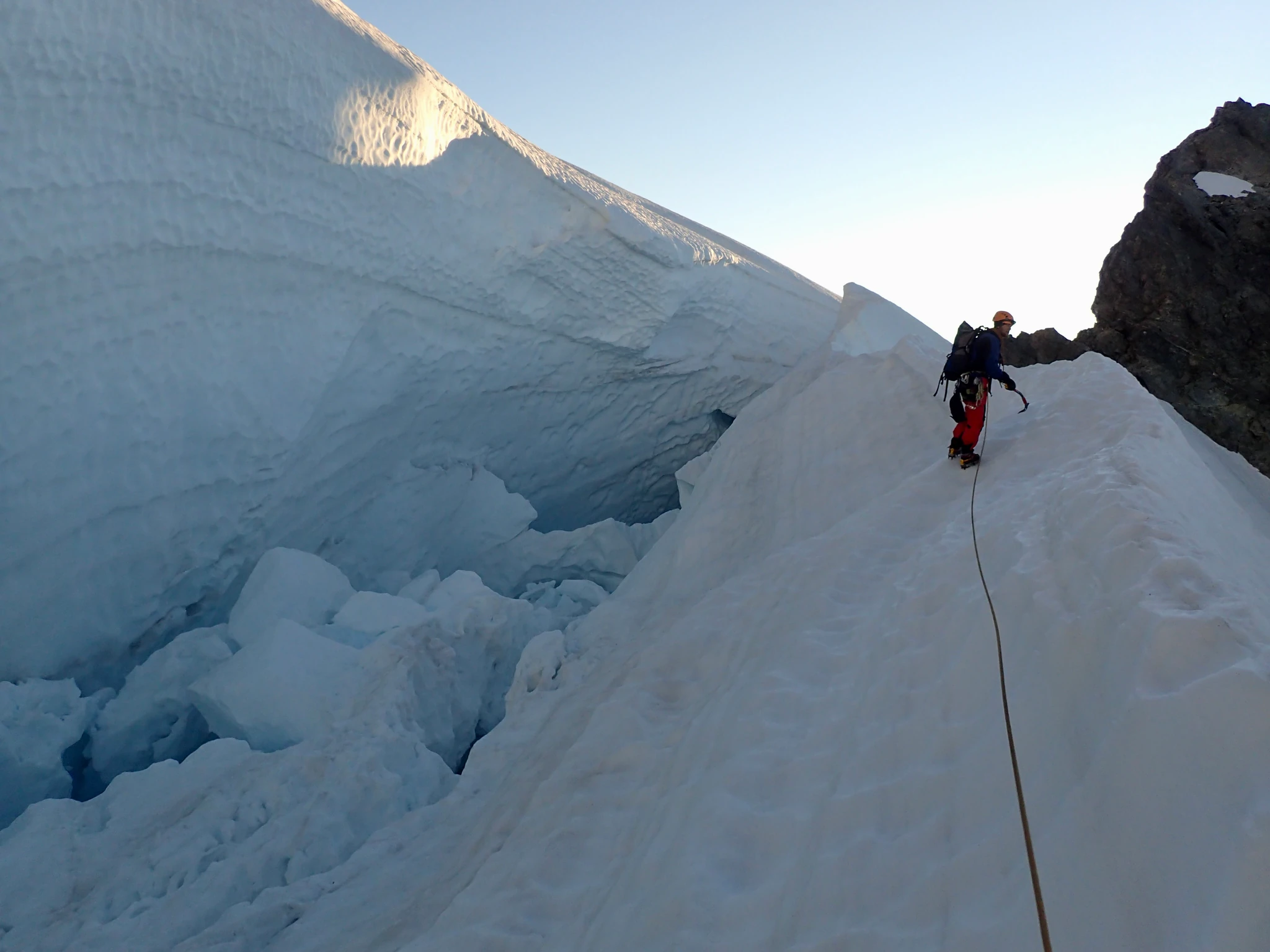
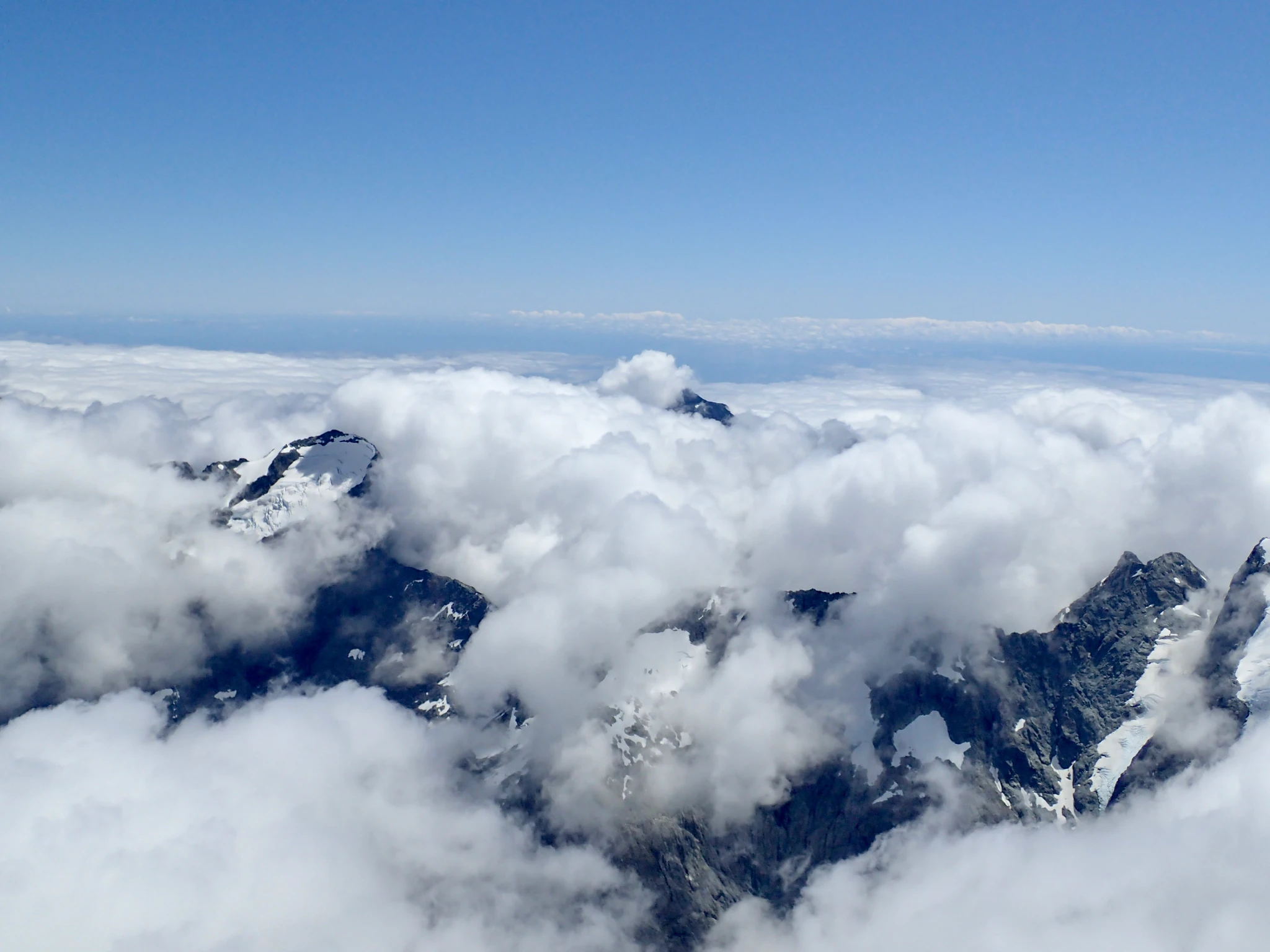
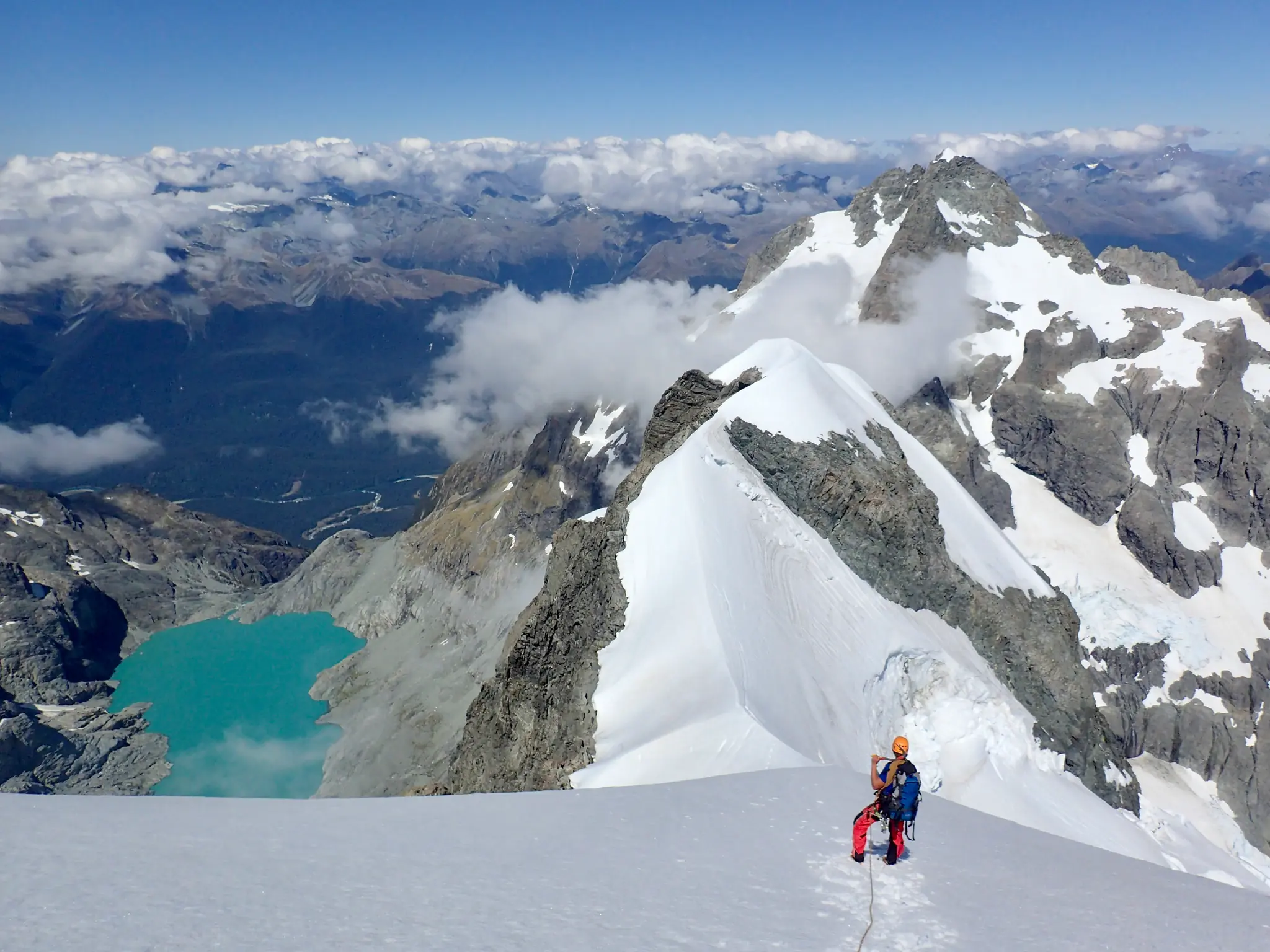
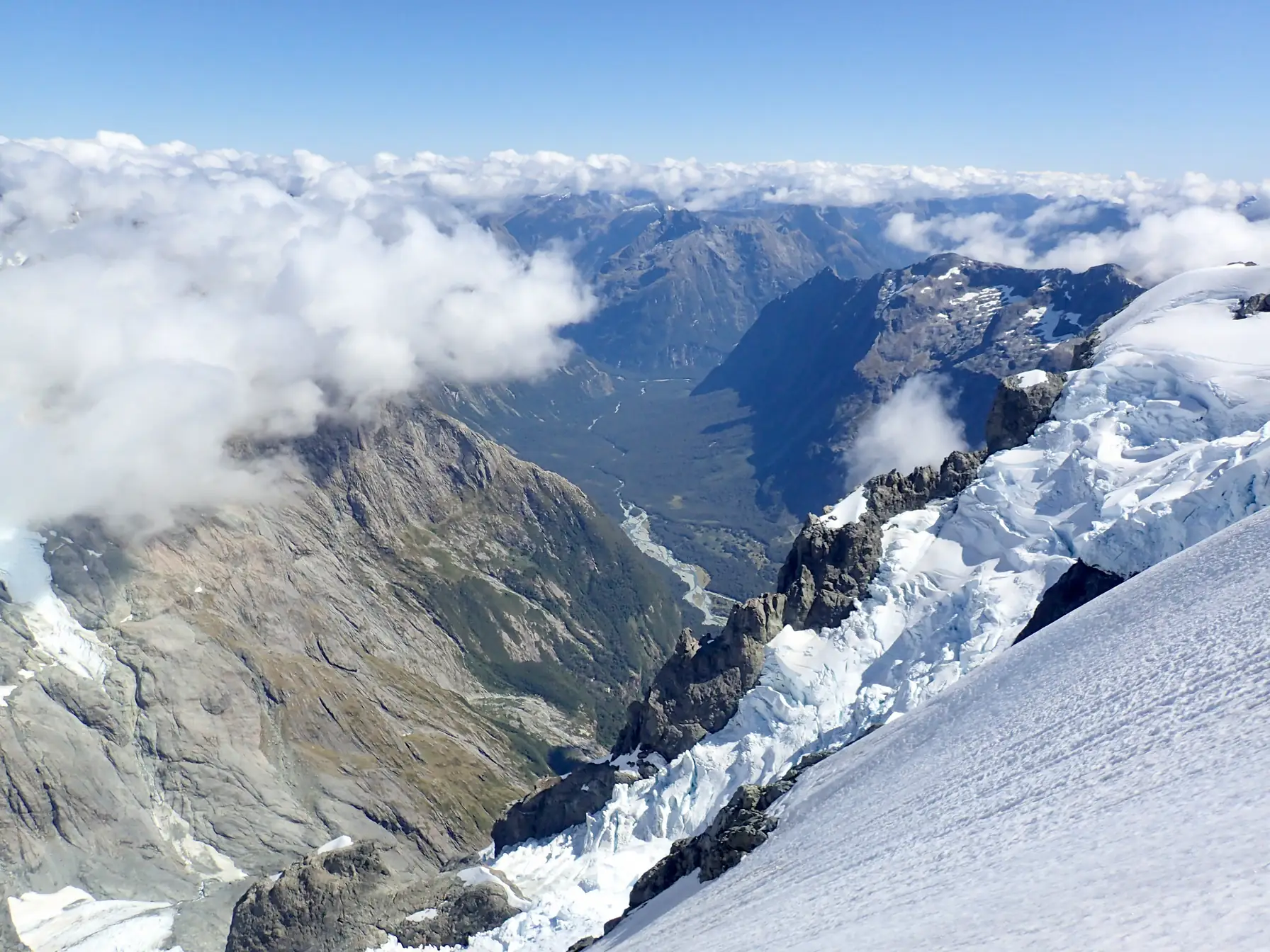
Above the seracs, the going became easier. Cloud filled the valley behind us. On reaching the ridge, we saw what lay on the other side: another sea of cloud, with isolated mountain peaks poking out of it. The sun just above the horizon, clear sky overhead. If only this moment could last!
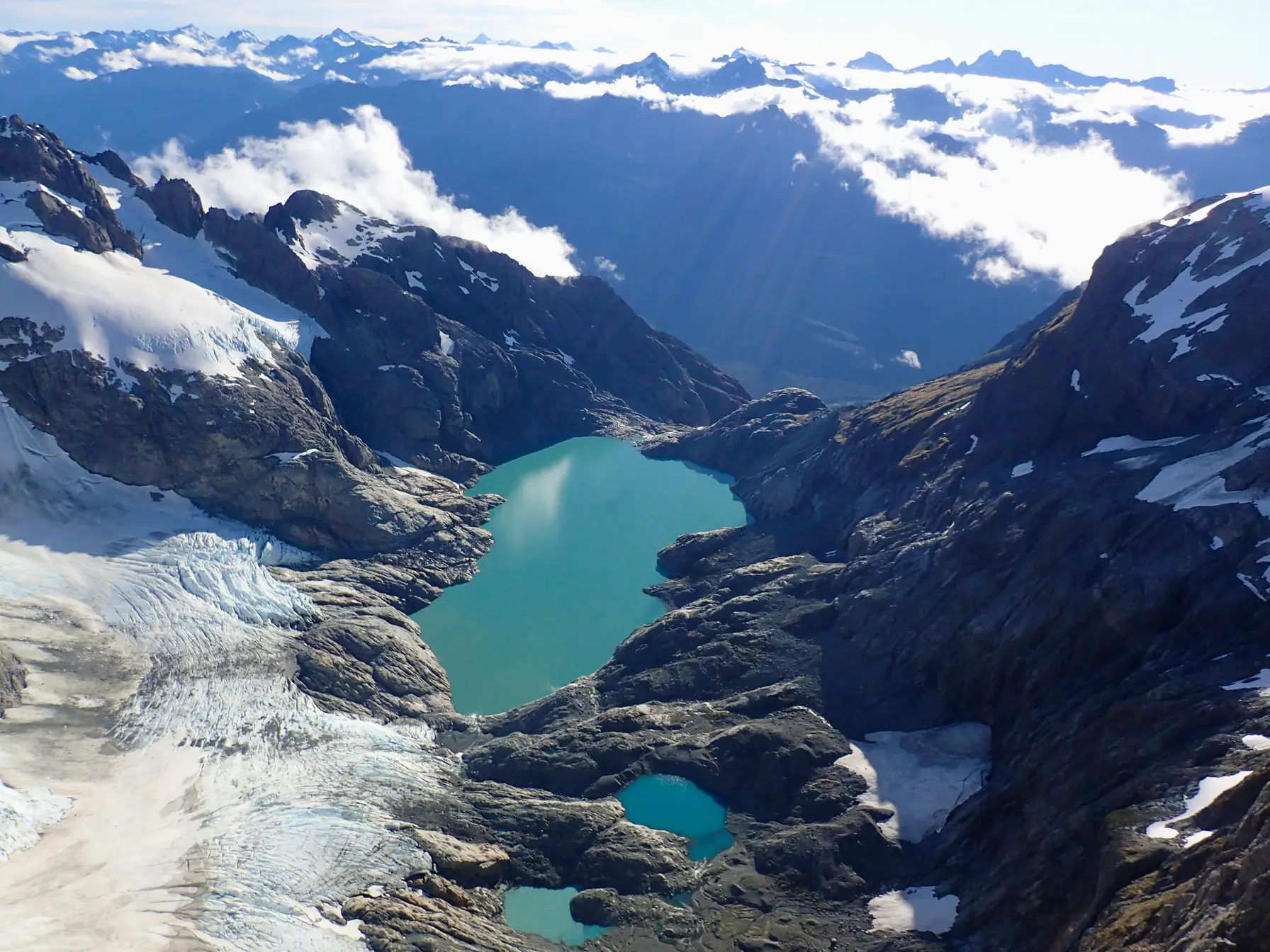
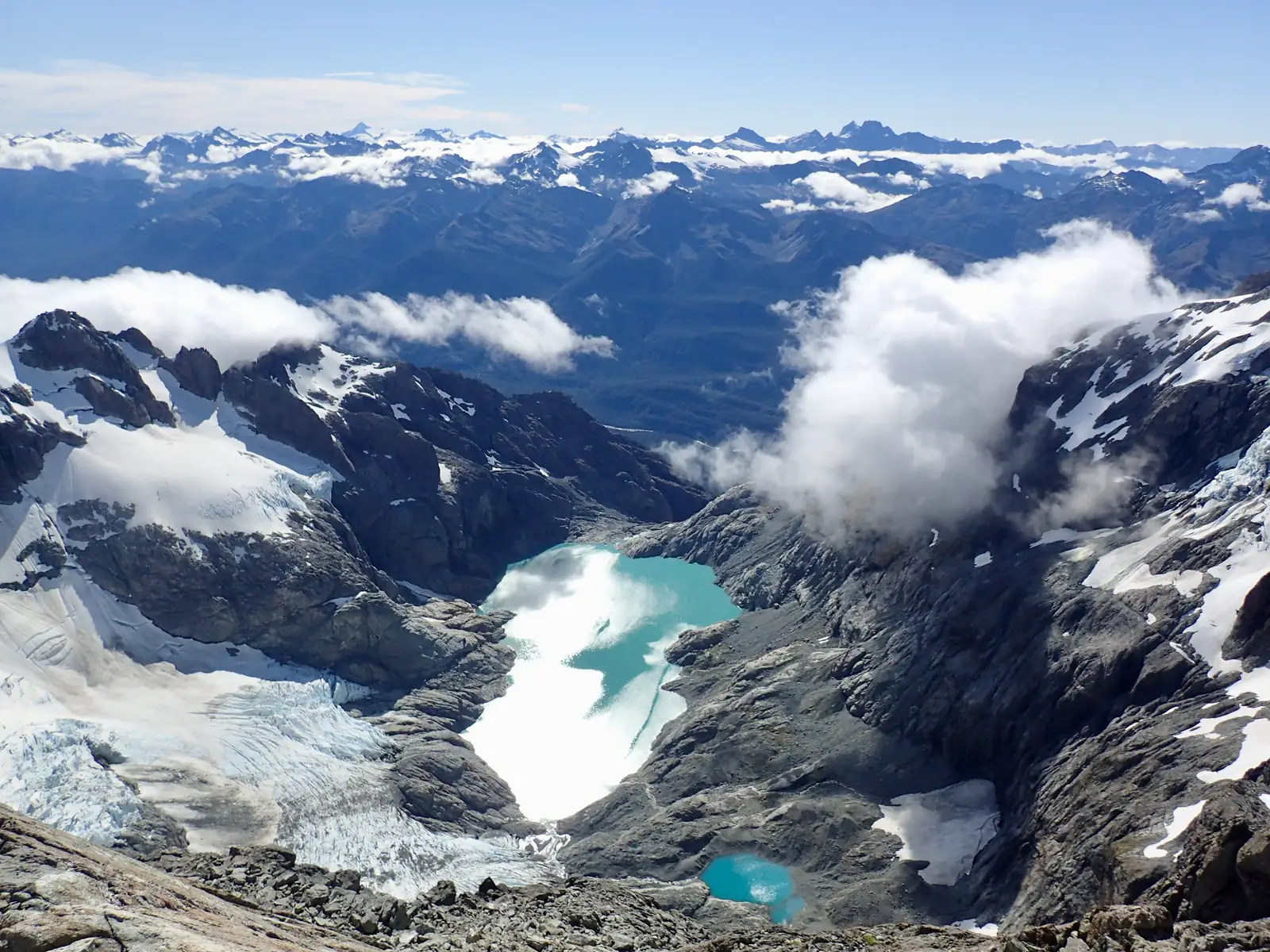
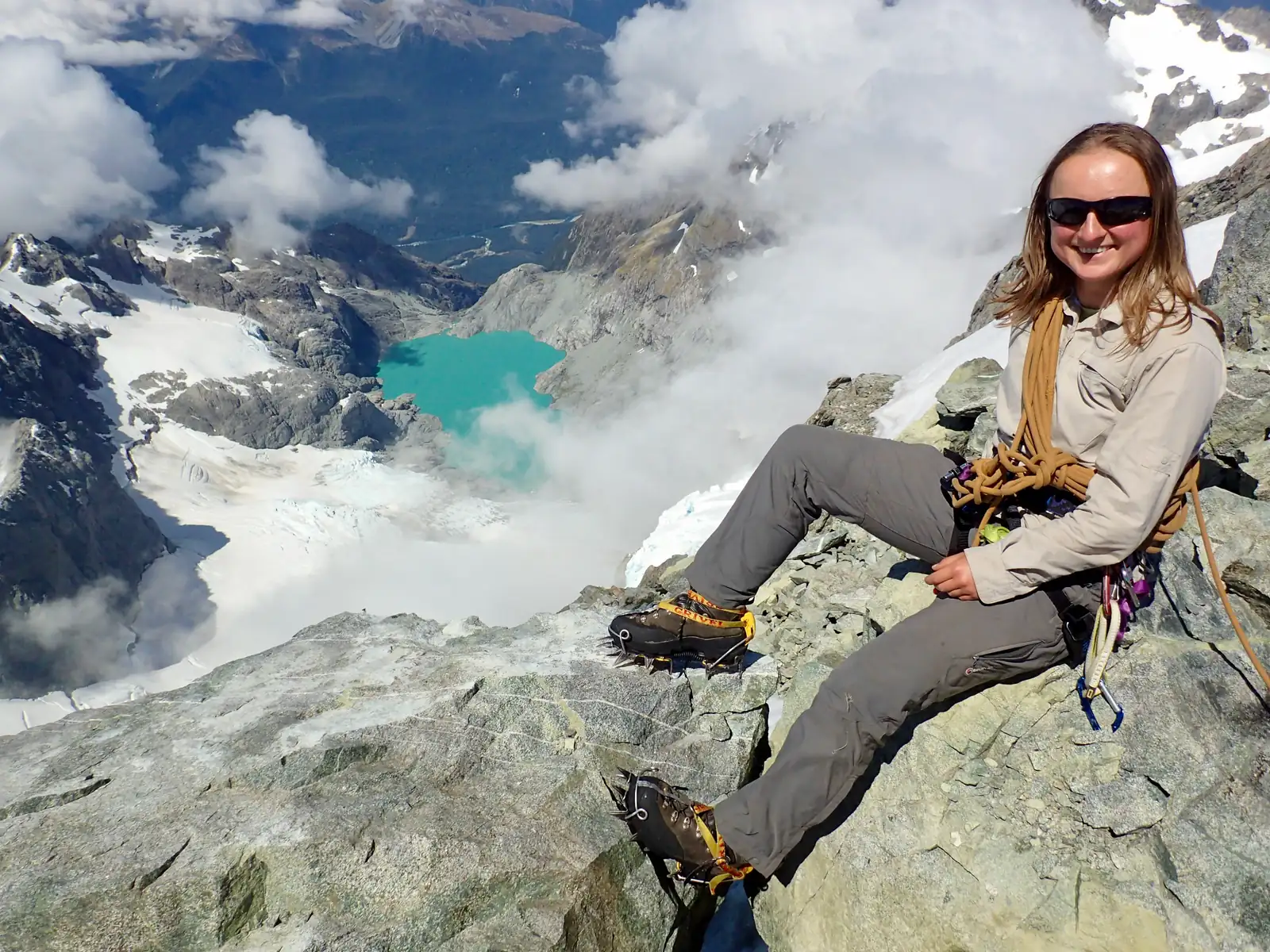
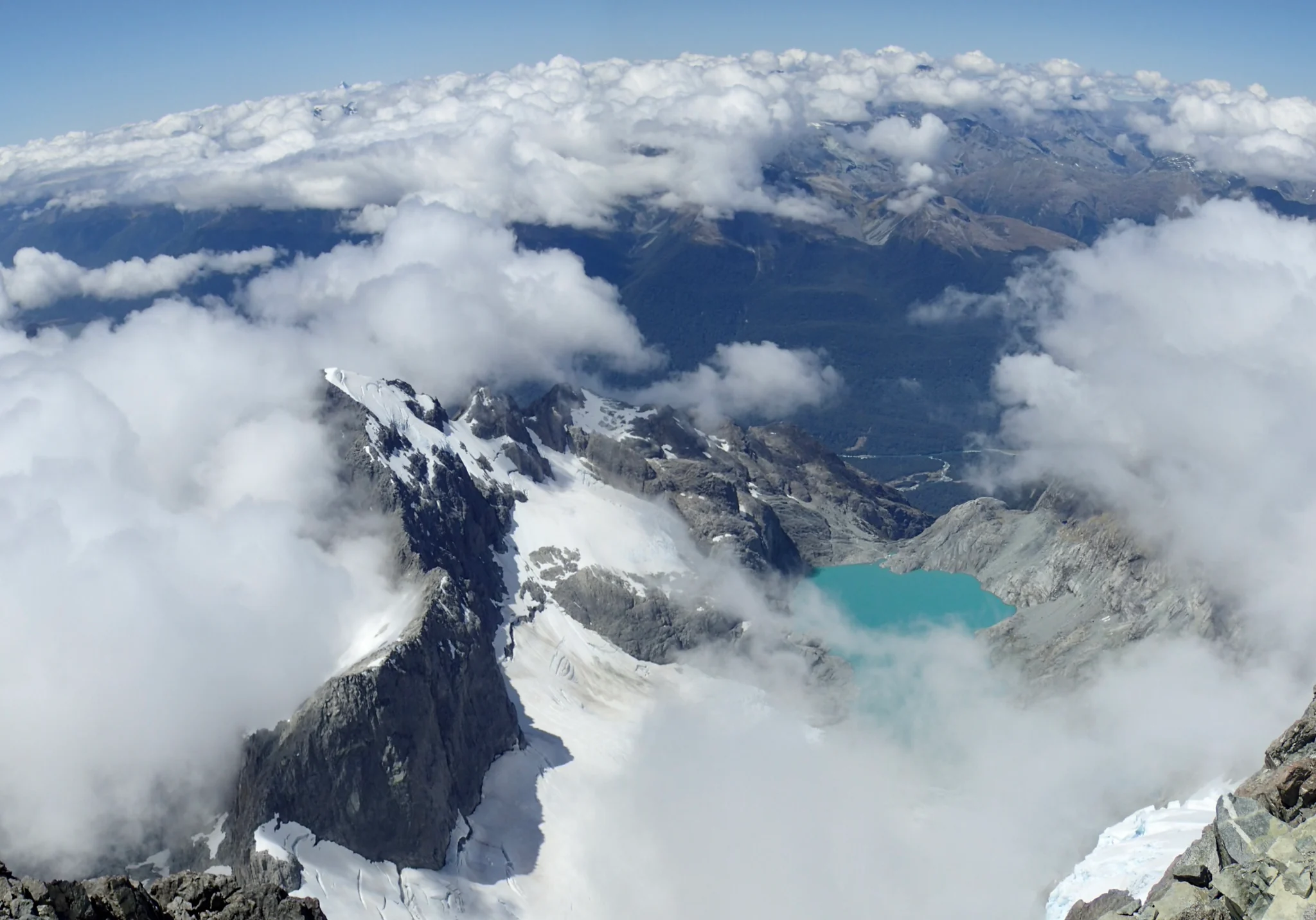
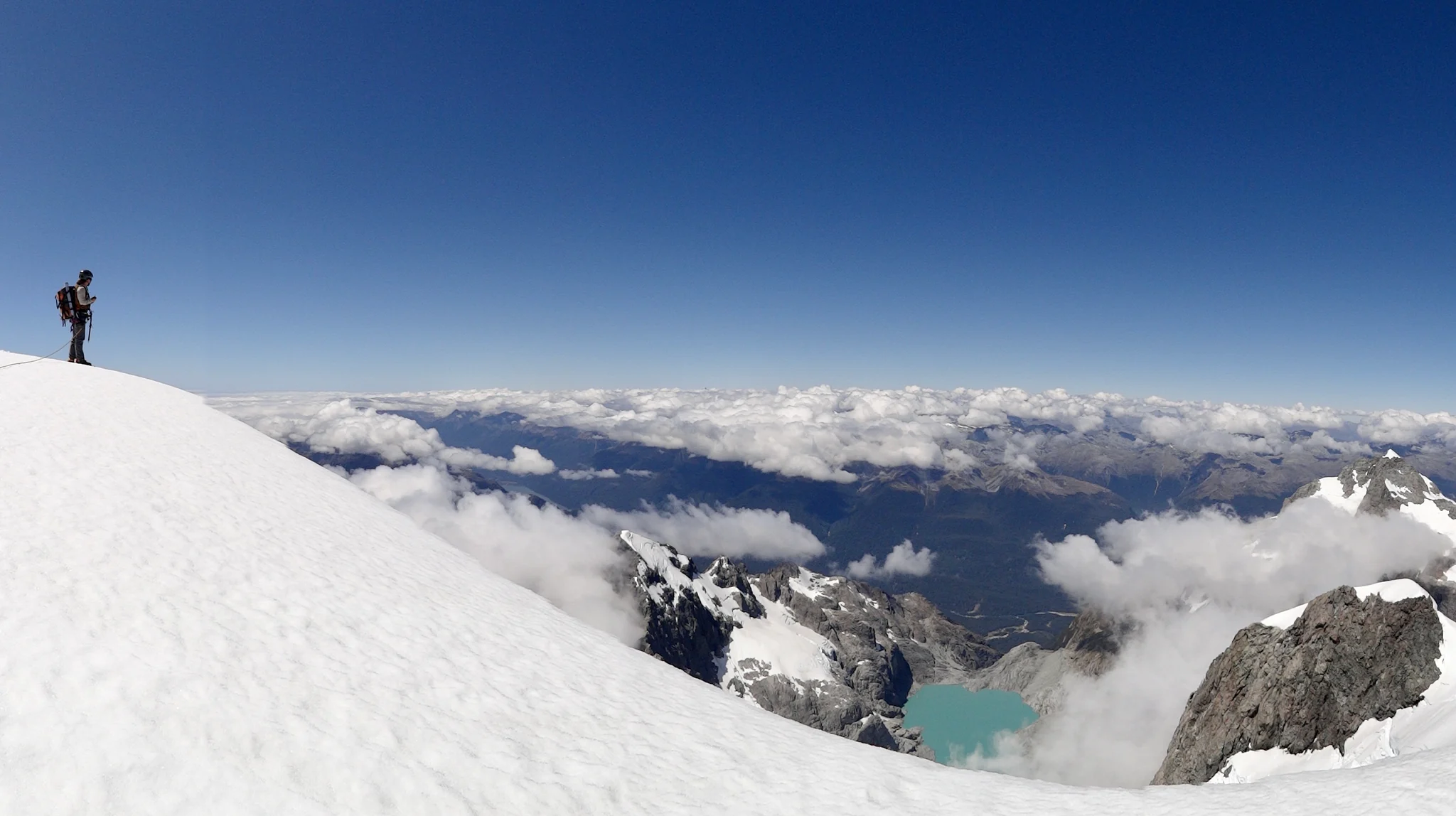
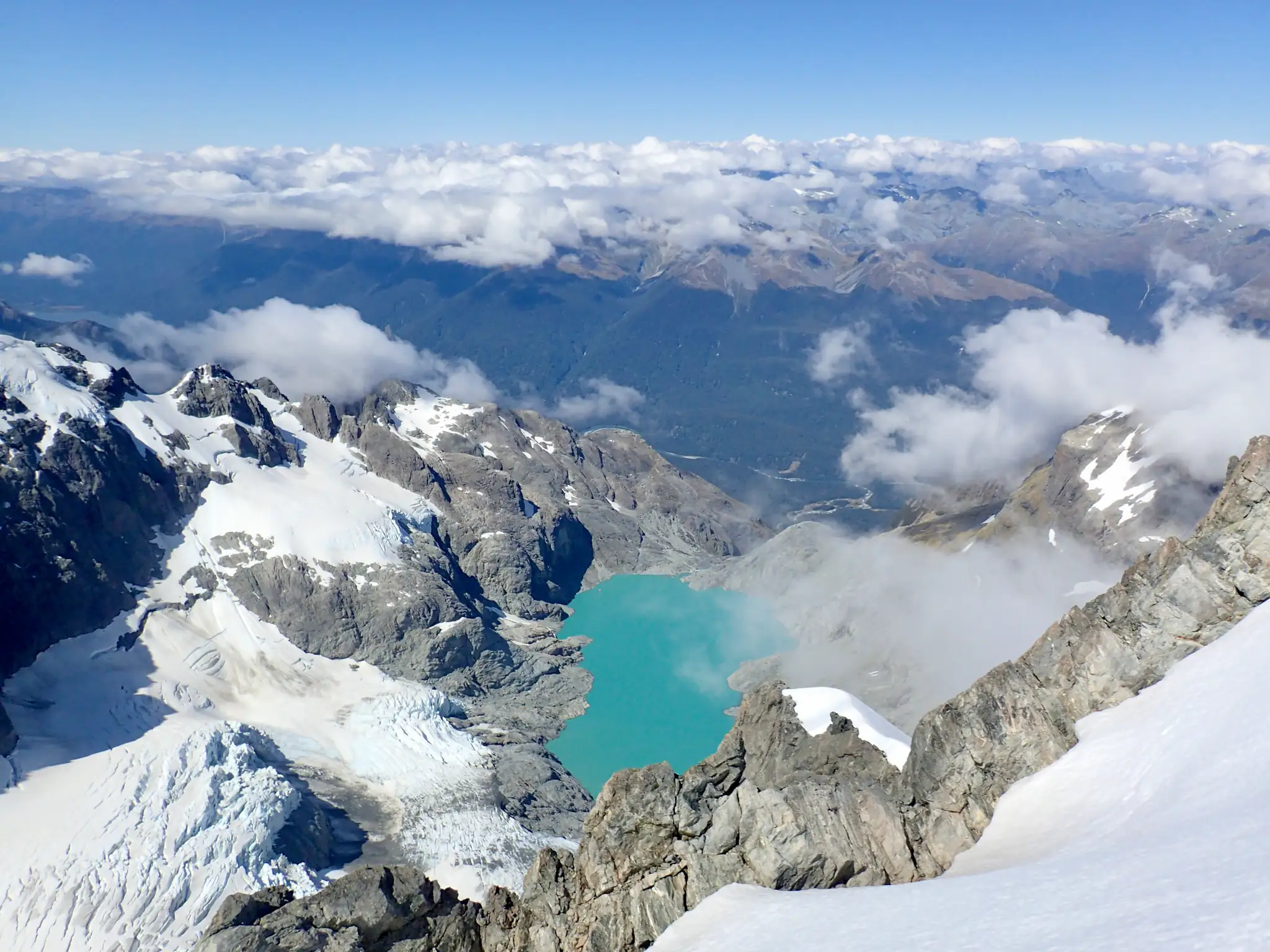
Eventually, the morning clouds parted. We could see vast valleys in the distance and, in a glacial cirque below, a beautiful turquoise lake. A little higher, we spotted several smaller lakes of the same colour. That turquoise stayed with us all the way to the summit.
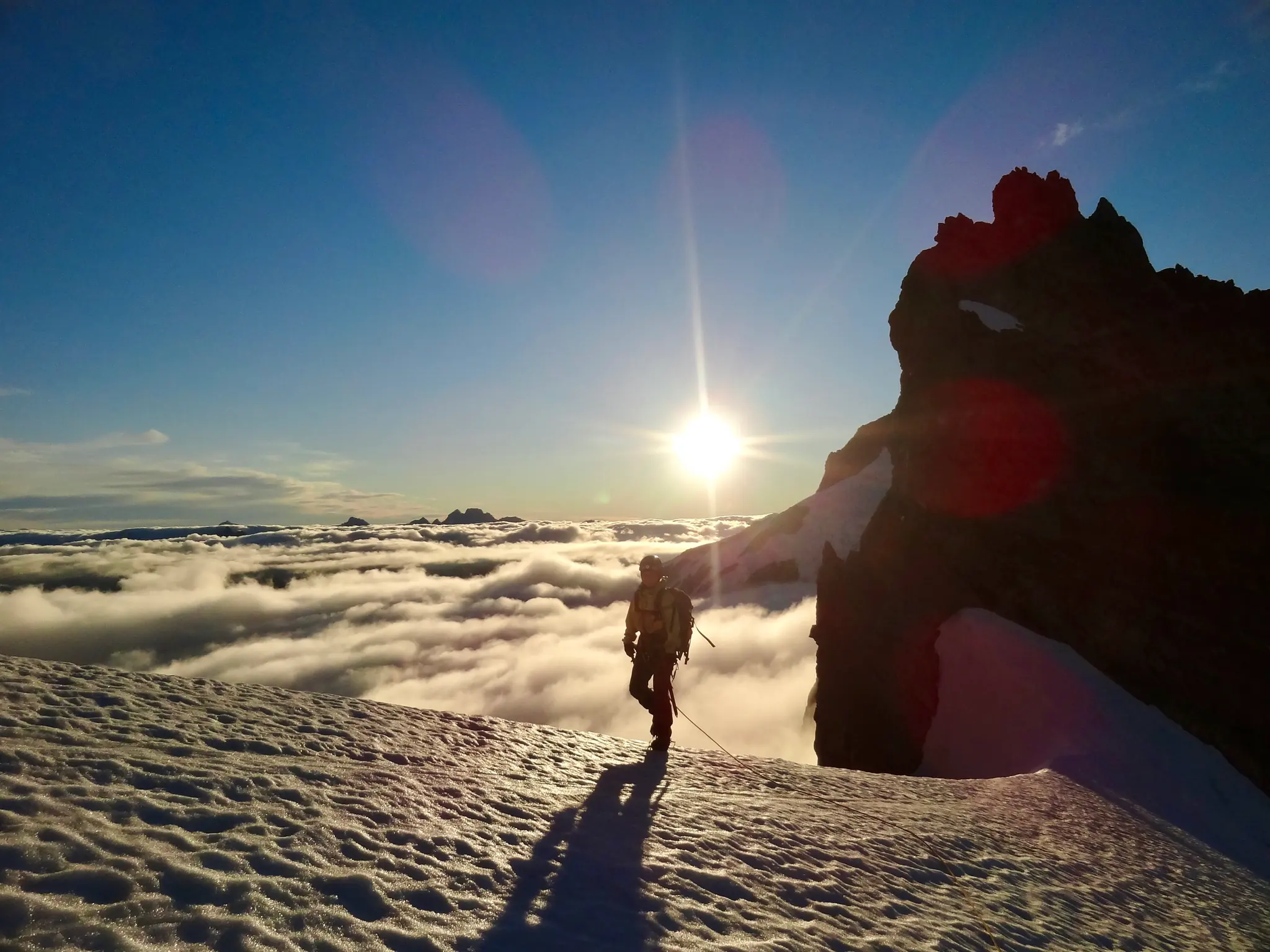
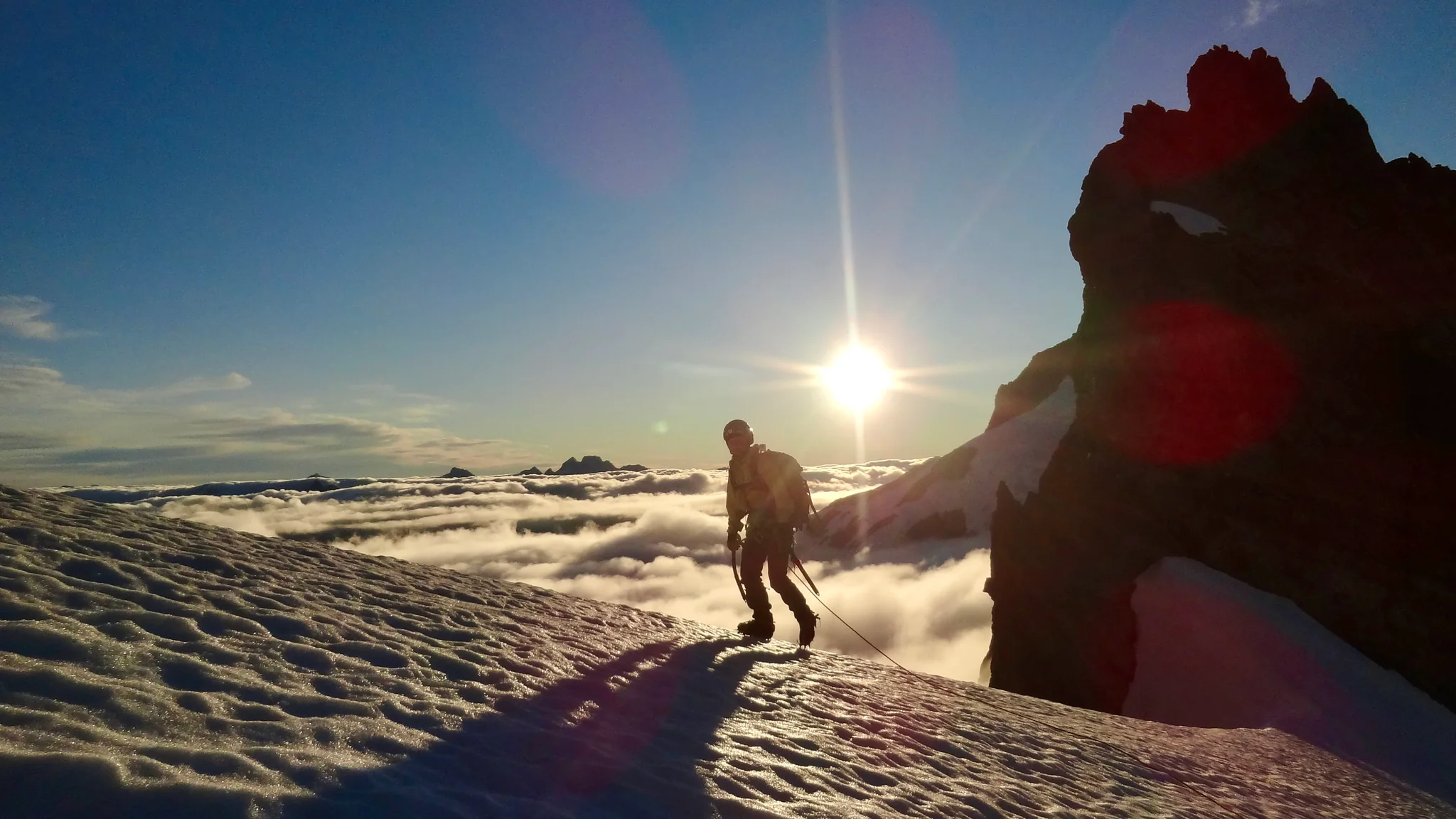
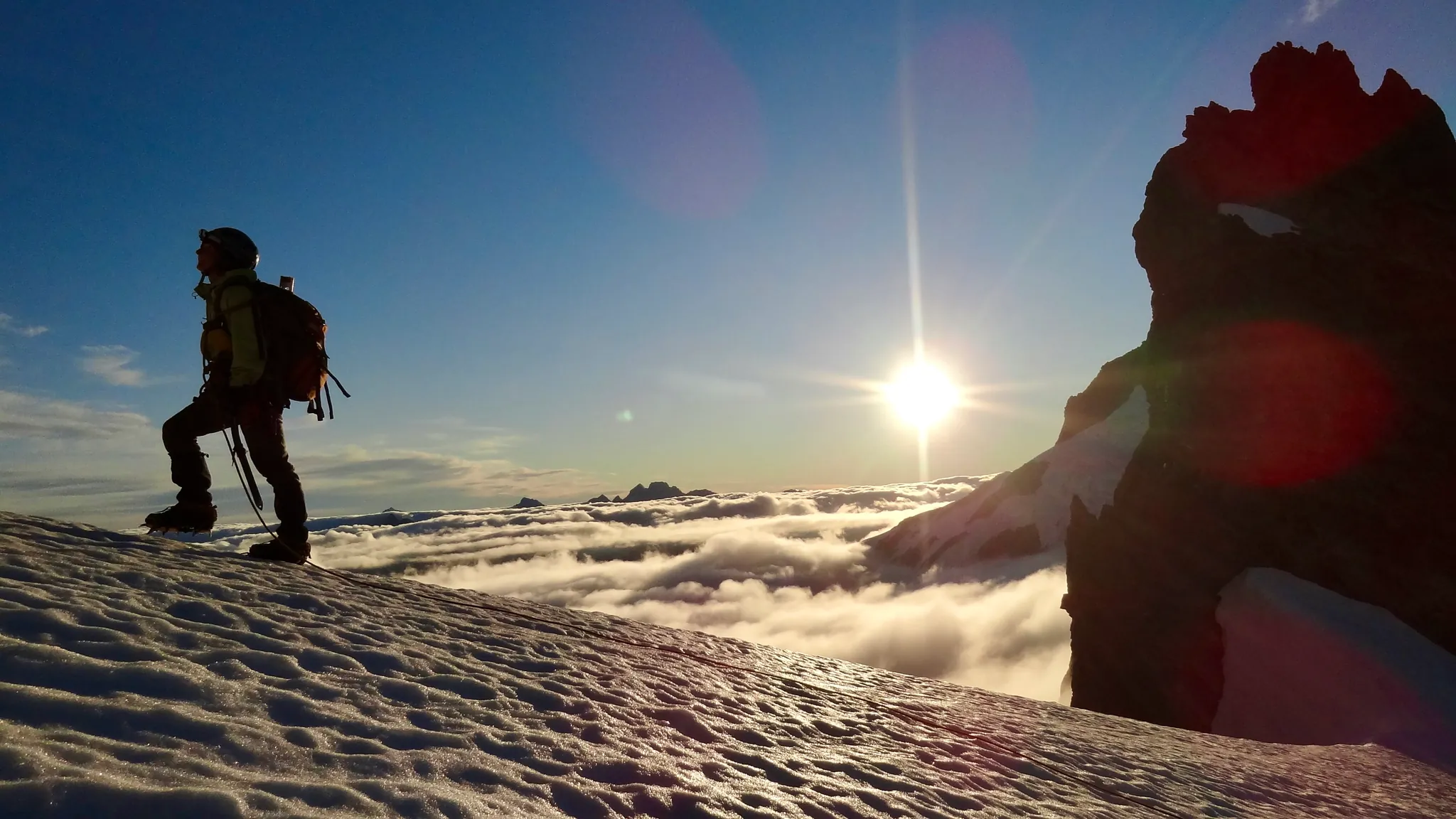
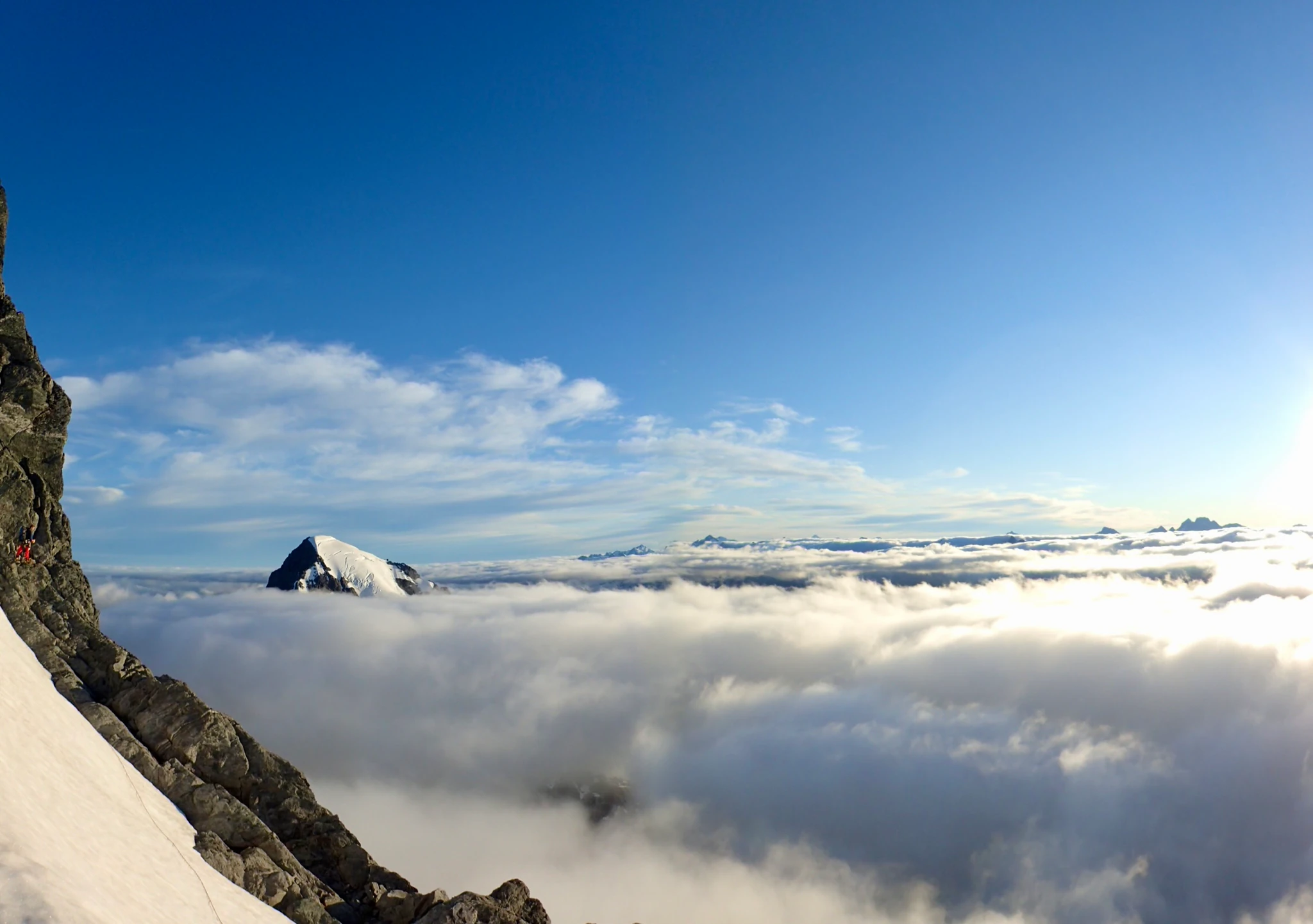
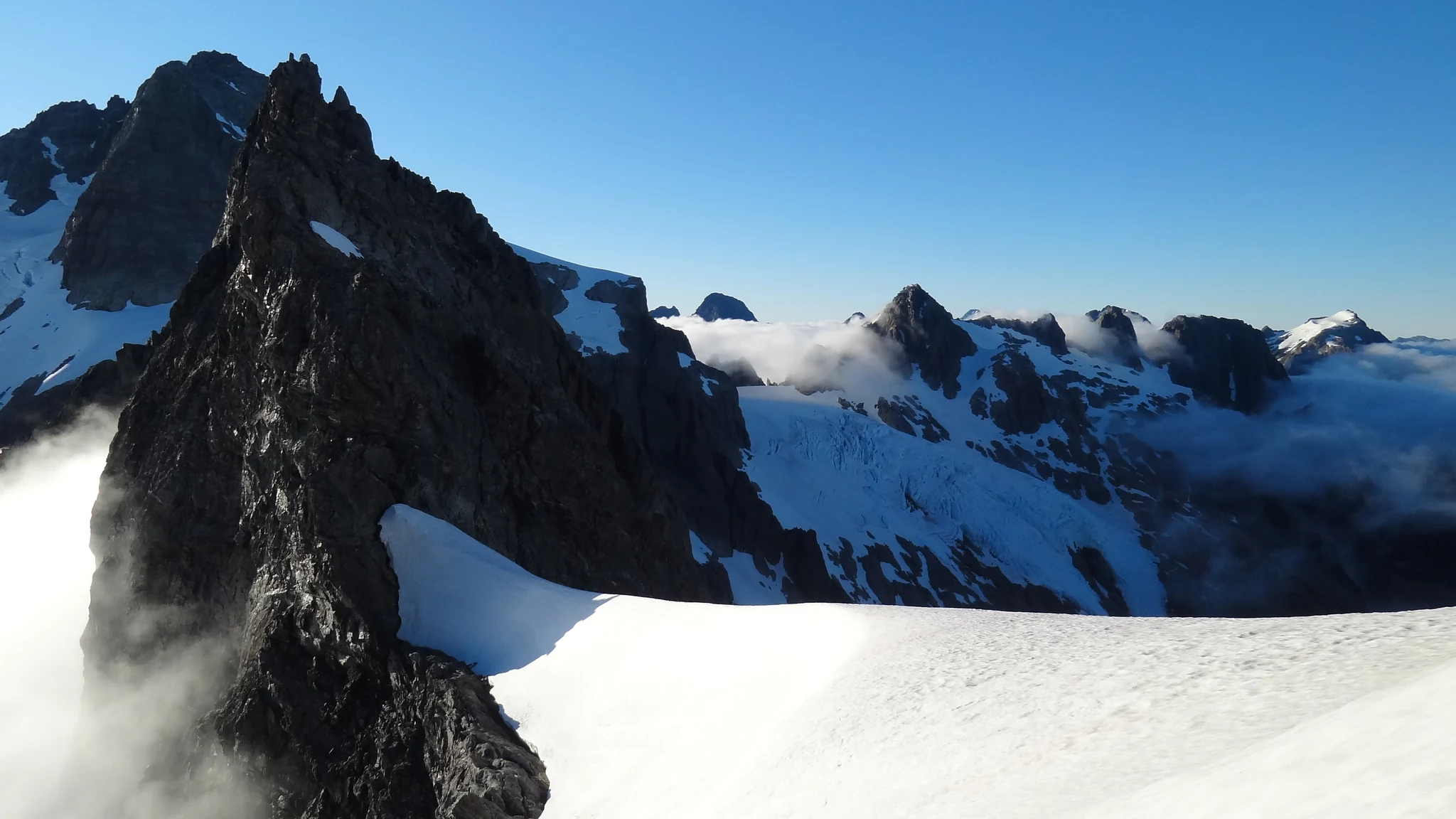
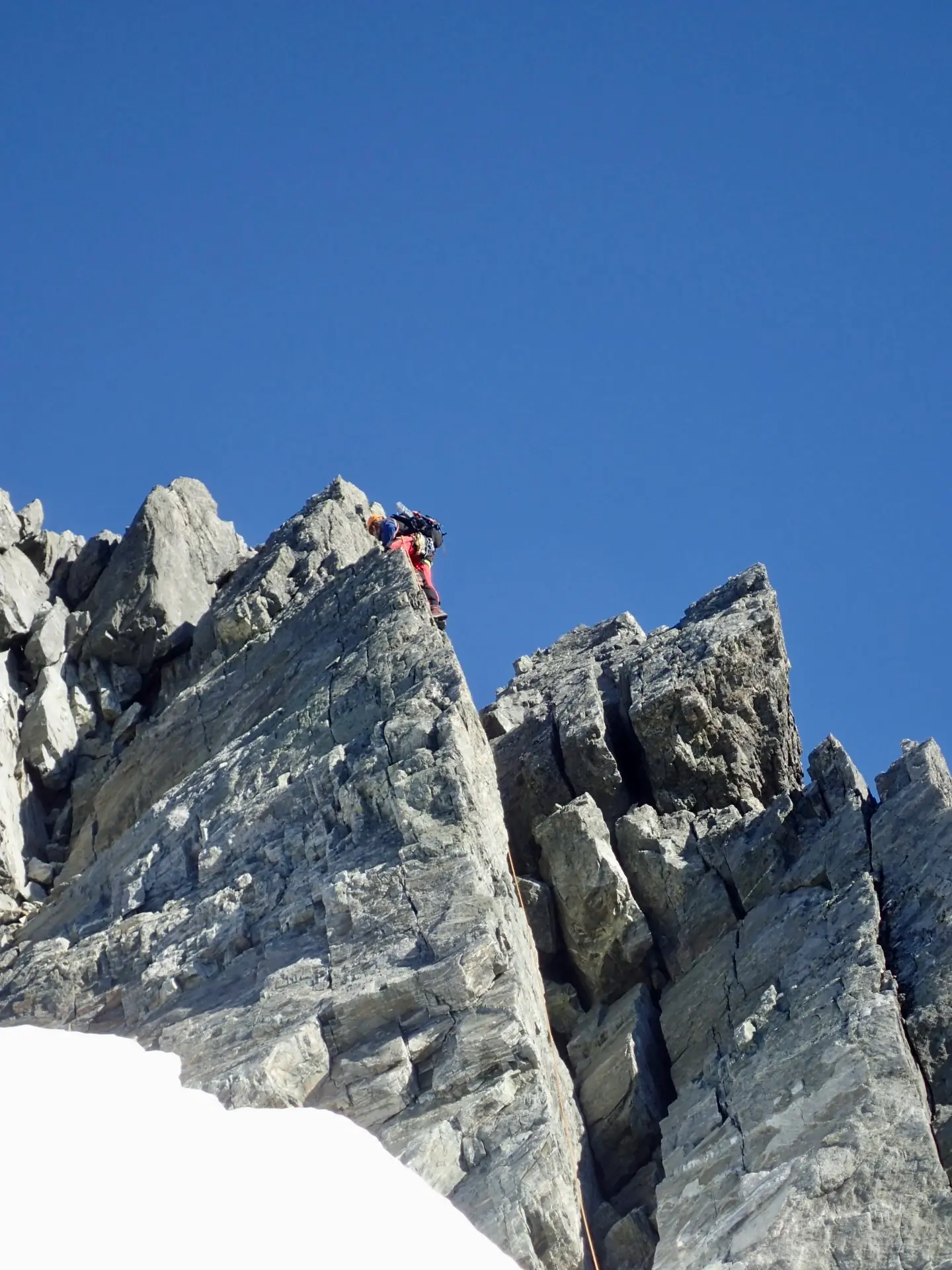
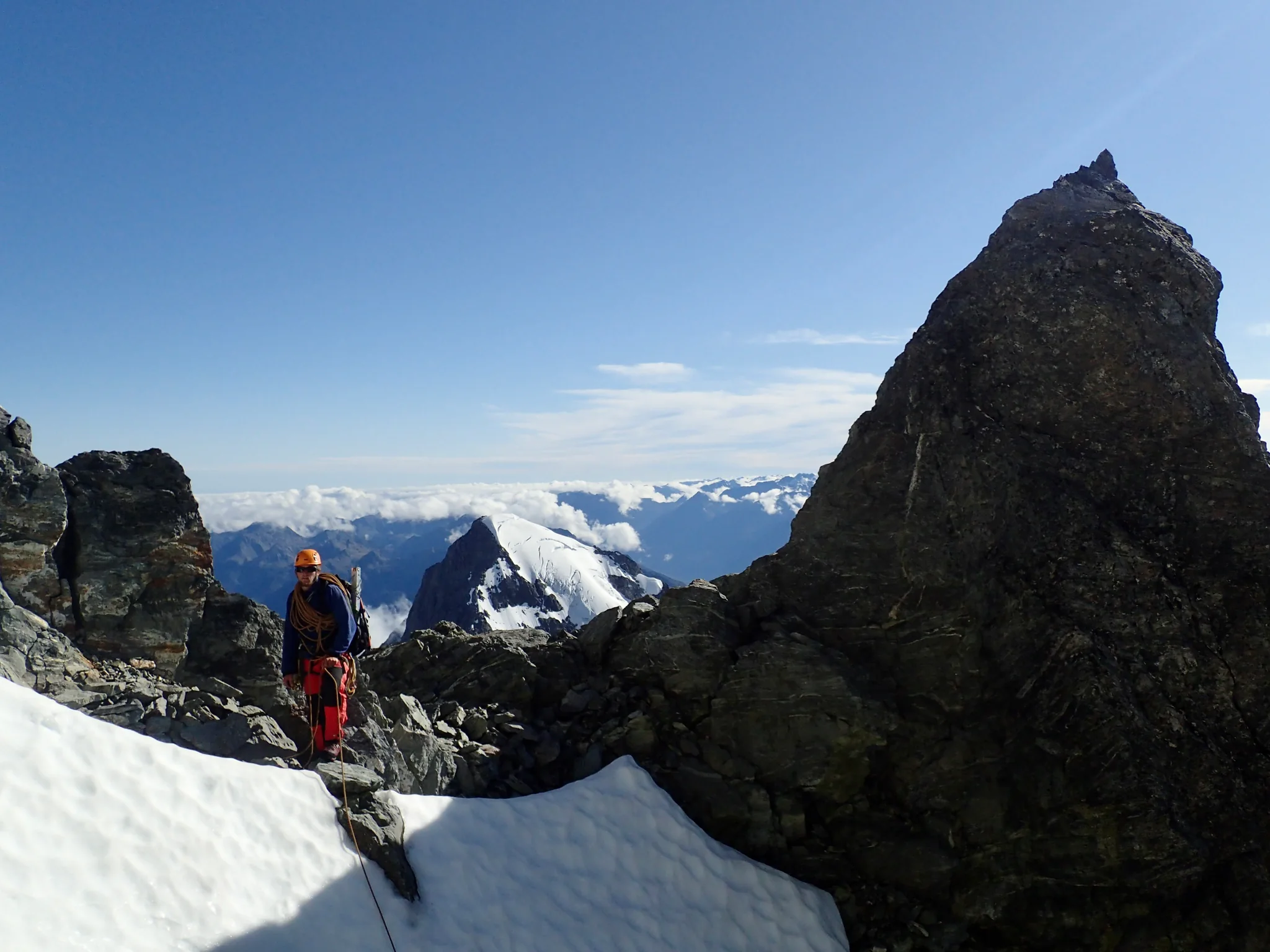
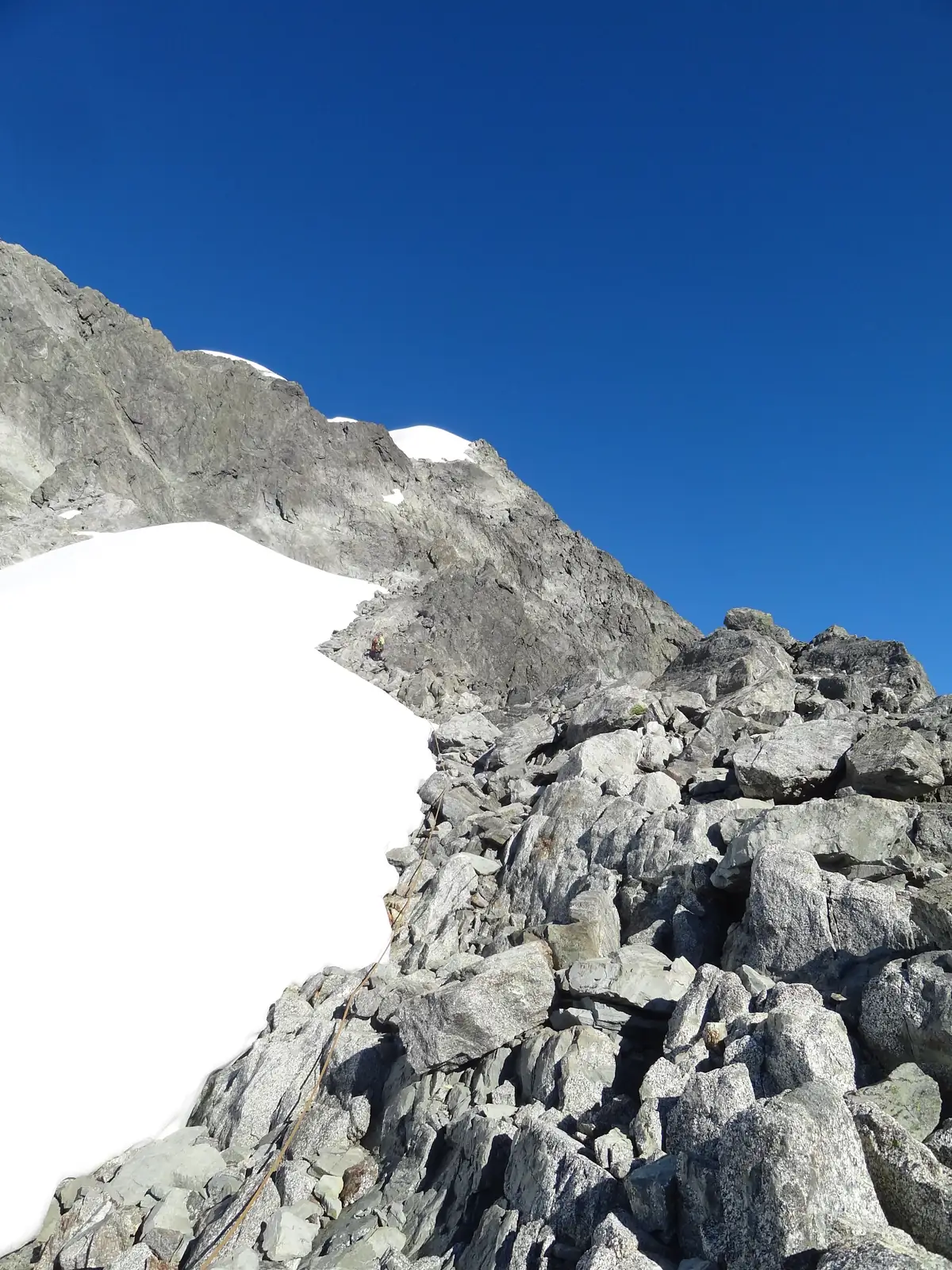
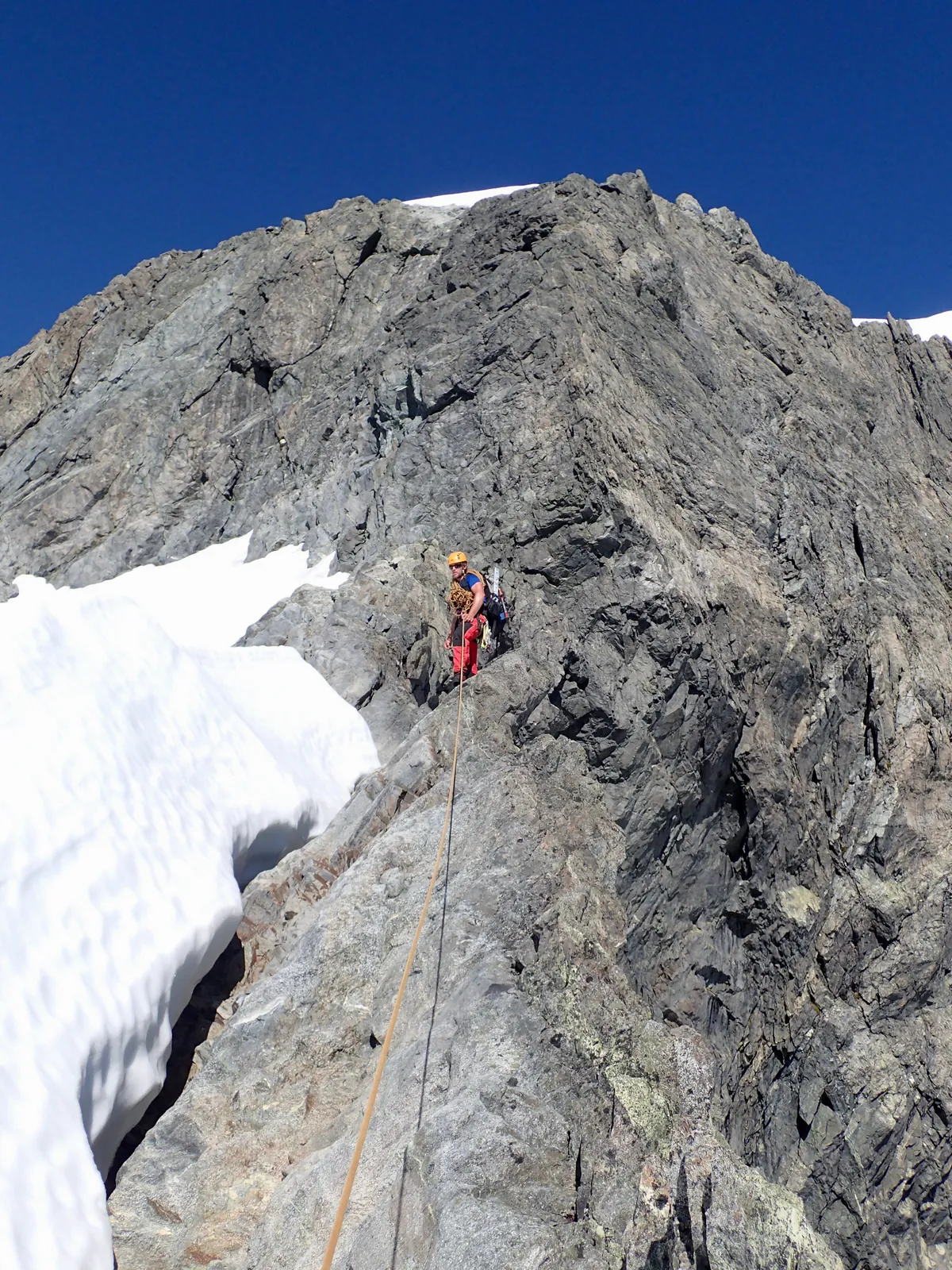
At first, the ridge was broad and the snow nicely frozen. Further on, it turned to rock. Time for trad climbing. A few fairly easy pitches, with the hardest sections graded 13 in New Zealand, roughly IV+ on the UIAA scale. The difficulty mainly came from climbing in stiff crampon-compatible boots, with packs full of gear.
On the rock pitches, I felt a familiar texture beneath my fingers, and smelled lichens warmed by the sun. Just like climbing on Tatra granite. Add those lakes in glacial cirques, reminding me of Morskie Oko, Czarny Staw and the Valley of Five Lakes. For a moment, I felt as though I was back in the Tatras.
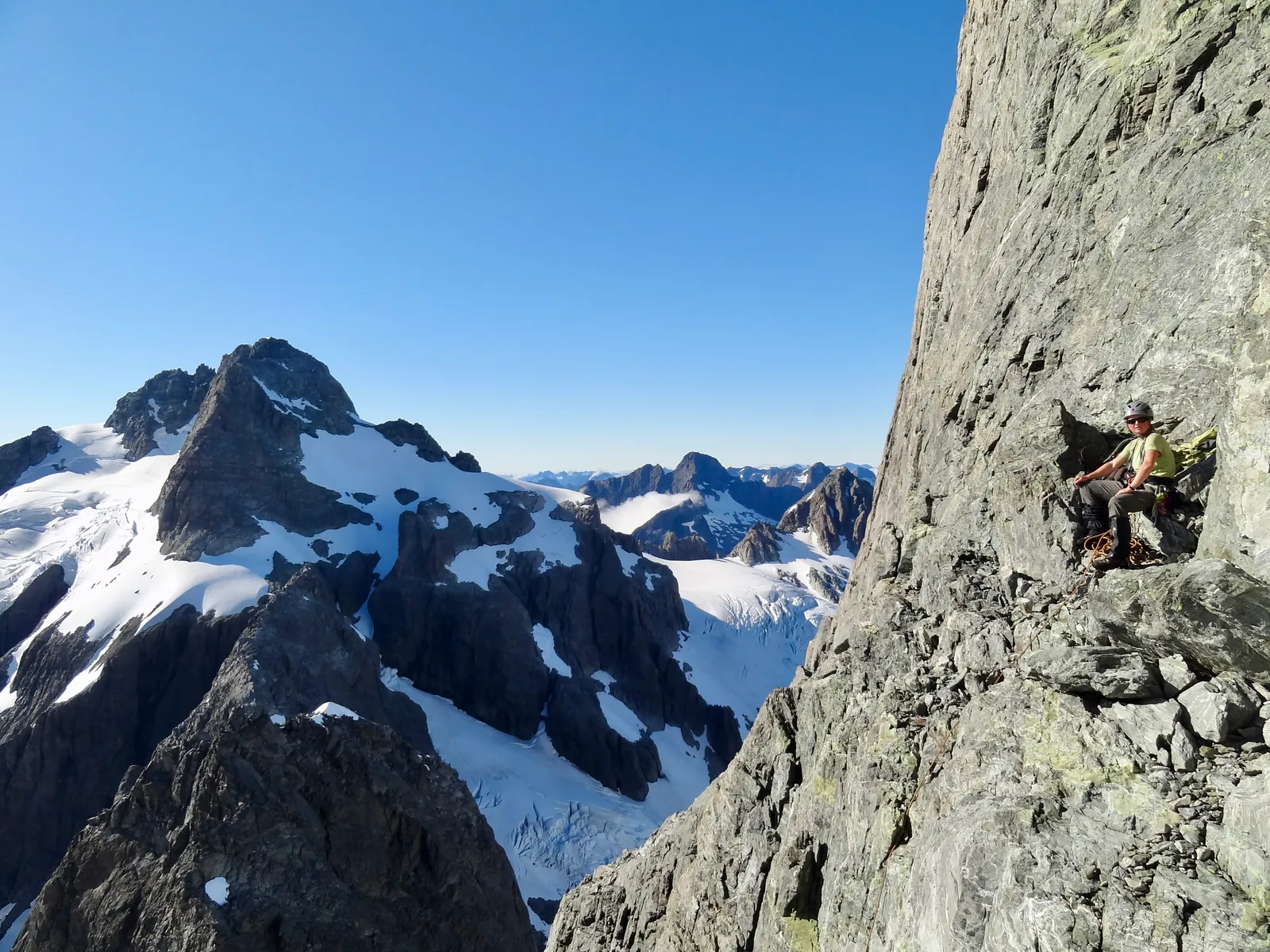
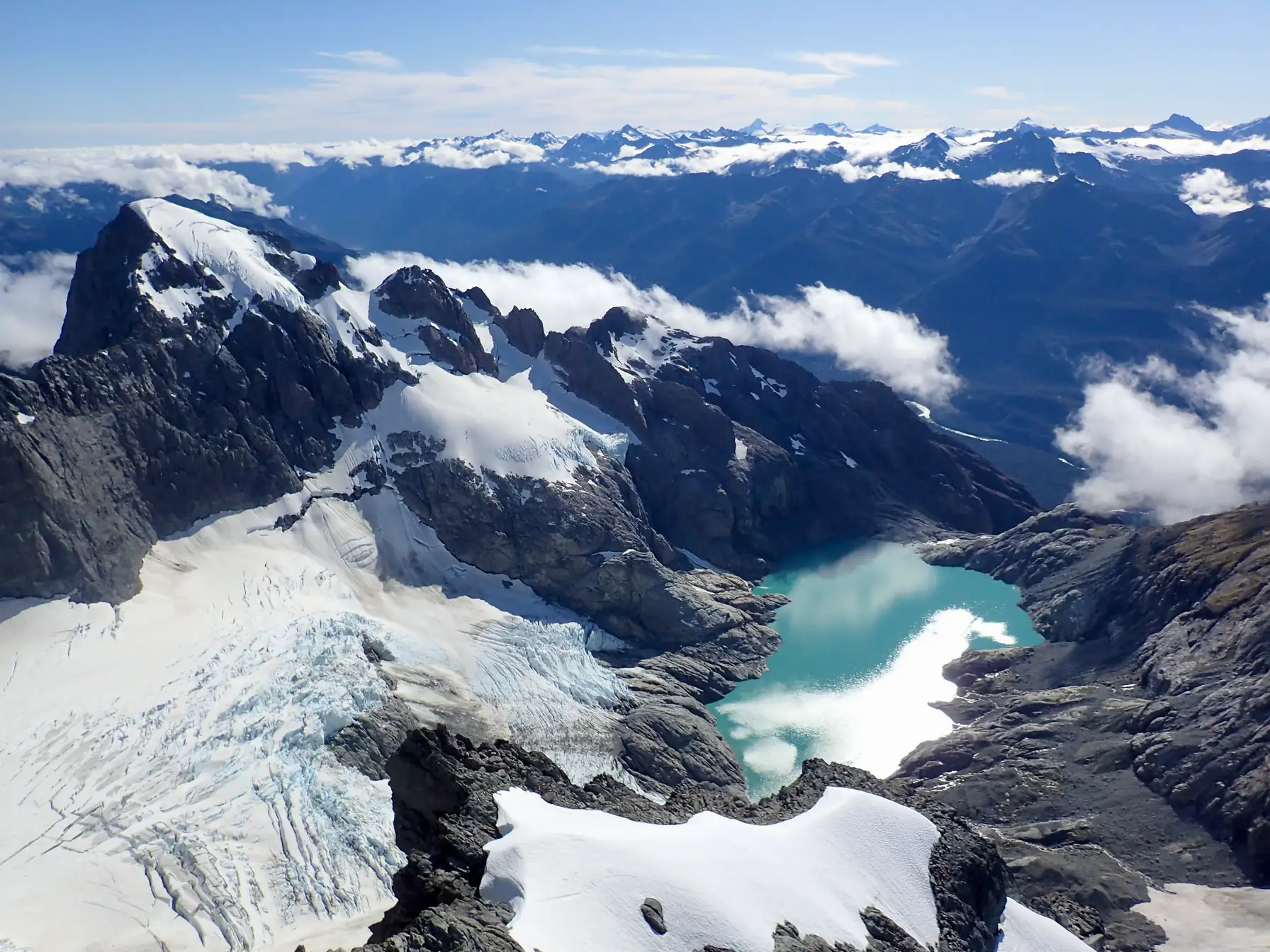
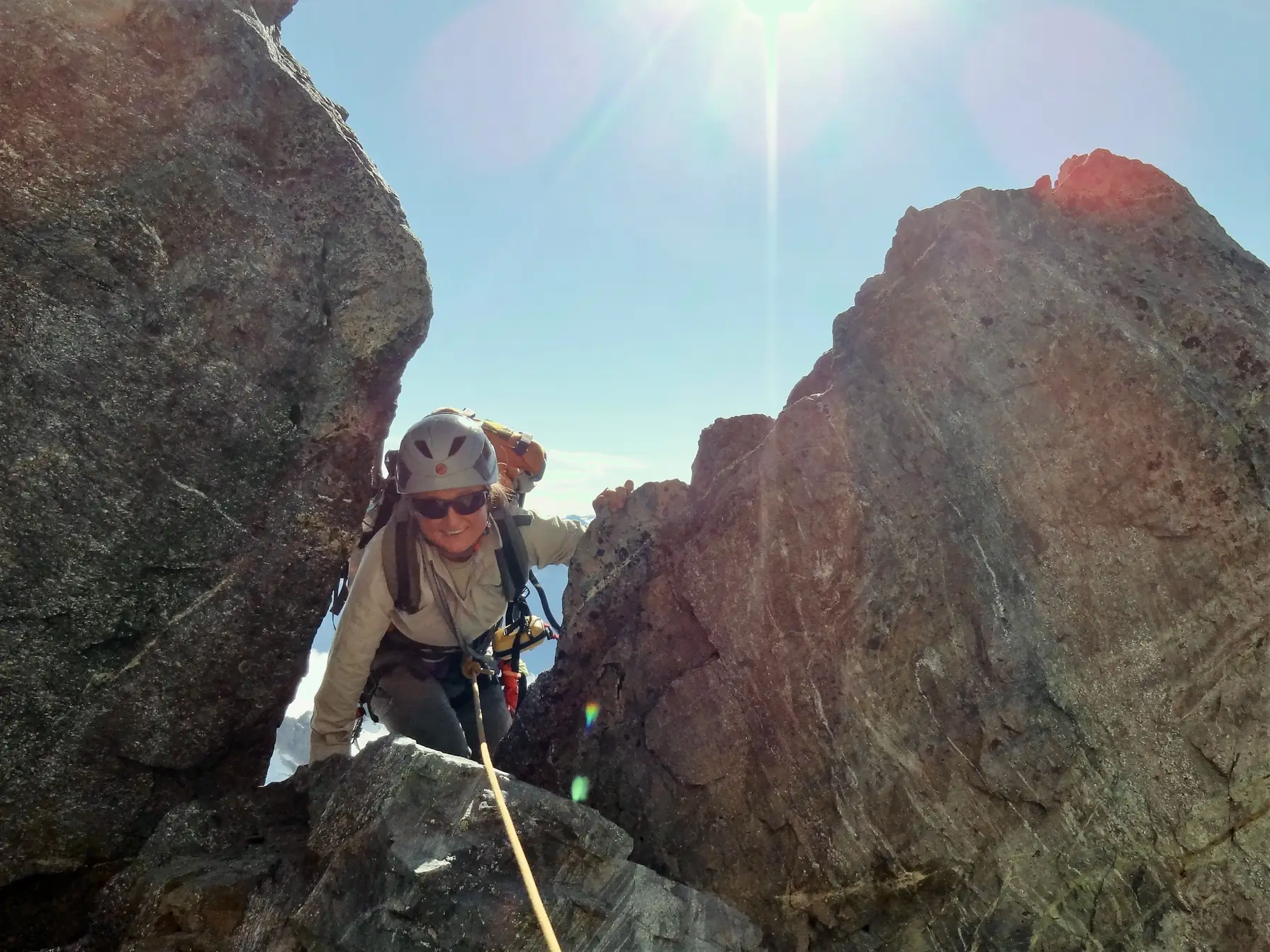
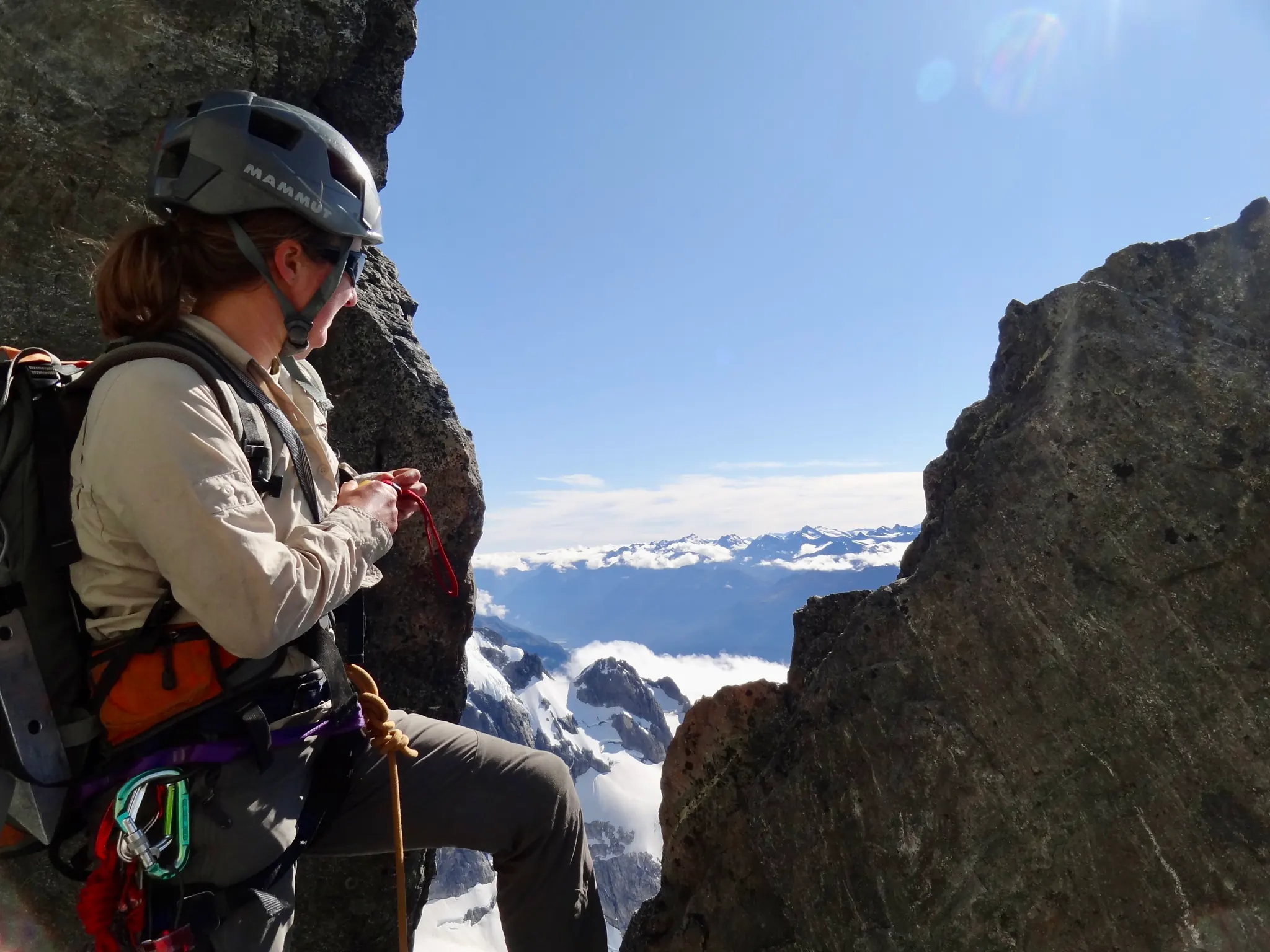
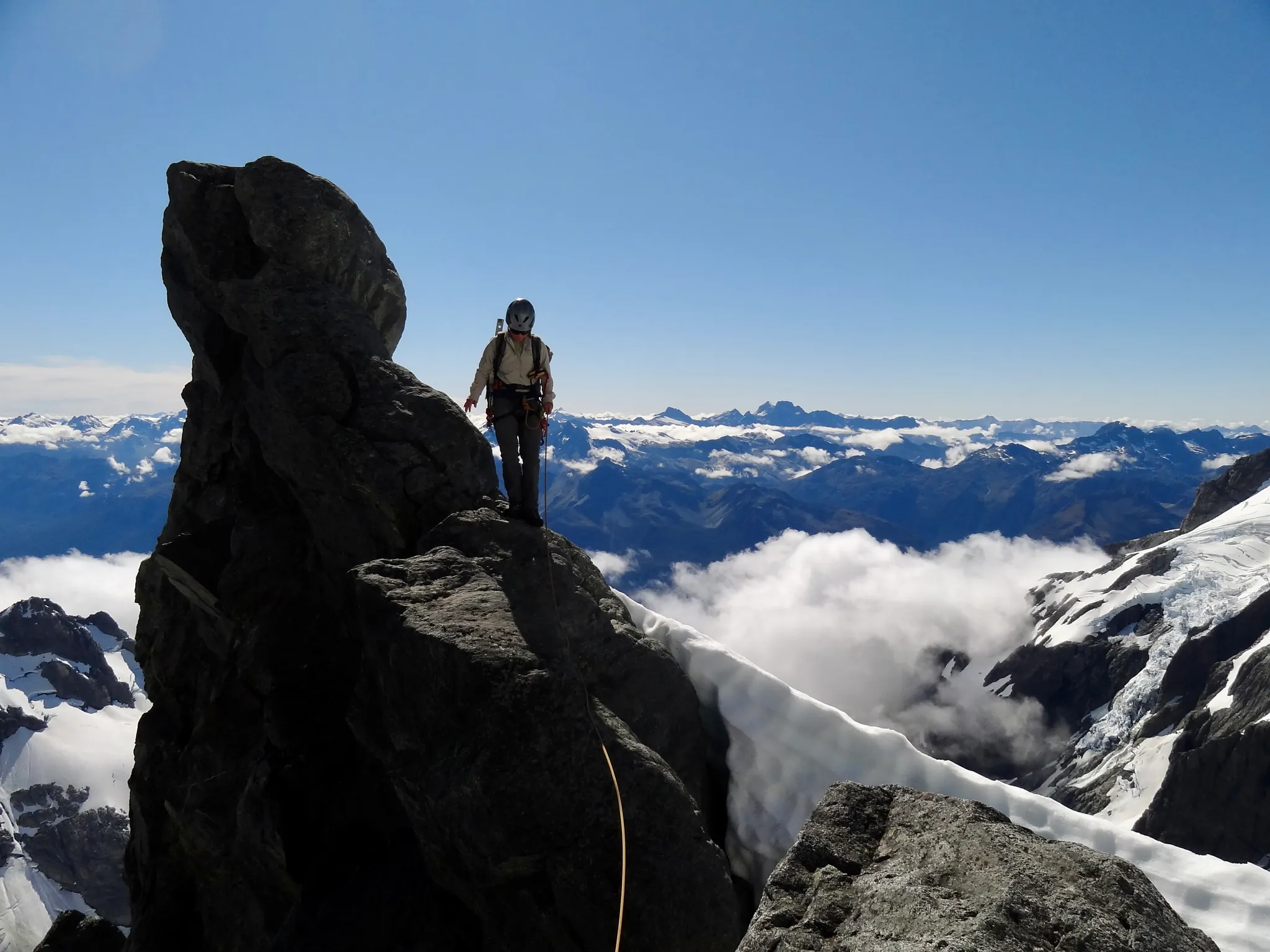
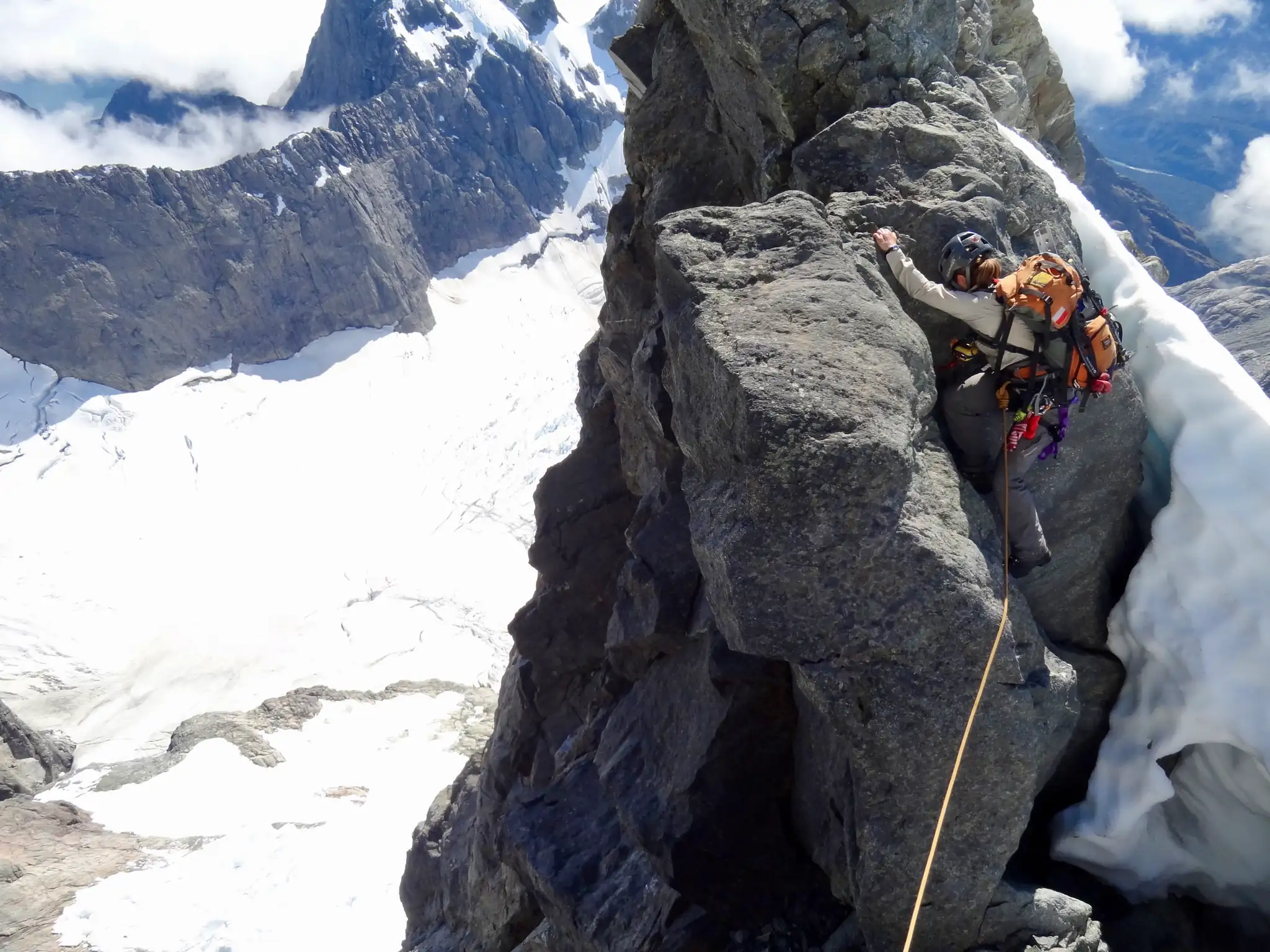
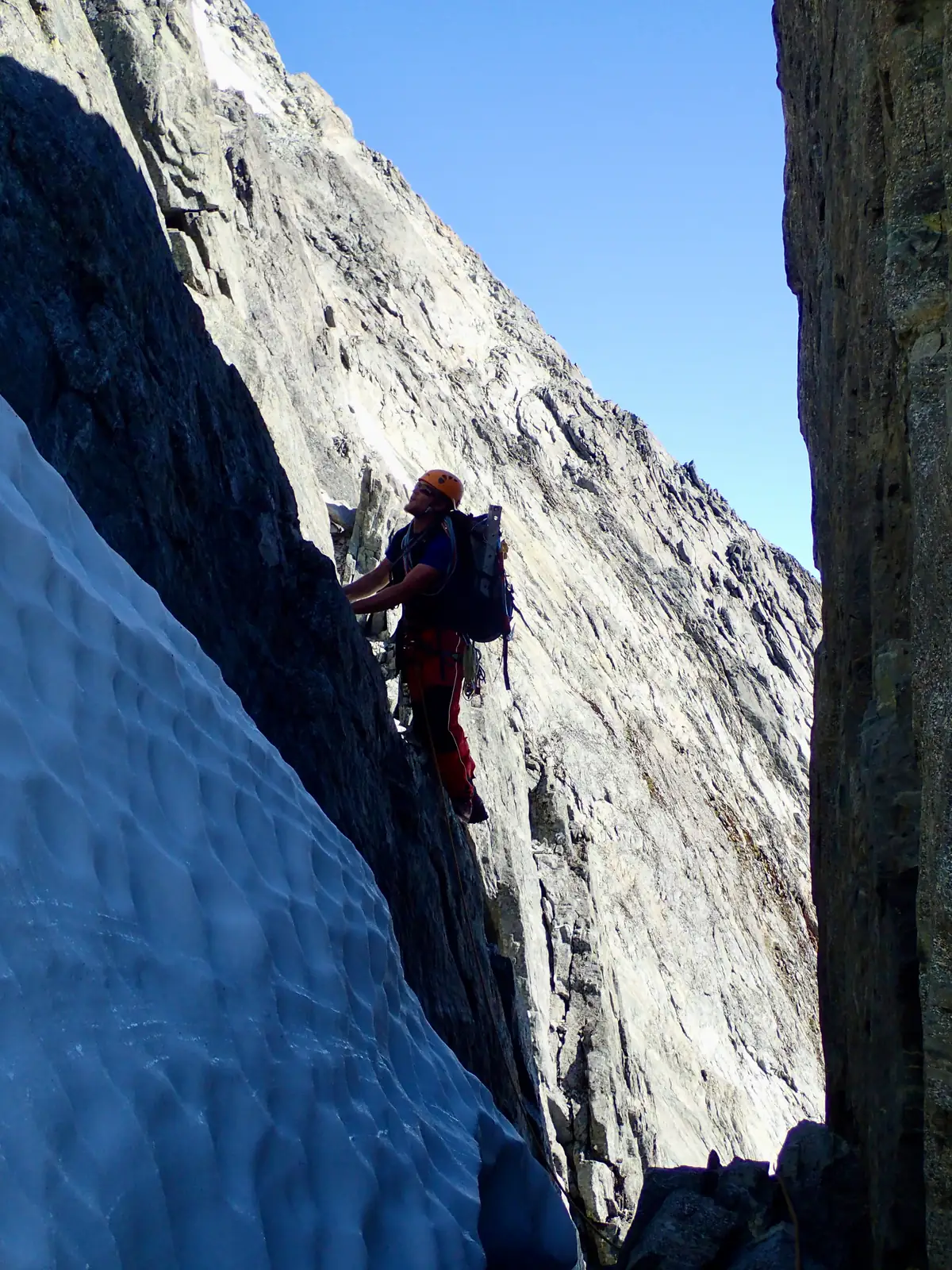
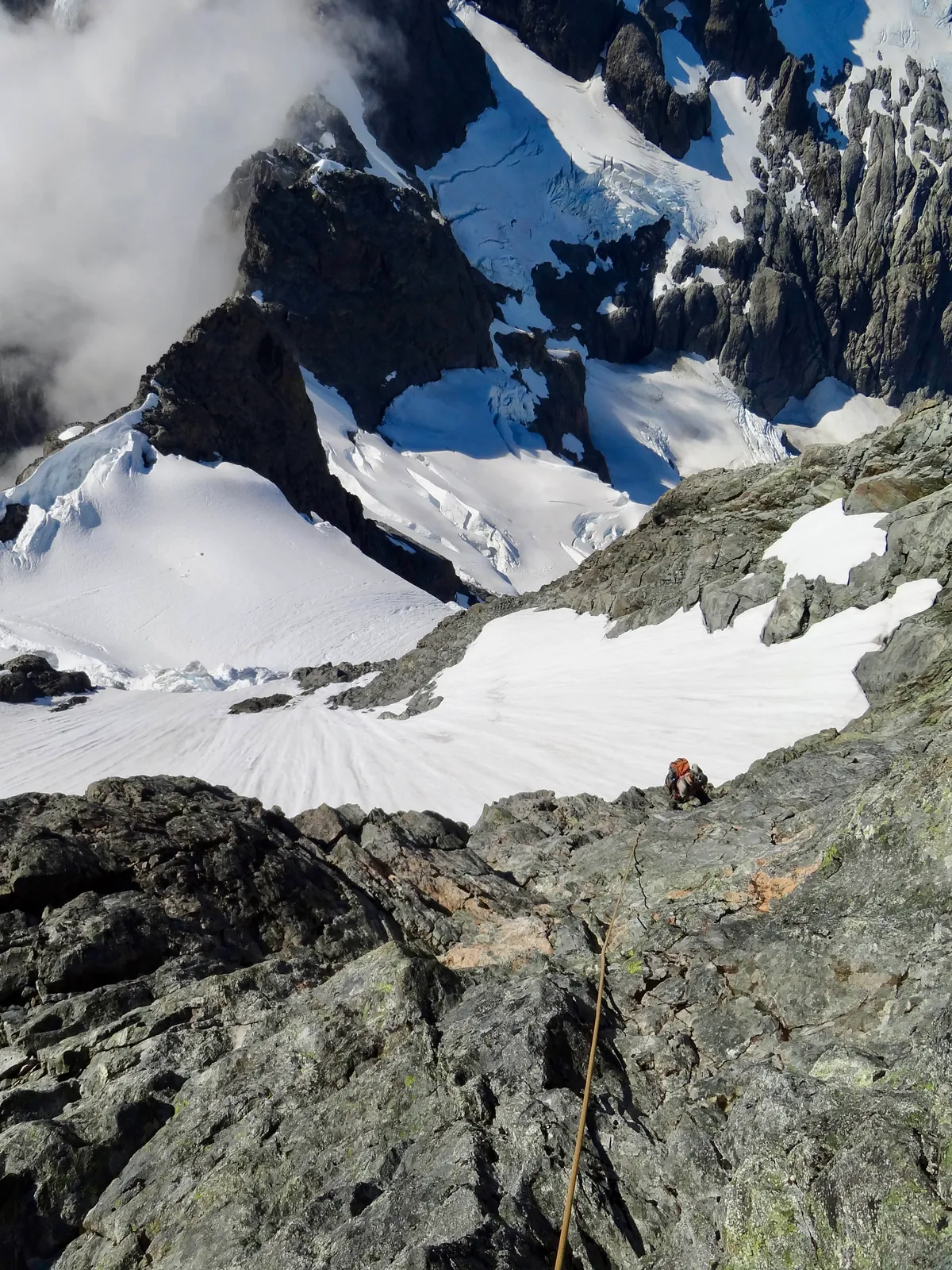
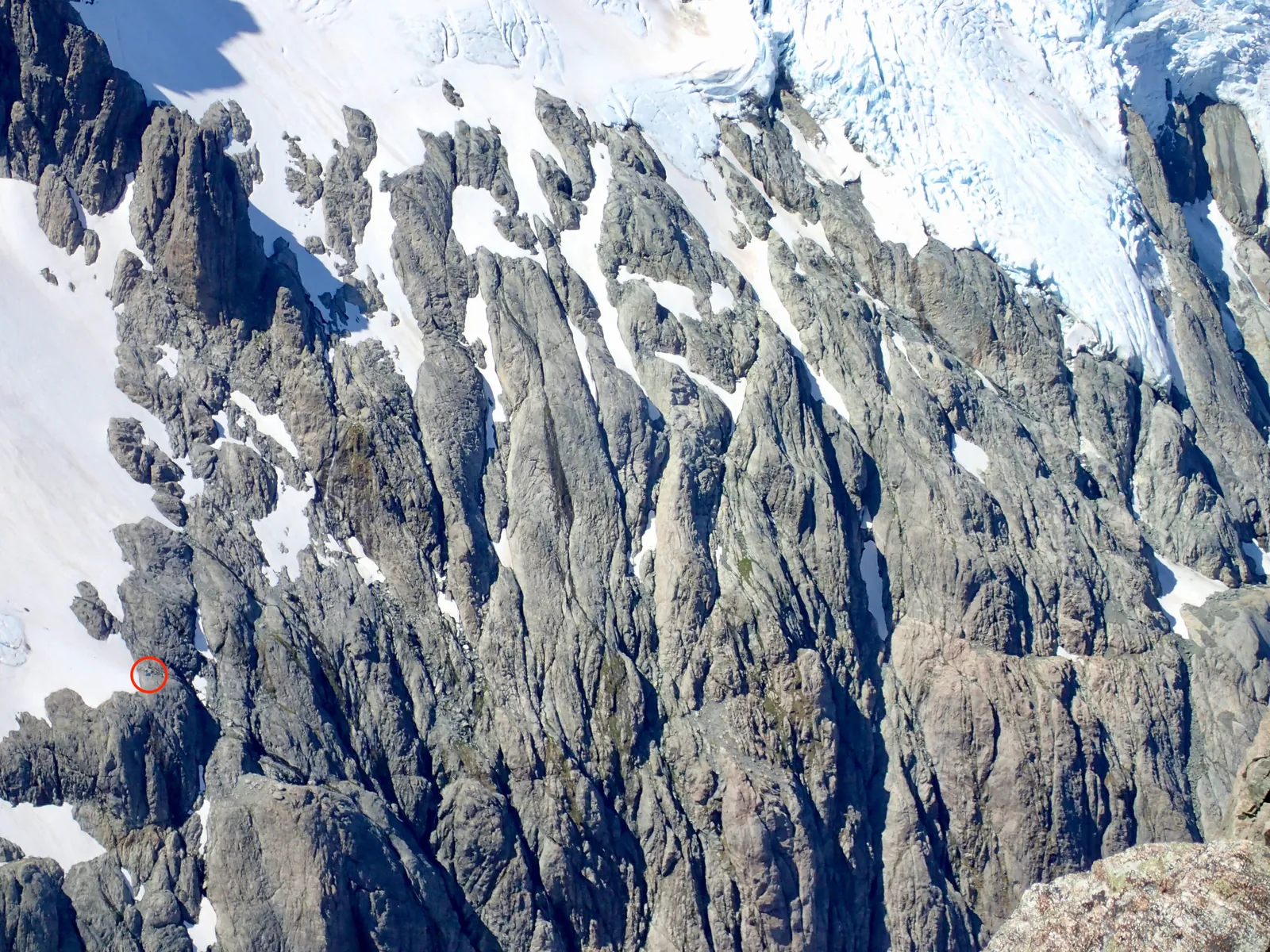
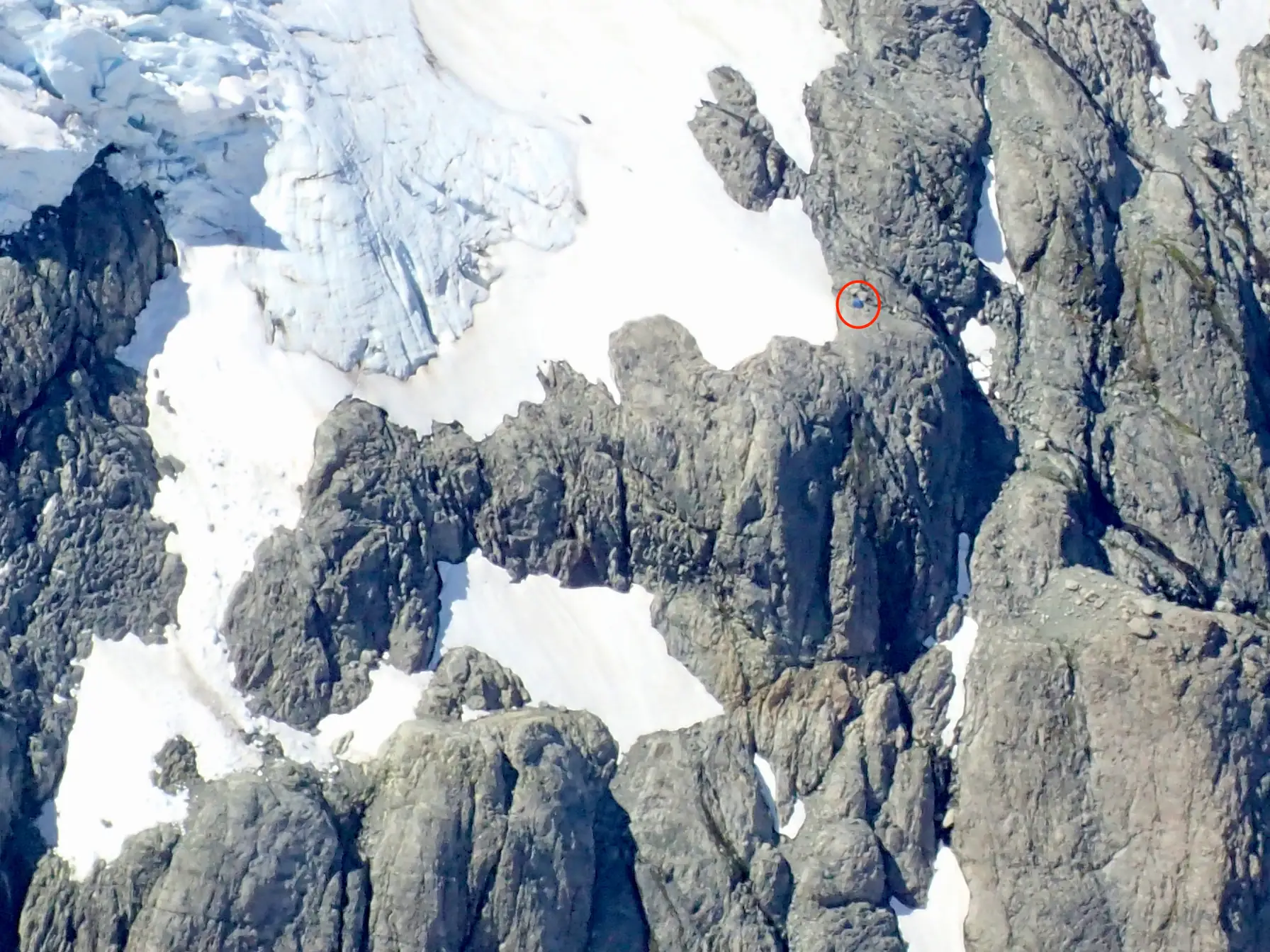
From here, we had a good view of where our camp should have been. Seen from this angle, the vertical rock wall hardly looked like somewhere you could pitch a tent. We couldn’t spot it with the naked eye. Only in a photo did we find a blue dot against the grey rock. Hard to believe we’d spent the night there!
An ice axe as a spirit level
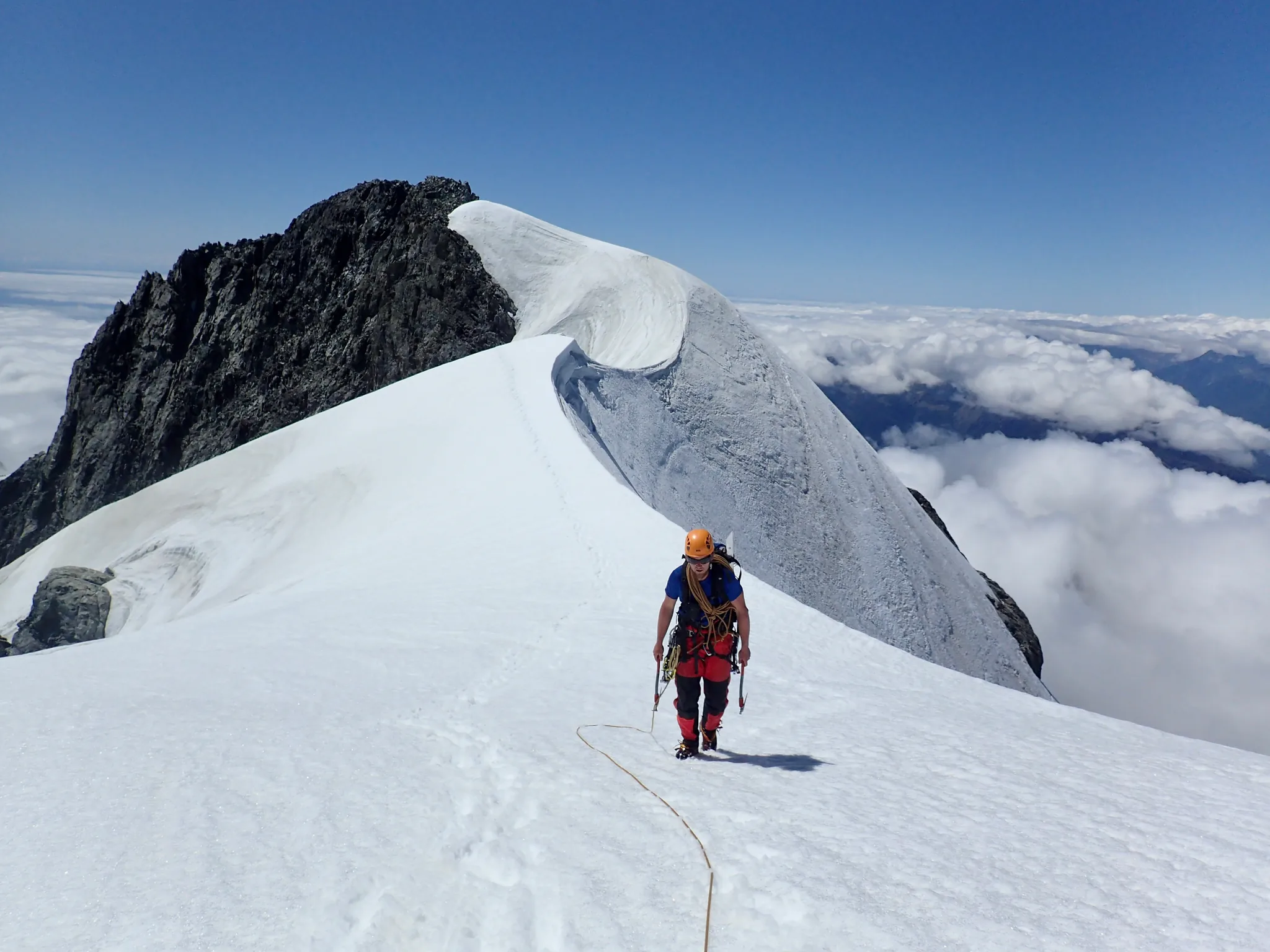
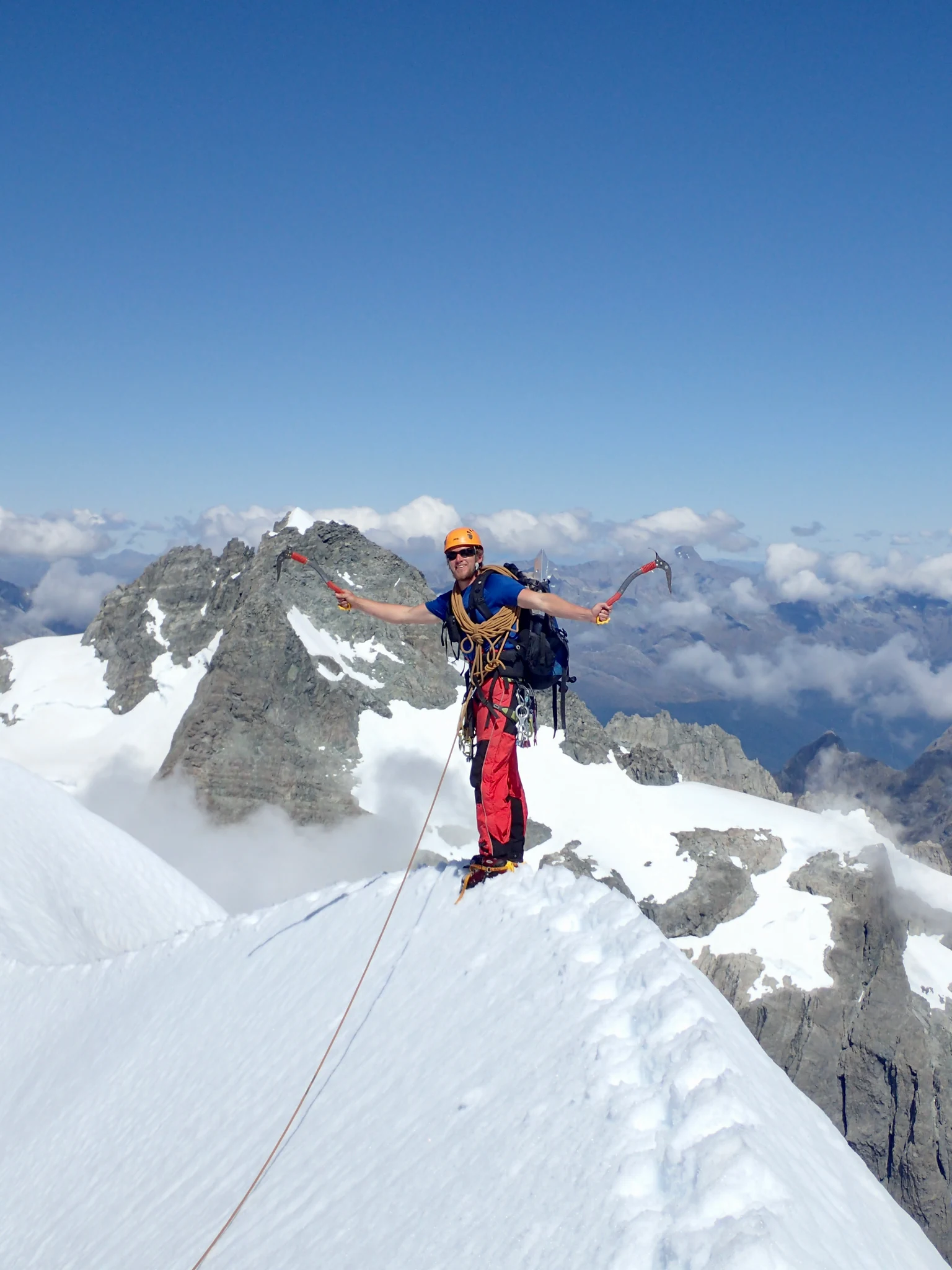
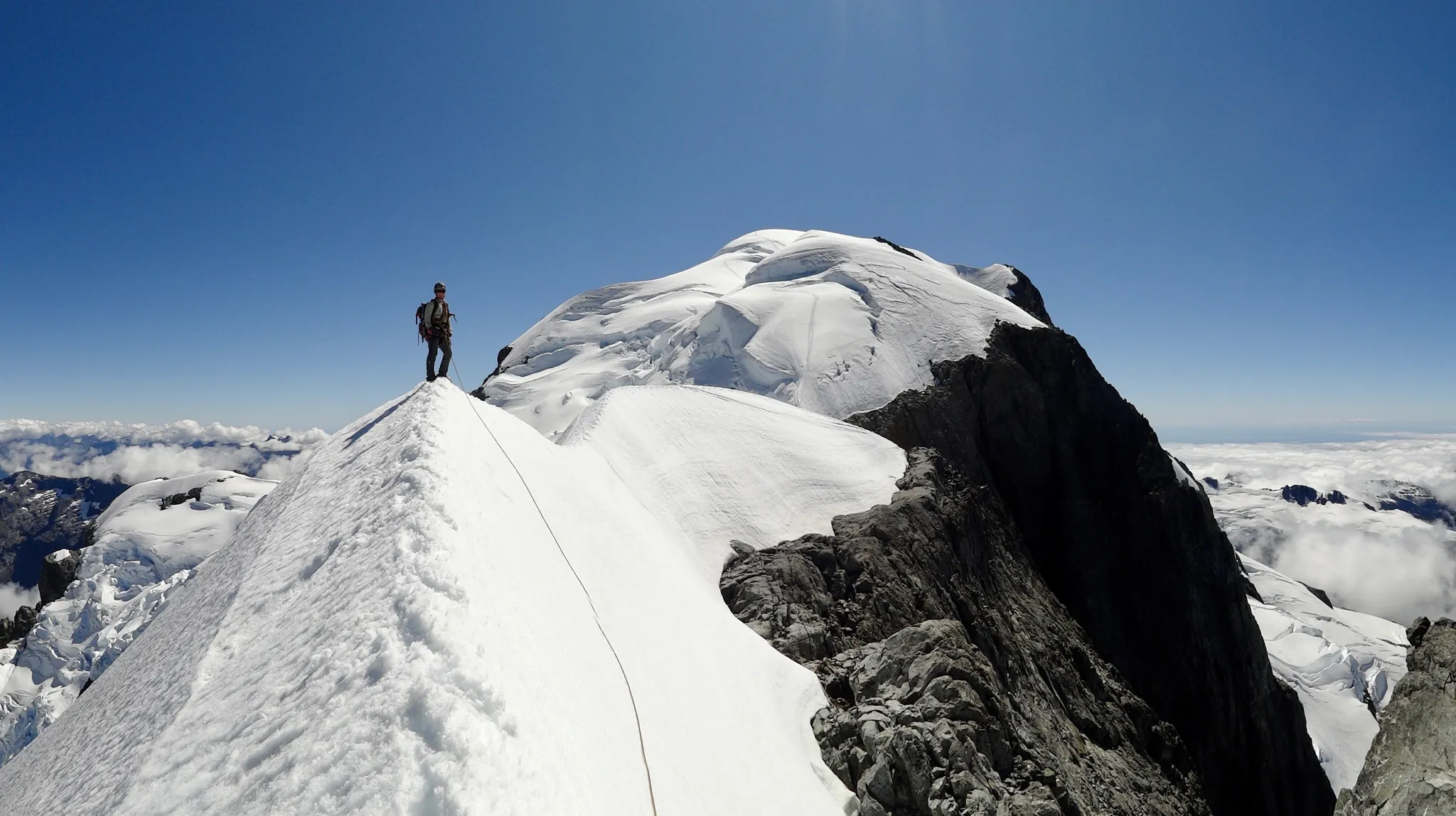
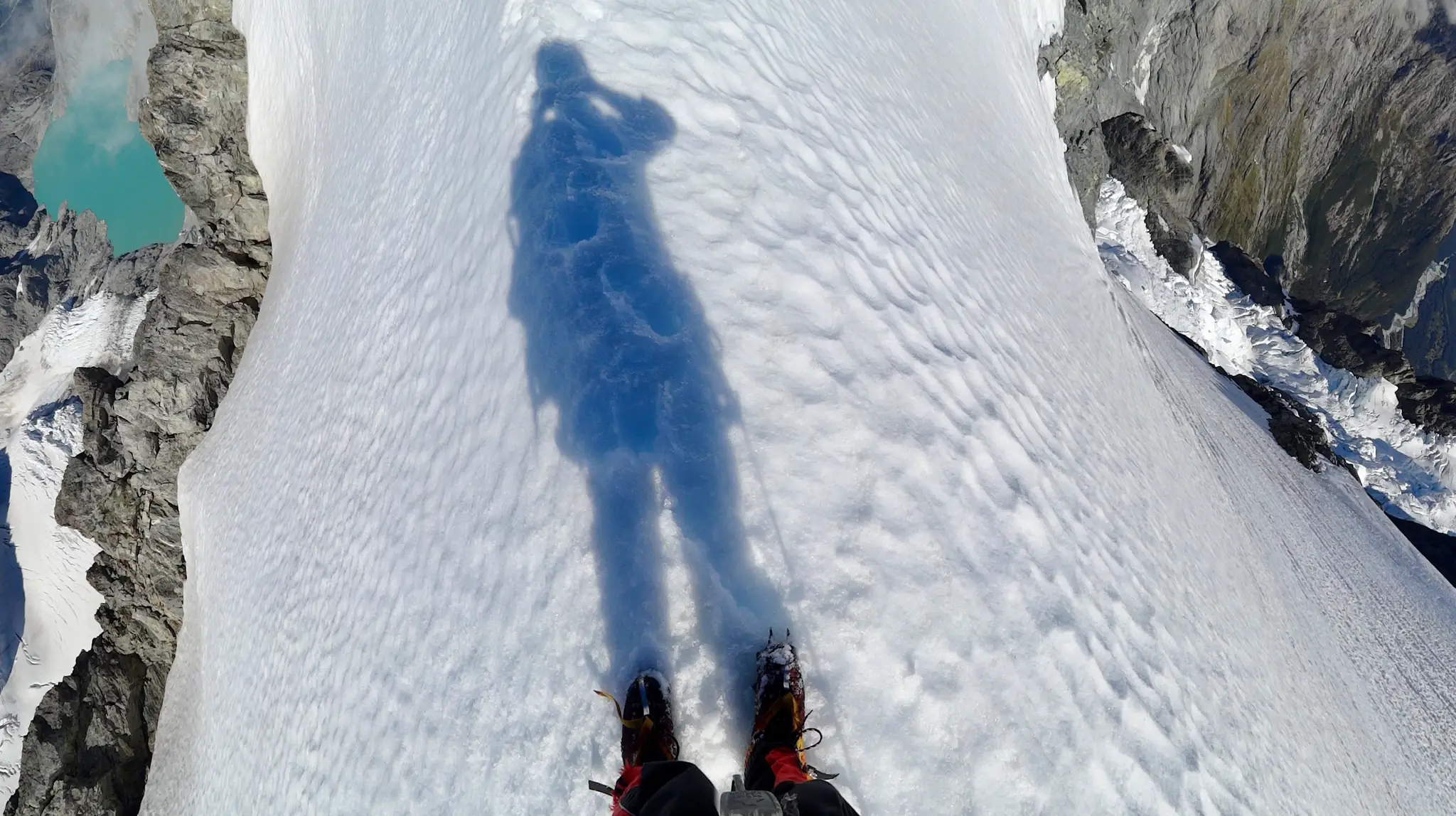
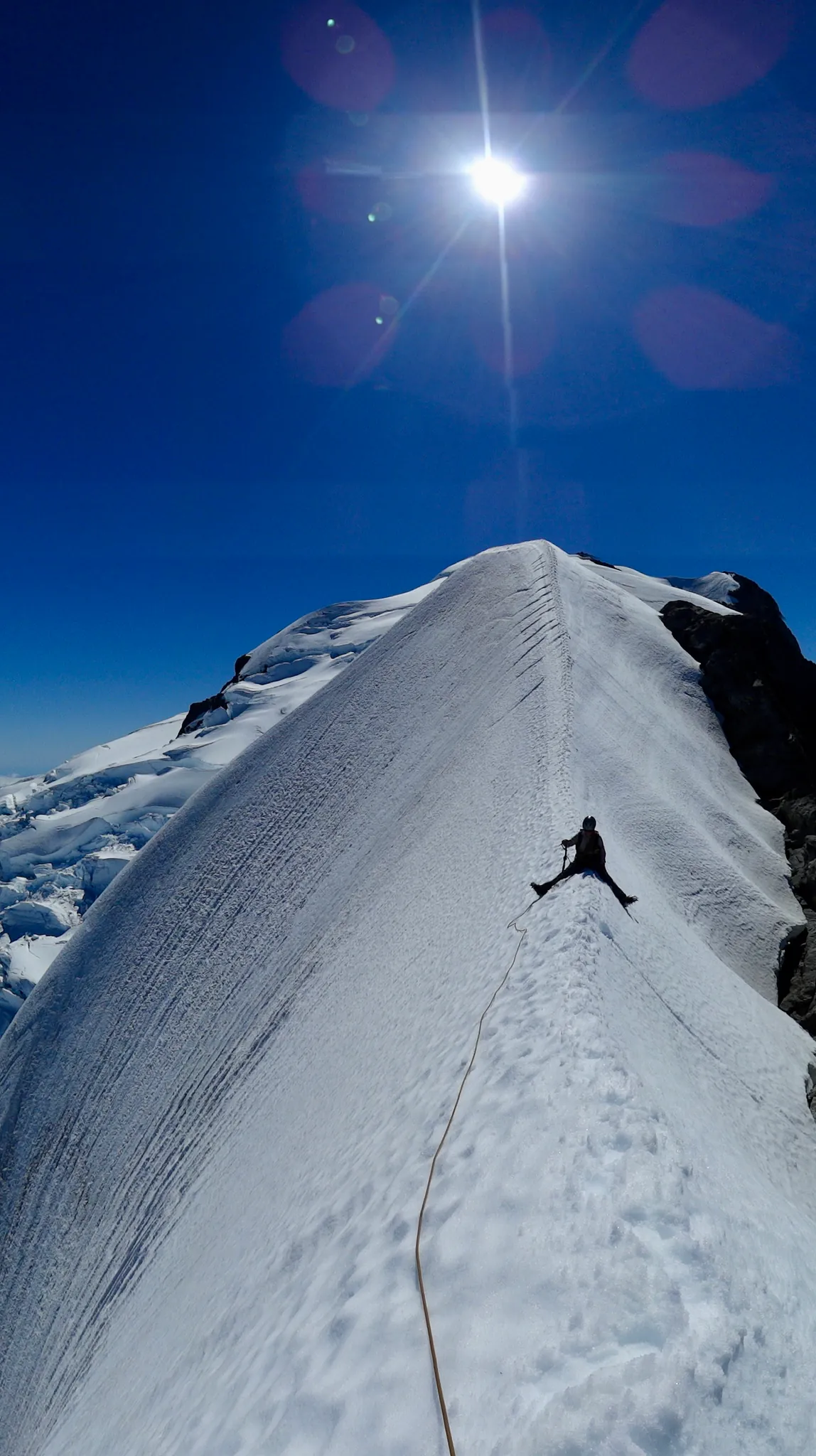
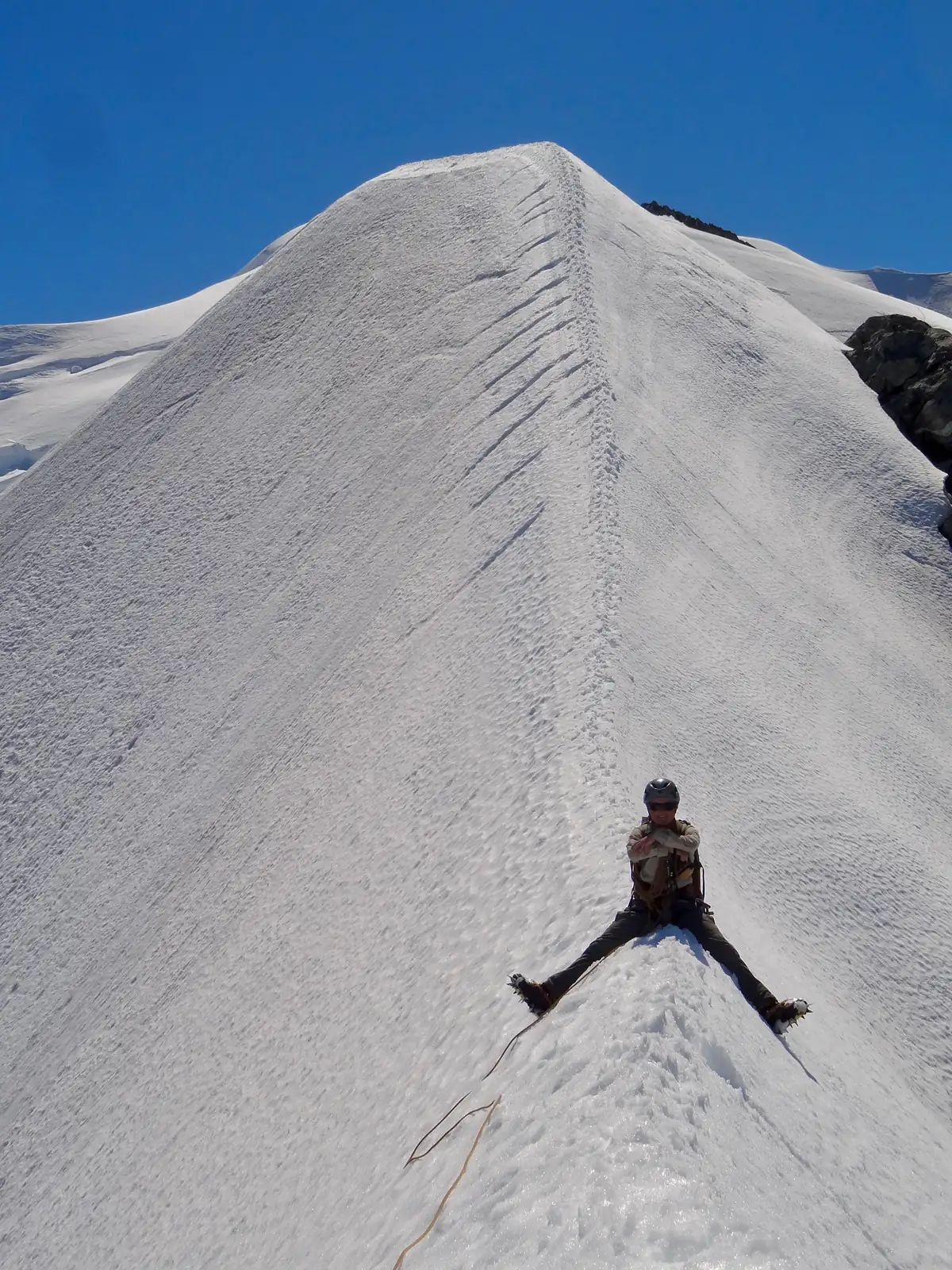
On the main ridge, we had to put one foot directly in front of the other. It was razor-thin. The frozen snow held our crampons well, though. We moved efficiently but carefully, climbing together on the rope. The sun shone brightly, and a light breeze blew.
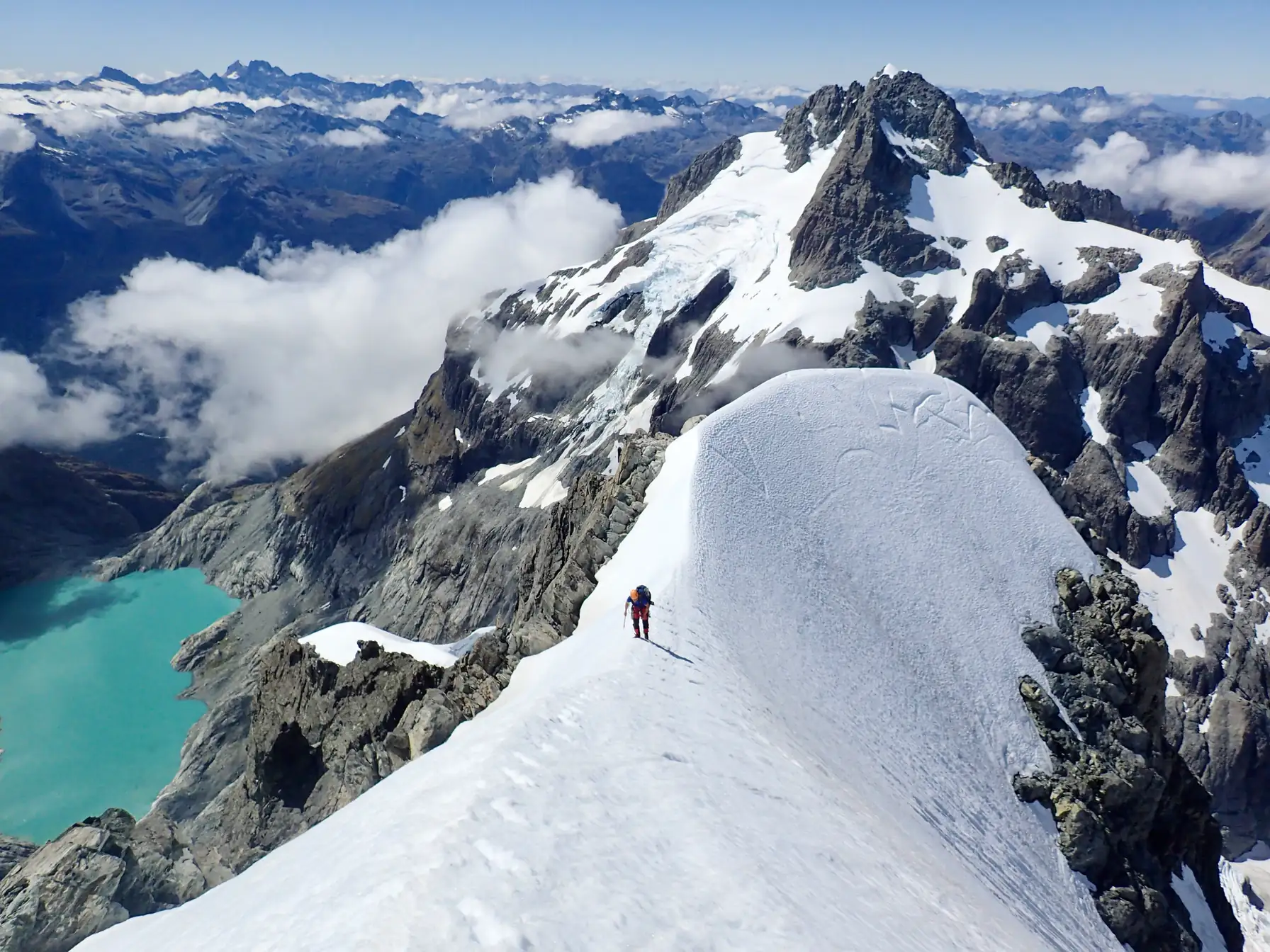
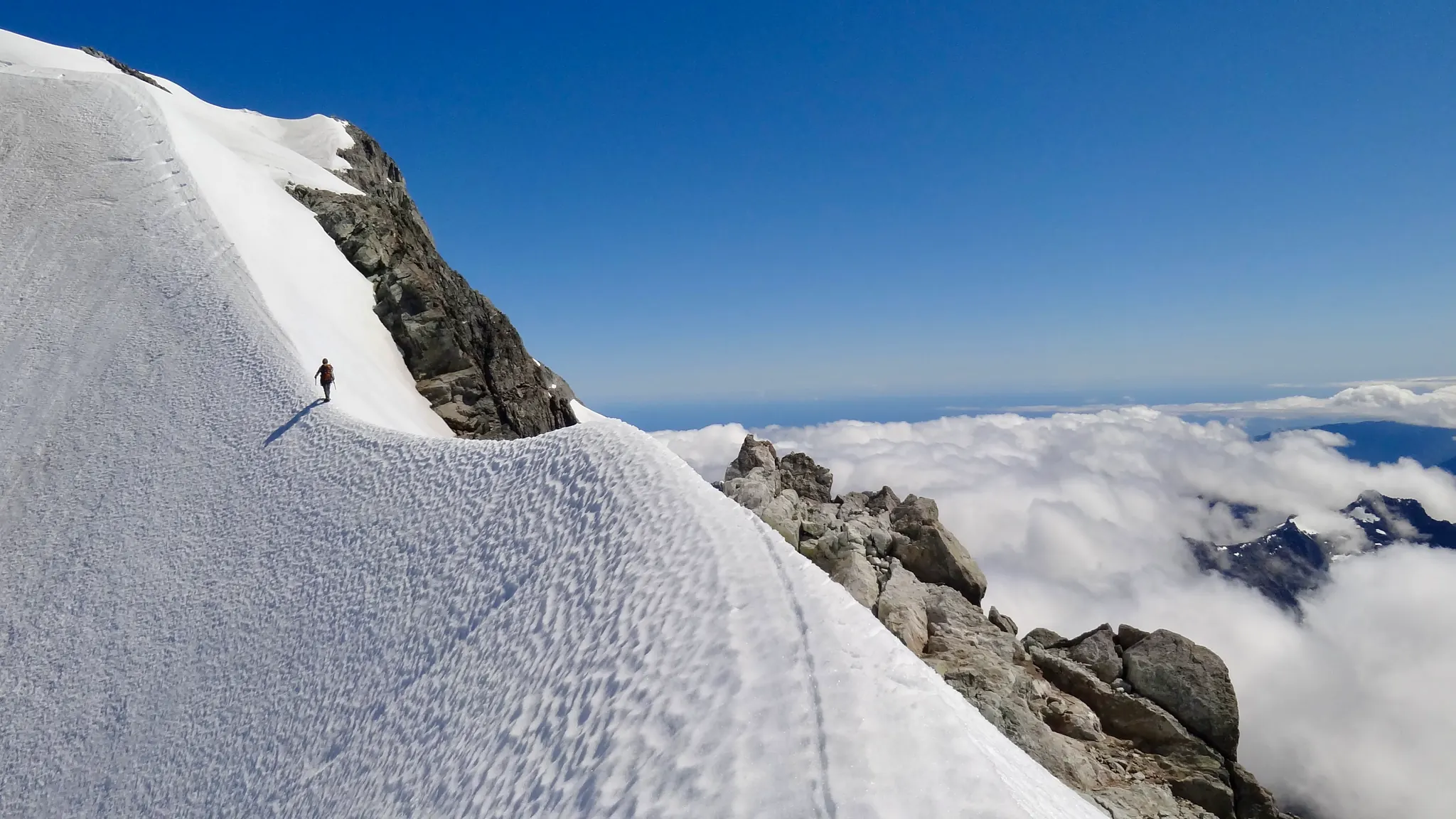
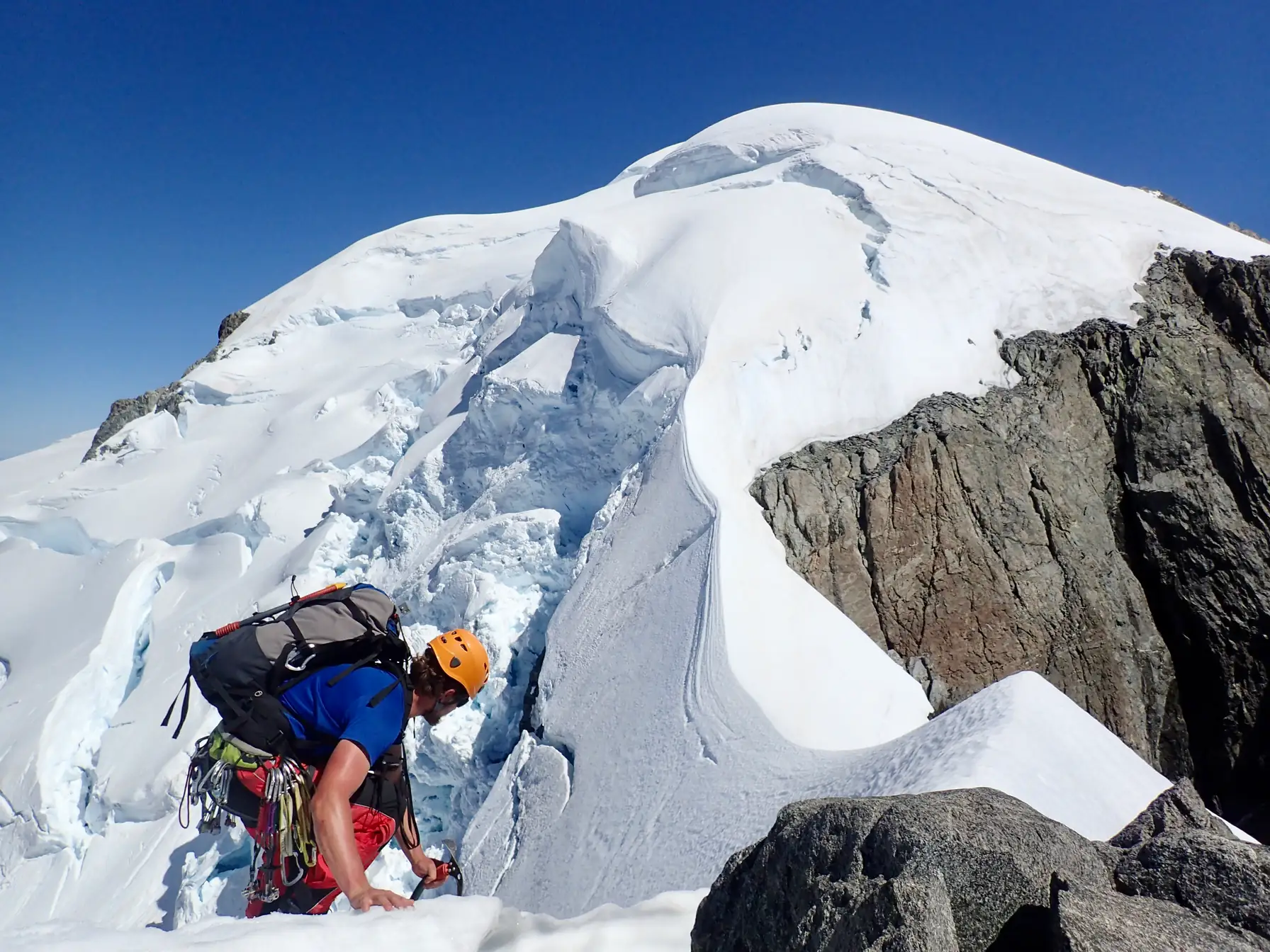
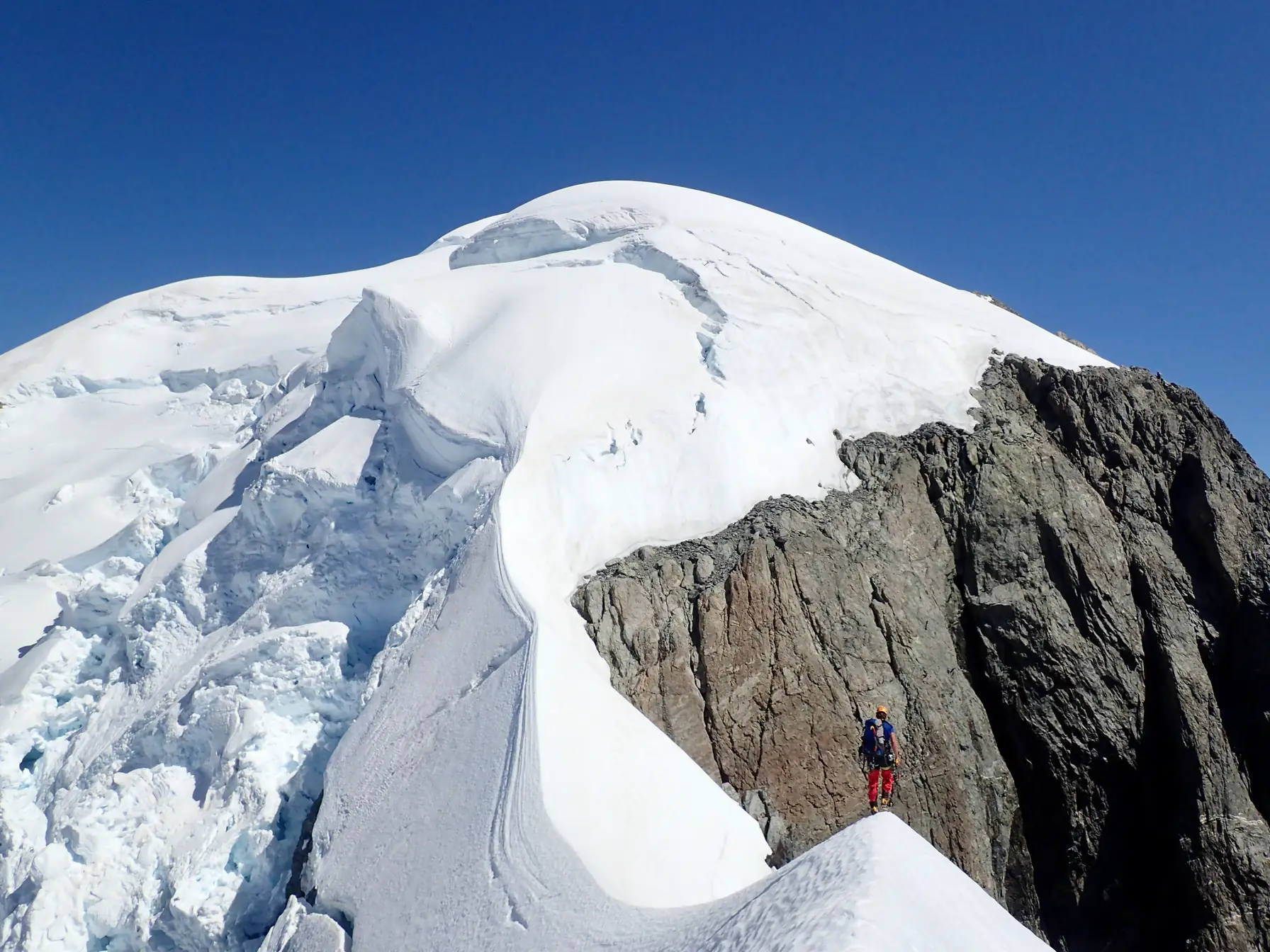
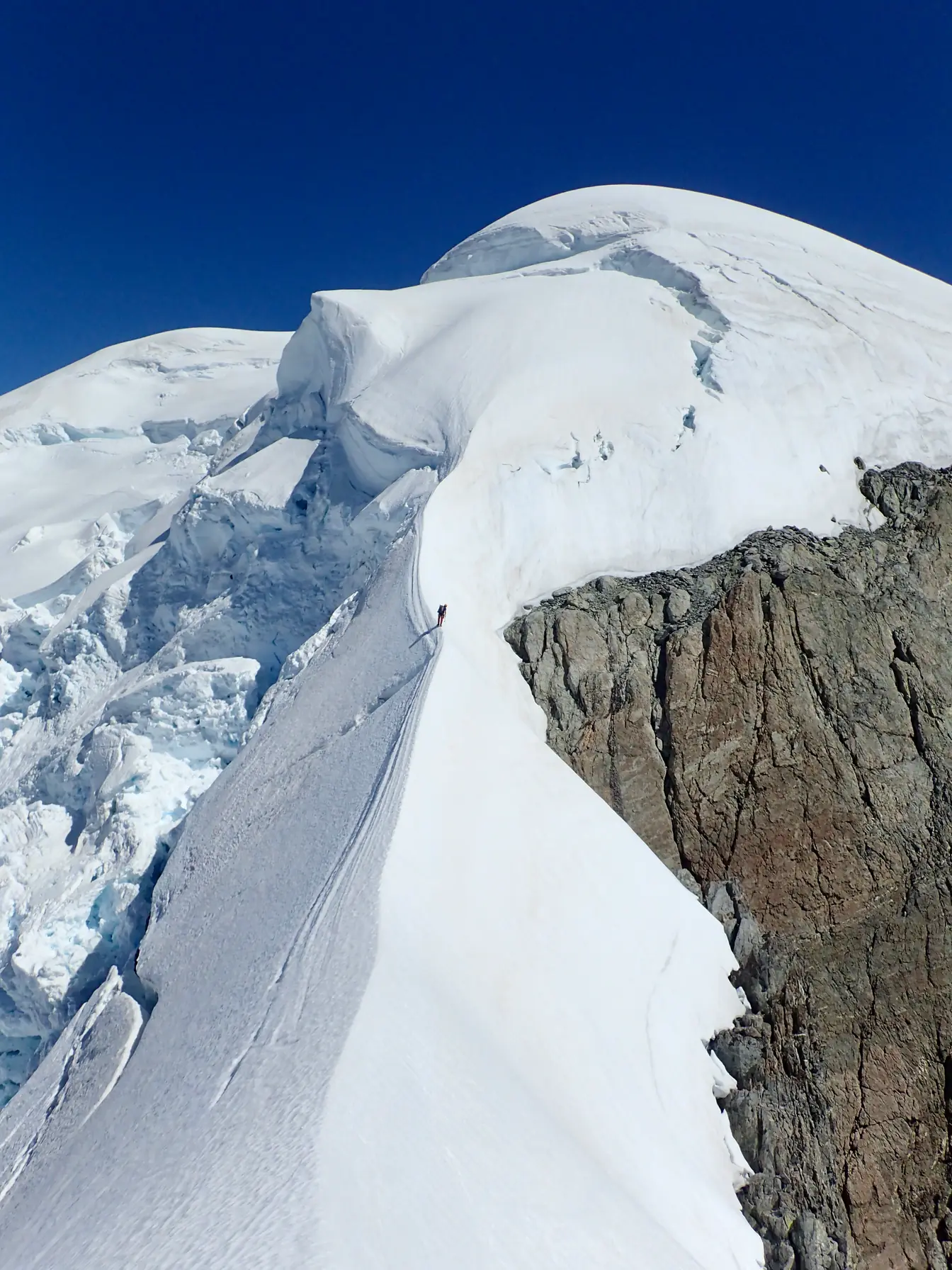
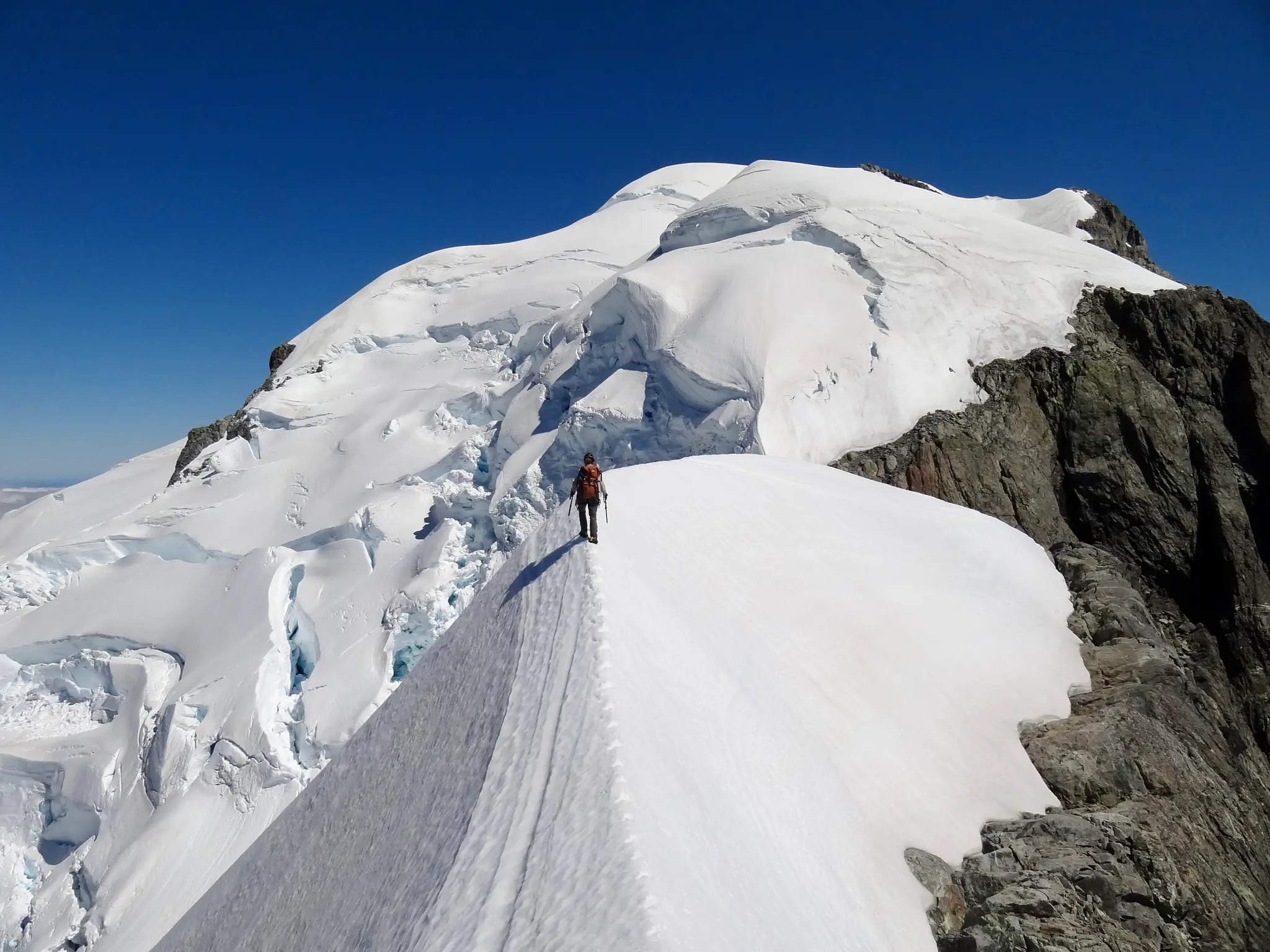
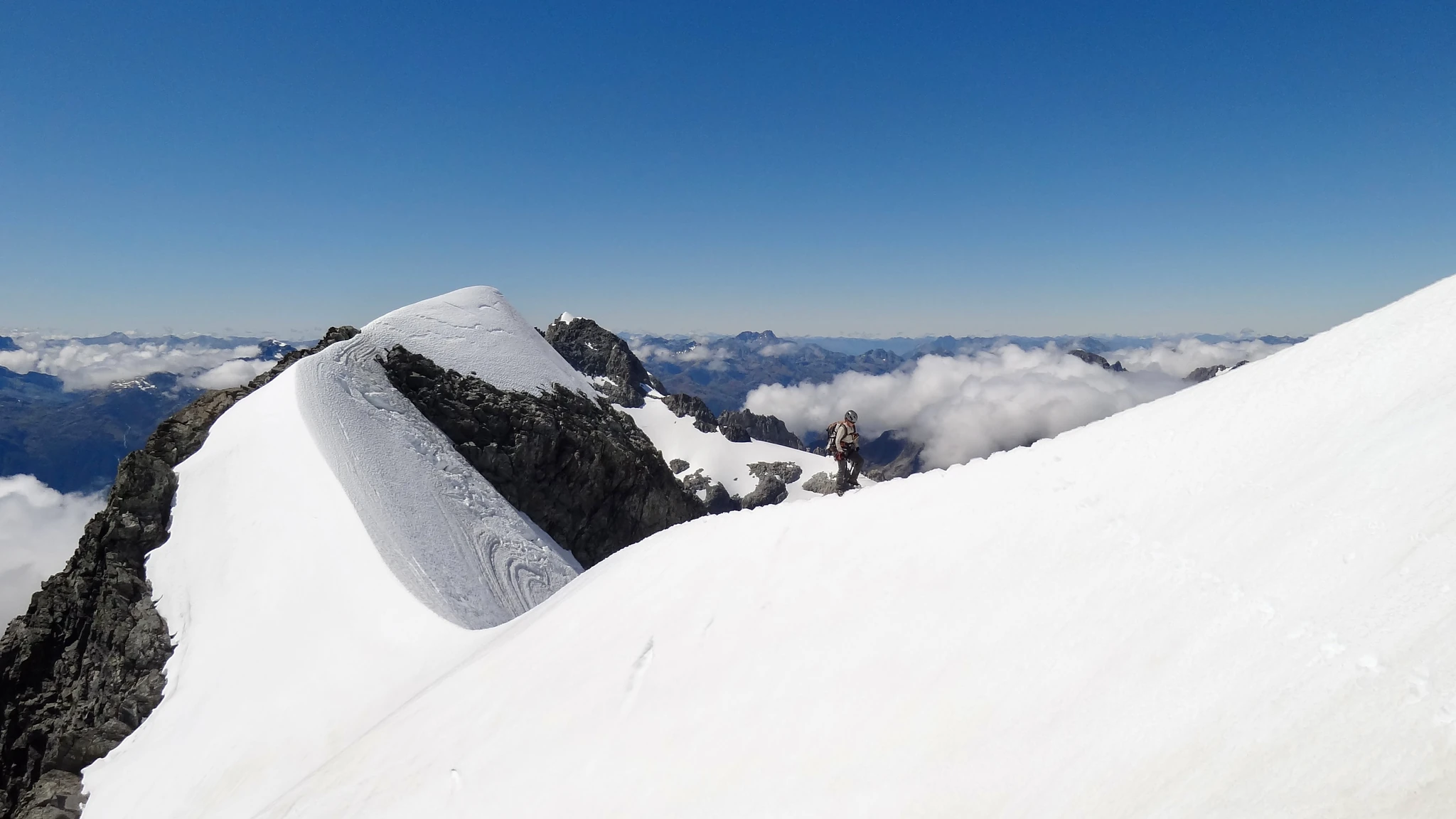
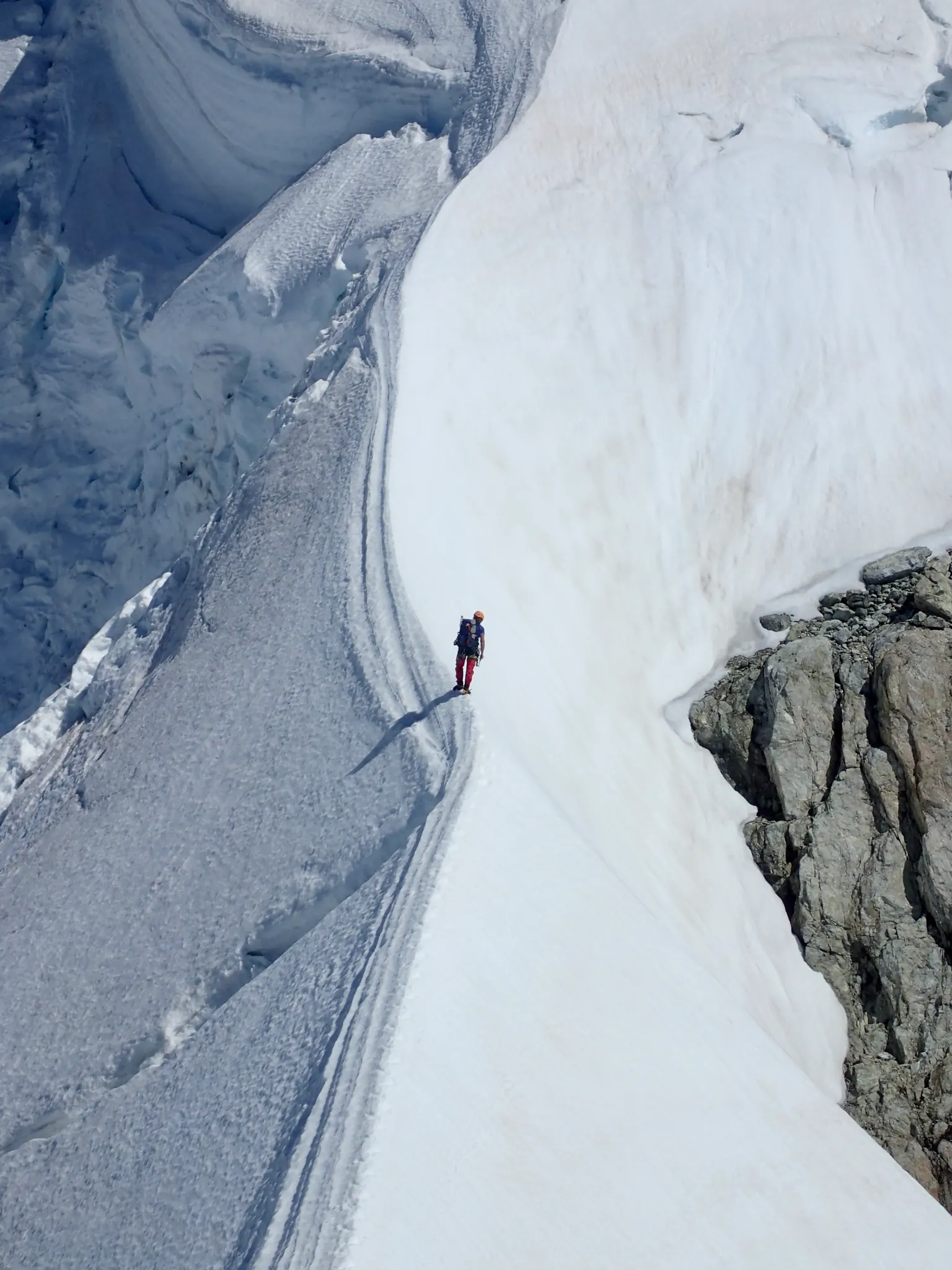
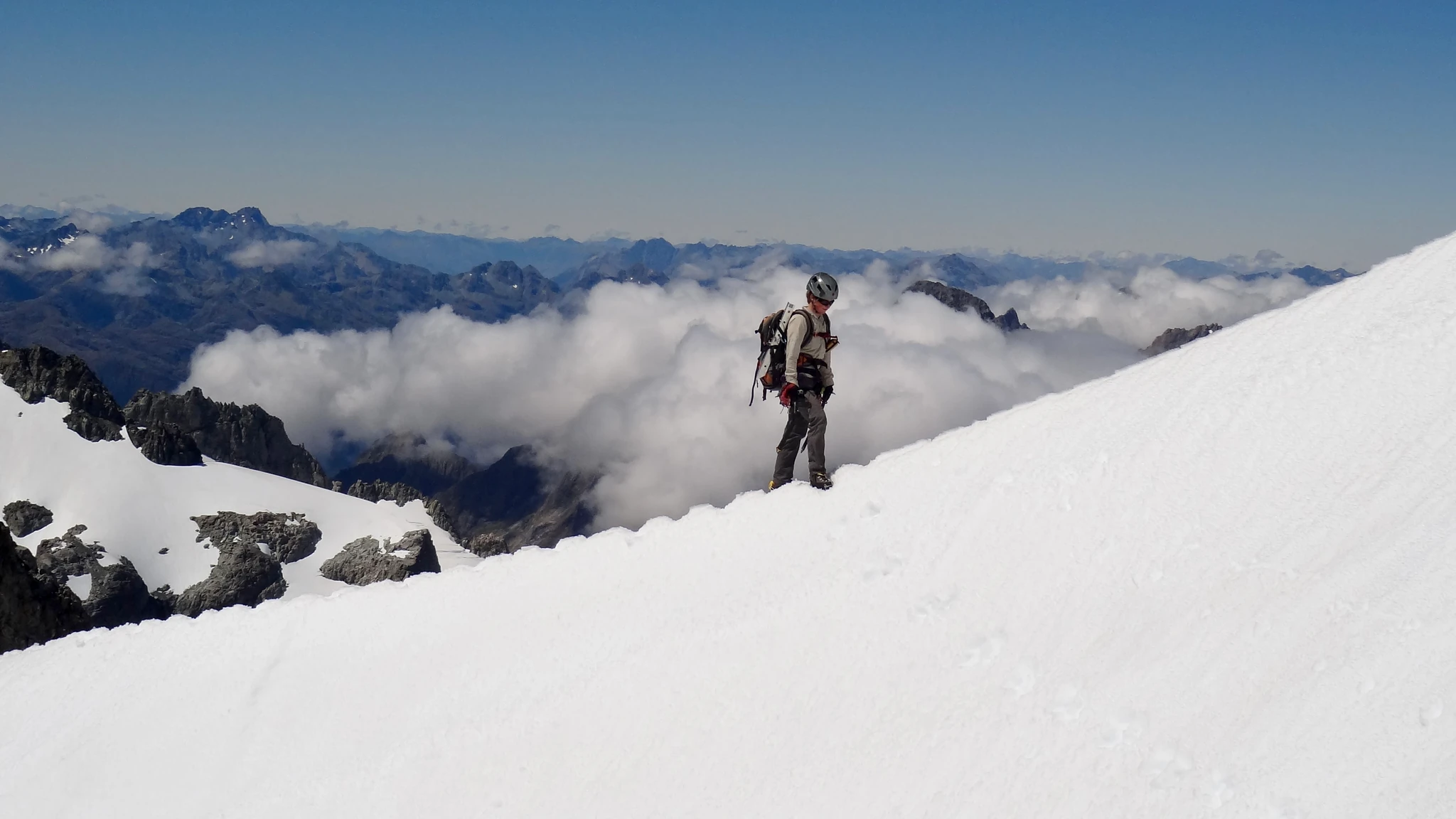
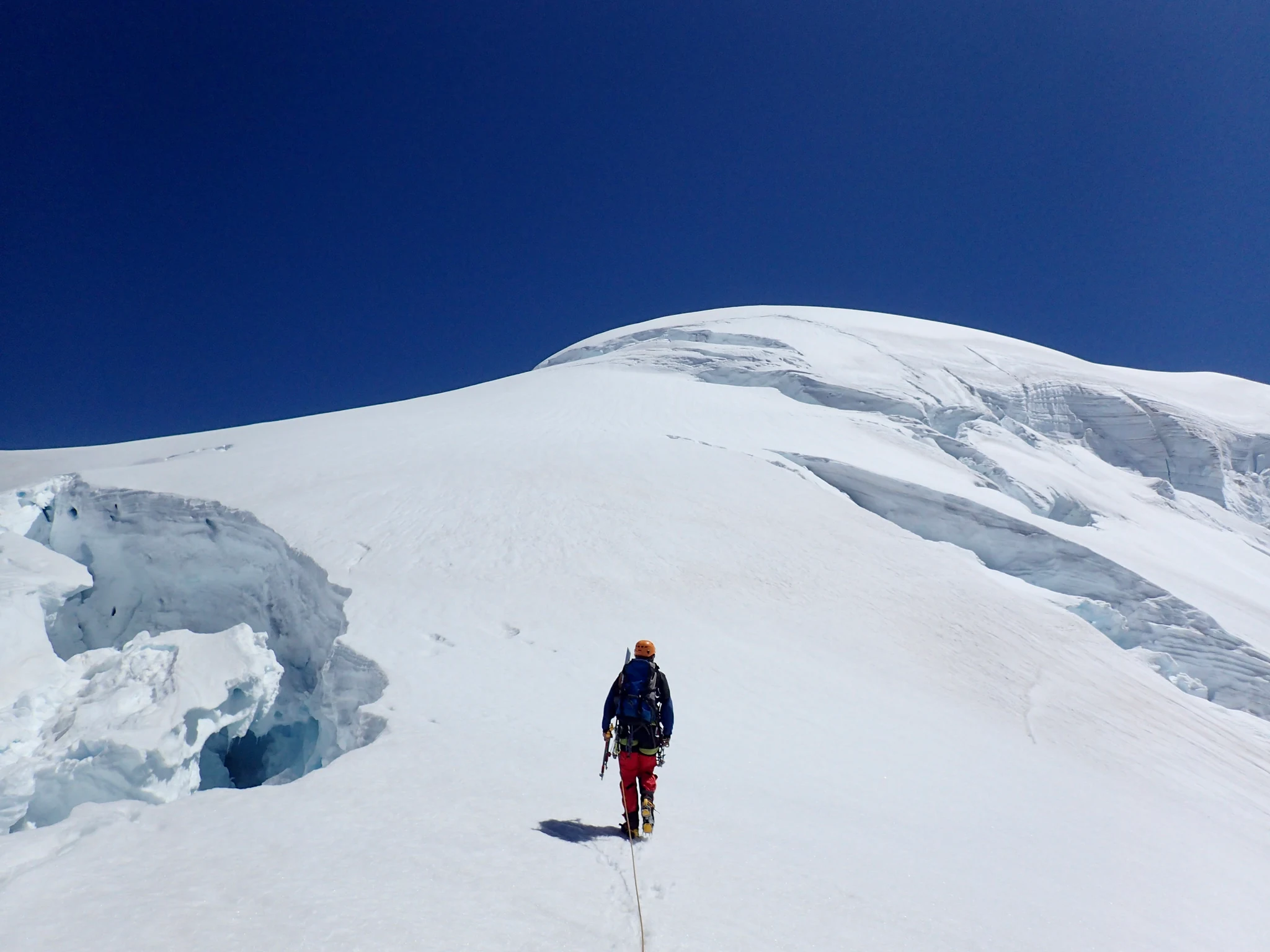
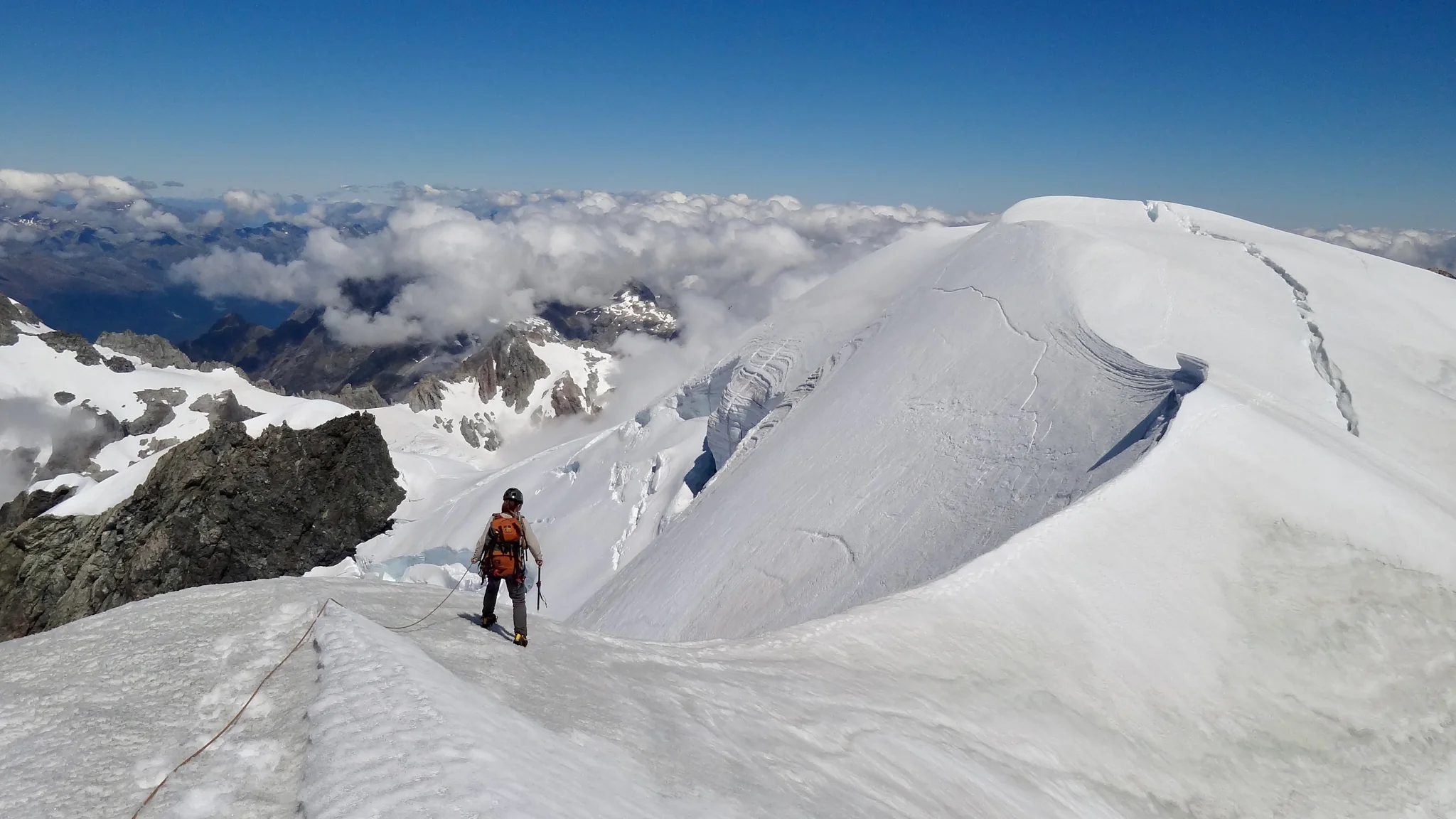
An enormous snow-and-ice cap rose at the end of the ridge. That had to be the summit. Before it, a huge crevasse stopped us. We spent some time and energy going round it, then climbed onto the dome.
There were two more beyond it.
Tutoko isn’t a popular climbing destination. There were few summit photos available online. The ones we’d found showed a snow cap, but here one of the tops was rocky. So which was the highest?
We took an ice axe and used it as a spirit level. The rocky one seemed to be highest. Perhaps snow had covered the rocks in the photos? To reach it, we’d have to cross all the domes anyway.
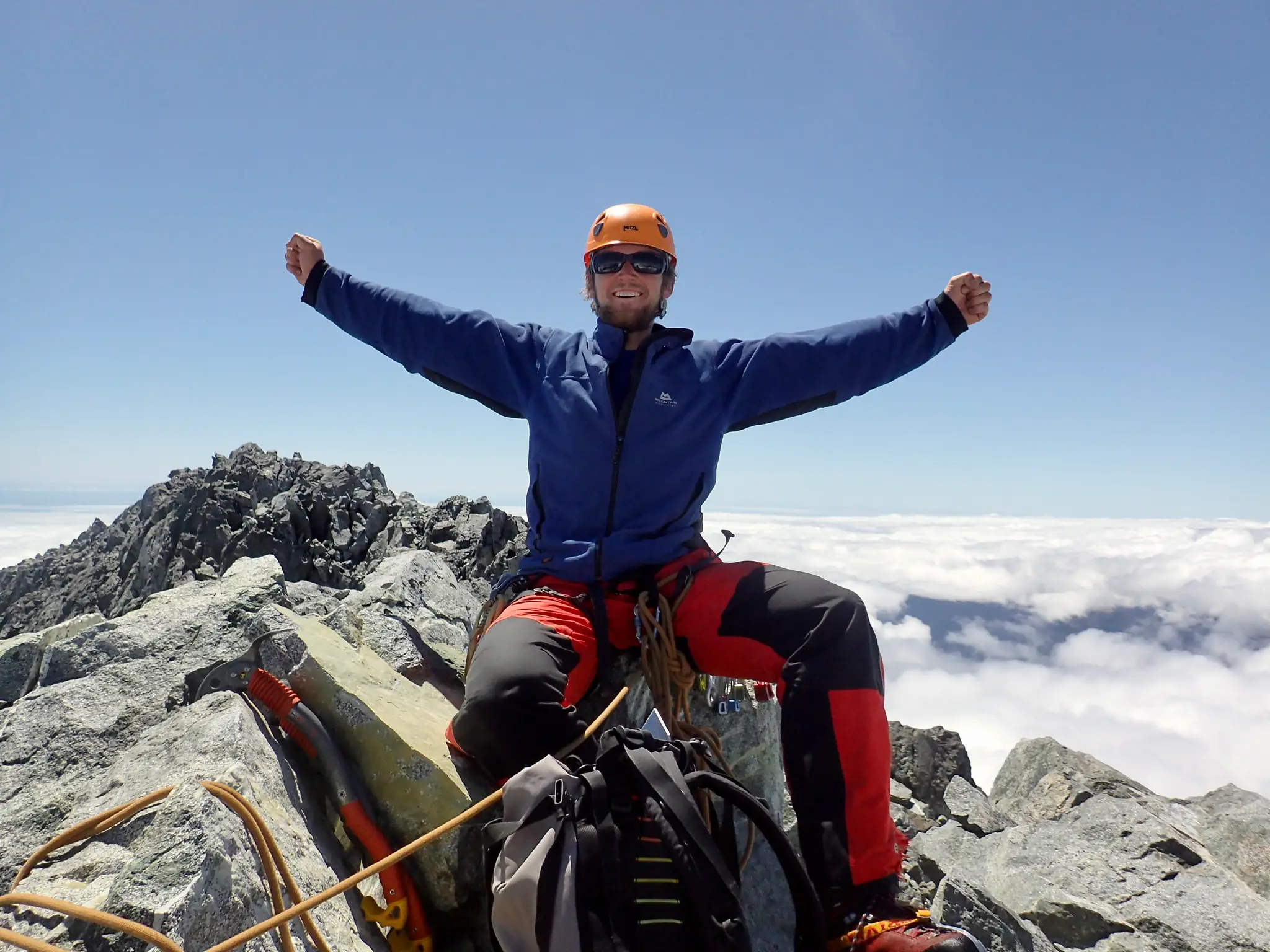
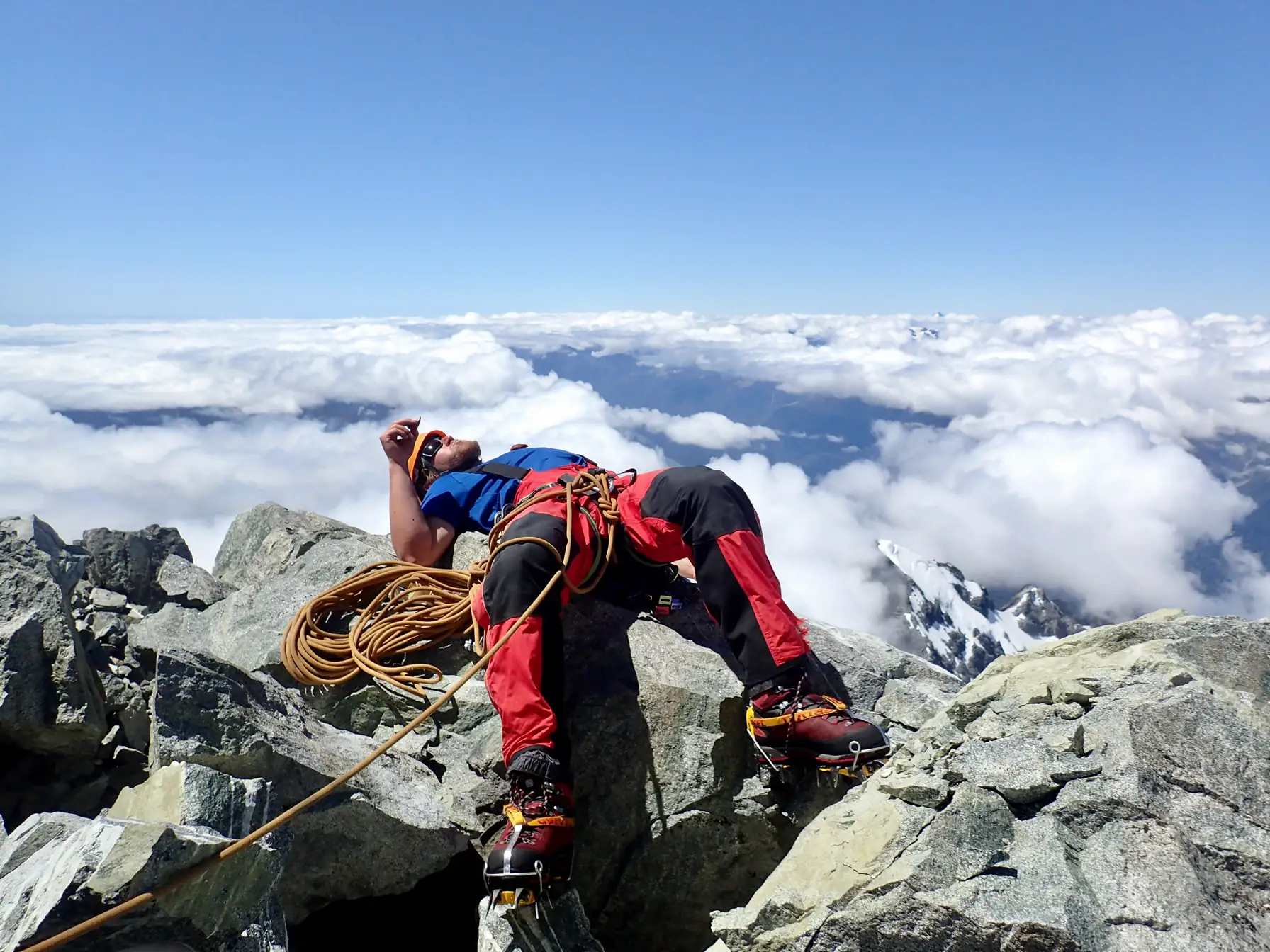
It was roughly half past two. We rested for a while on the summit rocks. Ate something, took photos.
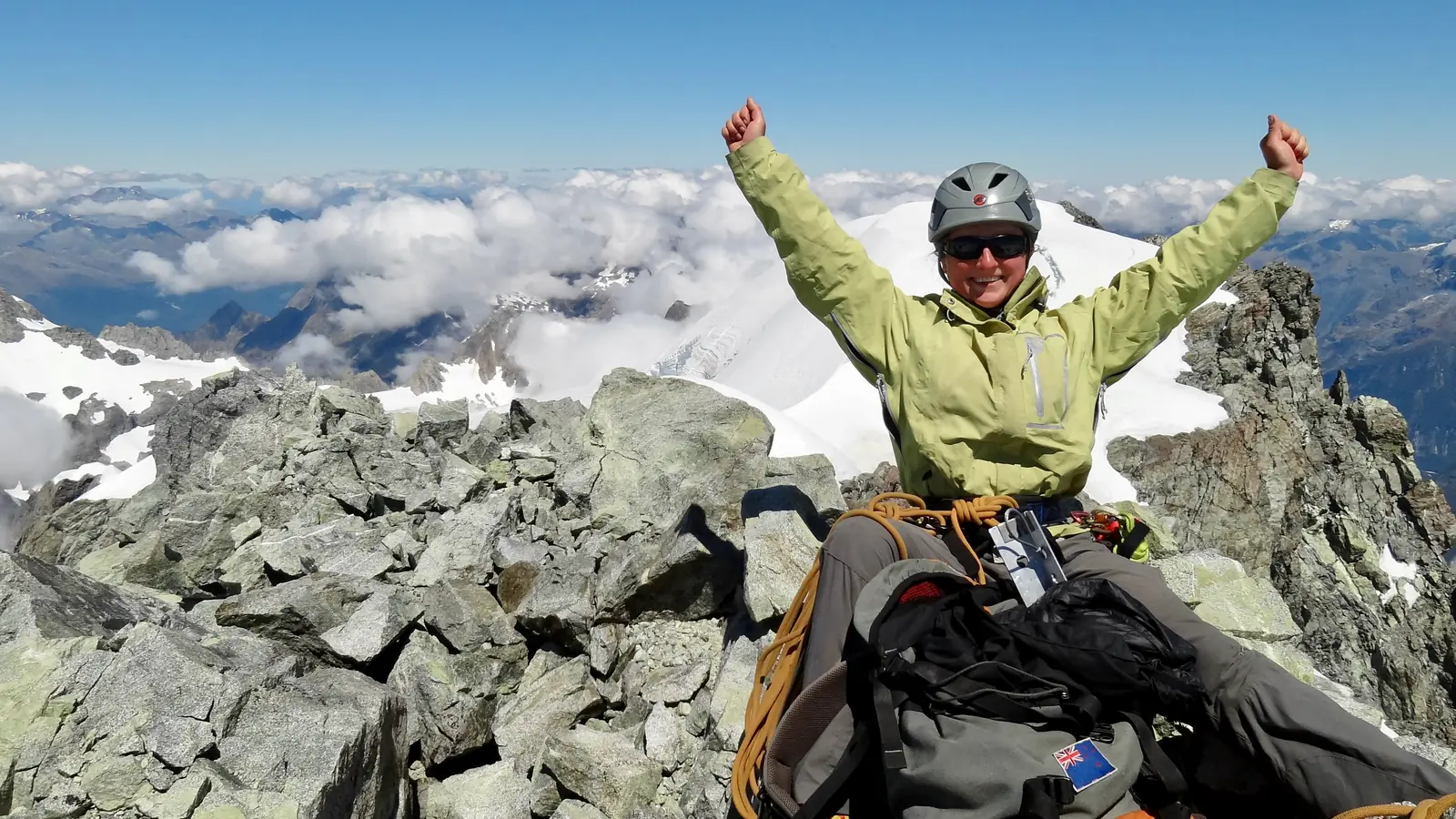
The summit offered a panoramic view. Mountains and valleys all around, with turquoise lakes still shimmering below. More clouds were gathering over the valleys, though they didn’t yet look threatening. After a quiet moment, we headed down. We’d reached the summit, but the tent was still a long way away.

Eight metres between us
We returned over the same domes, past the crevasse, along the narrow ridge, then abseiled down the rock section.
Higher up, the snow still held well. Lower down, before the band of seracs, we traversed the slope. The snow here had already softened. Eventually, it became too steep to keep moving sideways. We had to turn and descend facing into the slope.
We were roped together with only a short length between us. Eight metres of rope. I was to go down first.
As I changed position, the soft snow gave way and my crampons lost their grip. I began sliding on my stomach, head first. With every centimetre, I picked up speed.
I had two ice axes in my hands and wasn’t prepared for what to do with the second one. We’d always practised self-arrest with just one. Instinctively, I threw the spare axe away. I drove the other into the snow, trying to turn myself head uphill.
I started turning. Then I felt a jolt. I stopped.
Willi had caught my fall.
I felt relieved. First, I checked whether I’d hurt myself. Everything looked OK.
I looked for the axe I’d thrown away. It lay a dozen or so metres below, on a flat patch of rock. I went down to retrieve it.
Once I’d recovered, I asked Willi what it had looked like from his point of view.
While waiting for his turn to descend, he’d kicked solid steps with his boots and was standing very securely. When I lost my footing, he drove his axes hard into the slope, braced himself against them and caught my slide.
I thanked him. He laughed and said he’d done it for his own safety too. True, we were tied together. If I’d pulled him off, we’d both have gone.
Orange sky
One more band of broken ice. Only once we’d crossed it did we know we were ‘home’. On the rocks, we could finally enjoy the golden hour.
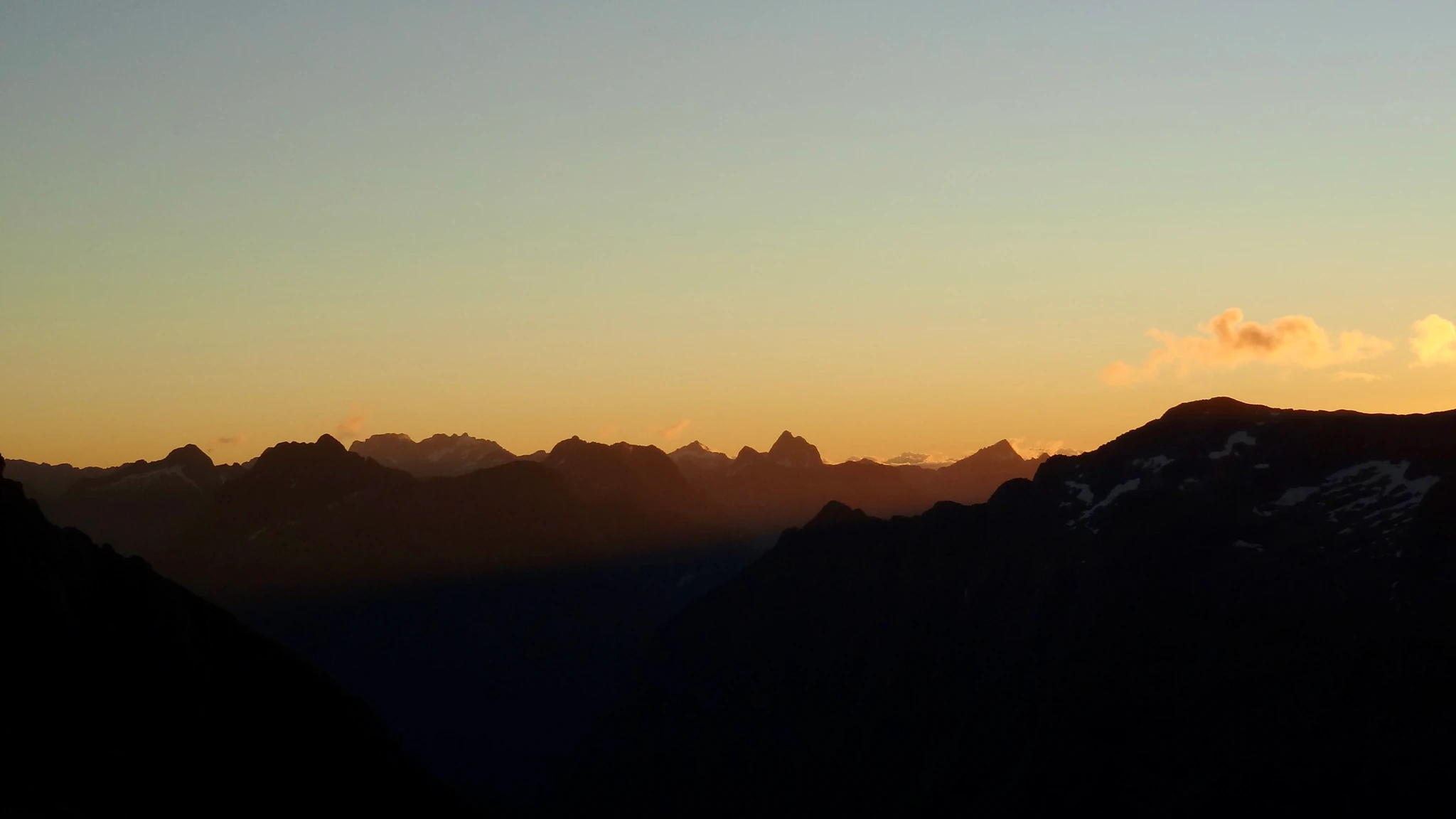
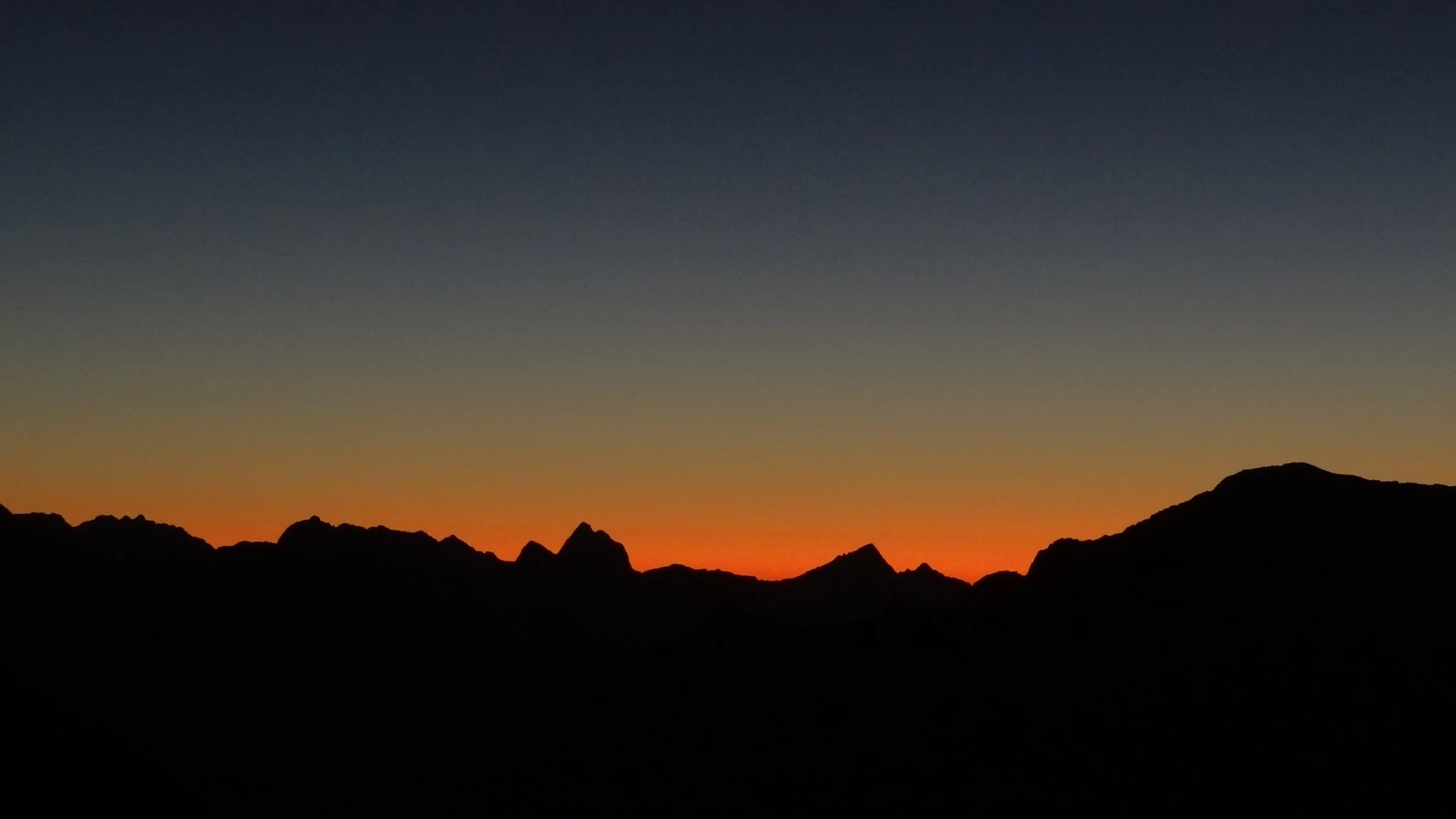
We reached the tent after nine in the evening. A deep orange glow spread over the mountains. The dark outline of the jagged ridge stood out sharply against the sky.
We watched it from beside the tent. Soon, we collapsed, exhausted.