Five thousand for his fiftieth
Rafał’s fiftieth birthday was approaching. We wanted to celebrate his half-century of existence by doing something really special. Climbing a five-thousander seemed like the perfect idea. 😎
The Alps were too low. South America was too far away. We looked towards the former Soviet republics. Initially, we considered Kyrgyzstan. But the number of expedition agencies operating in the region and the scale of the infrastructure, with entire expedition towns at the foot of the mountains, dampened our enthusiasm. We wanted a special mountain, away from popular objectives and commercial expeditions.
I asked a friend who had set his sights eastwards years ago. He immediately recommended Chimtarga. It was in the Fann Mountains, in Tajikistan. I’d never heard of them before. Brilliant, that was exactly the kind of place we were looking for! Little known, wild, with five-thousand-metre peaks. It looked as though we’d found exactly what we wanted! The planning began.
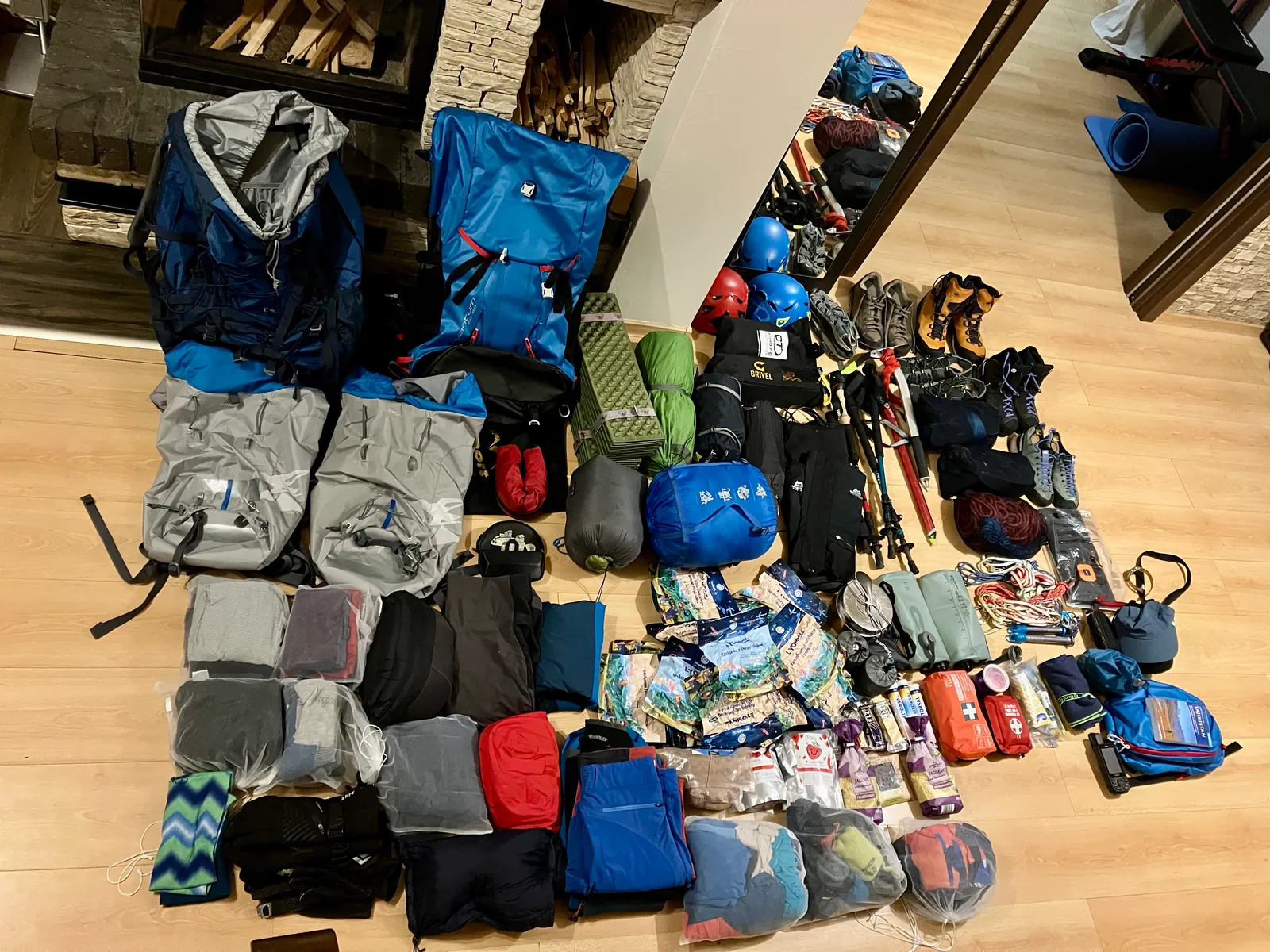
Preparations took more than six months. We had to research the conditions in the mountains, get maps, plan routes, choose and organise our equipment, and put together a high-altitude first-aid kit. Then there were all the logistics: getting there and getting around, visas, permits, accommodation, currencies, communications and so on. Physical, technical and mental preparation mattered too.
Chimtarga was our first choice, but our research showed that the ascent depended heavily on snow and ice conditions below the summit. In case they weren’t favourable, we had a plan B: the neighbouring mountain with the charming name Energia (5,120 m above sea level).
Our first big expedition together
At the end of June 2025, we set off for Tajikistan. It was our first really serious expedition together. The whole trip lasted exactly a month, during which we spent 21 days in the mountains, covered more than 200 kilometres and racked up more than 13,000 metres of ascent.
The expedition was divided into two main stages: mountaineering and trekking.
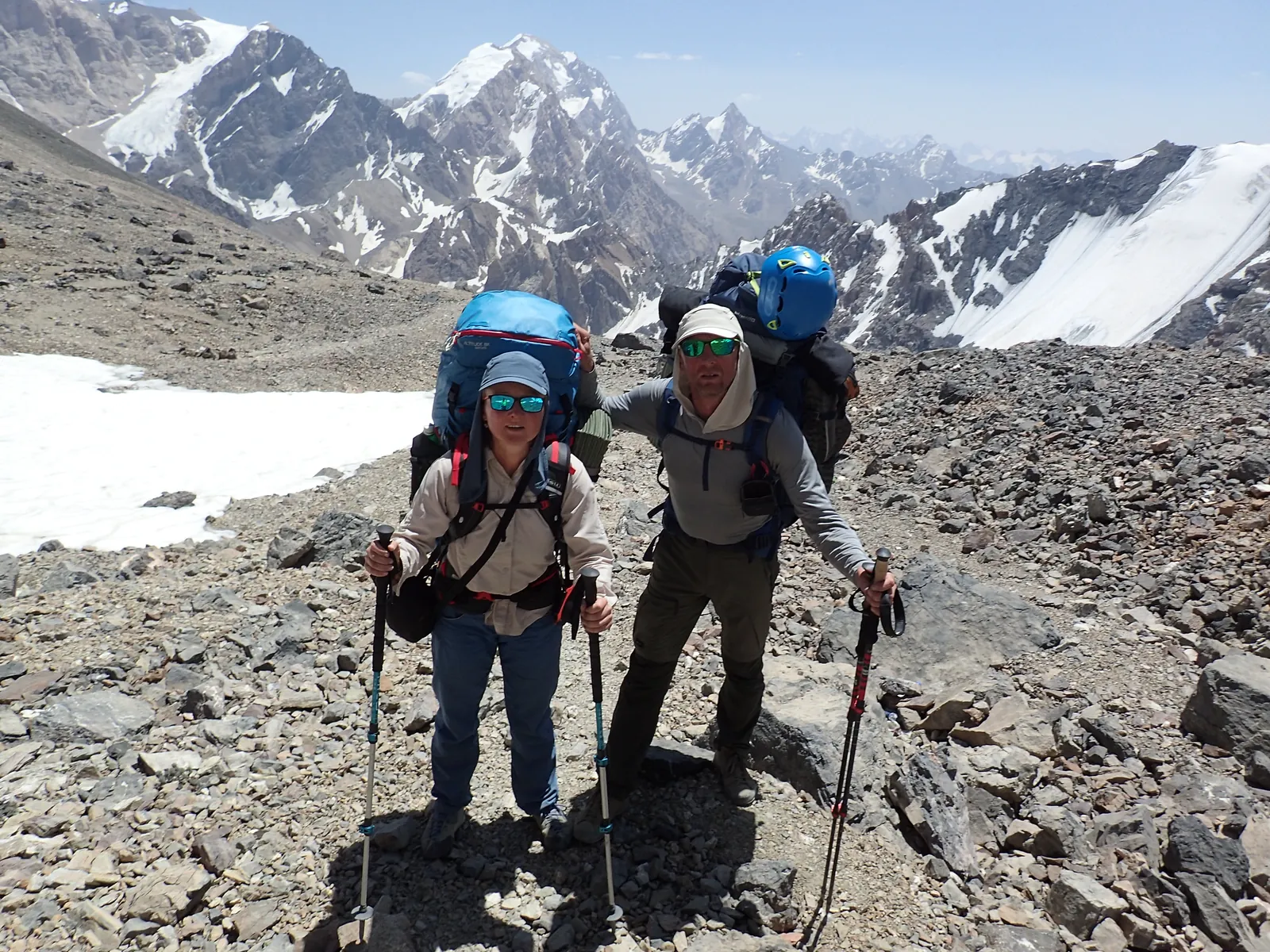
First came acclimatisation, moving our camps higher and higher, and climbing until we crossed the 5,000-metre barrier that was so magical for Rafał. On the day we flew out, our luggage, containing mountaineering and camping gear, some clothes and other essential equipment, weighed around fifty kilograms. On top of that came the food and gas bought locally, plus our water supply. With that load on our backs, the heat and loose scree really took their toll. But we managed!
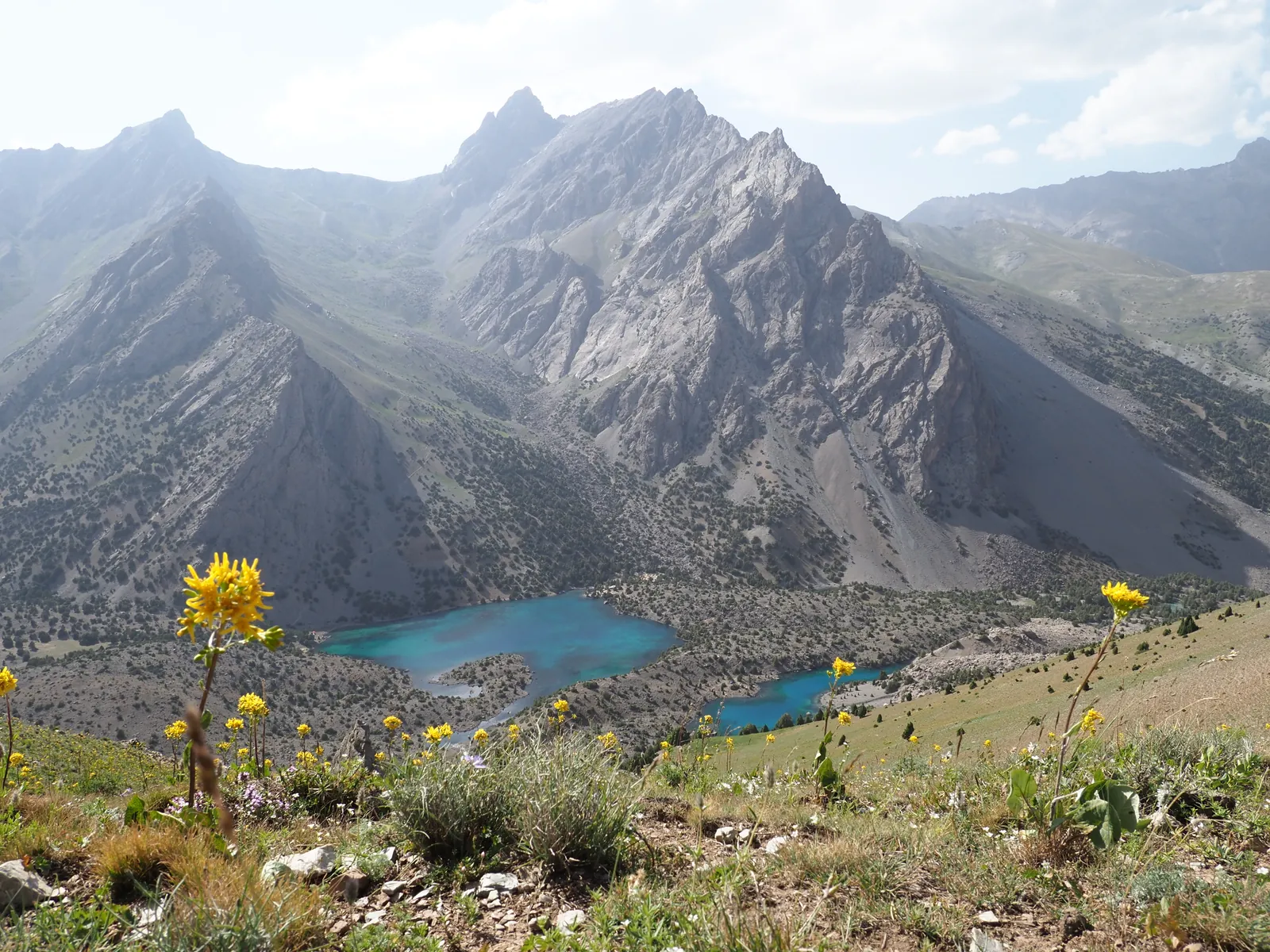
After leaving the five-thousand-metre peaks behind, we had a short rest, repacked and set off on the lighter trekking stage. At lower elevations (though there were still passes above four thousand metres), the route mainly led through broad valleys and tiny settlements. Along the way, we passed turquoise lakes, crystal-clear rivers, intricate cascades, broad pools and meanders.
Mountains and people over tea
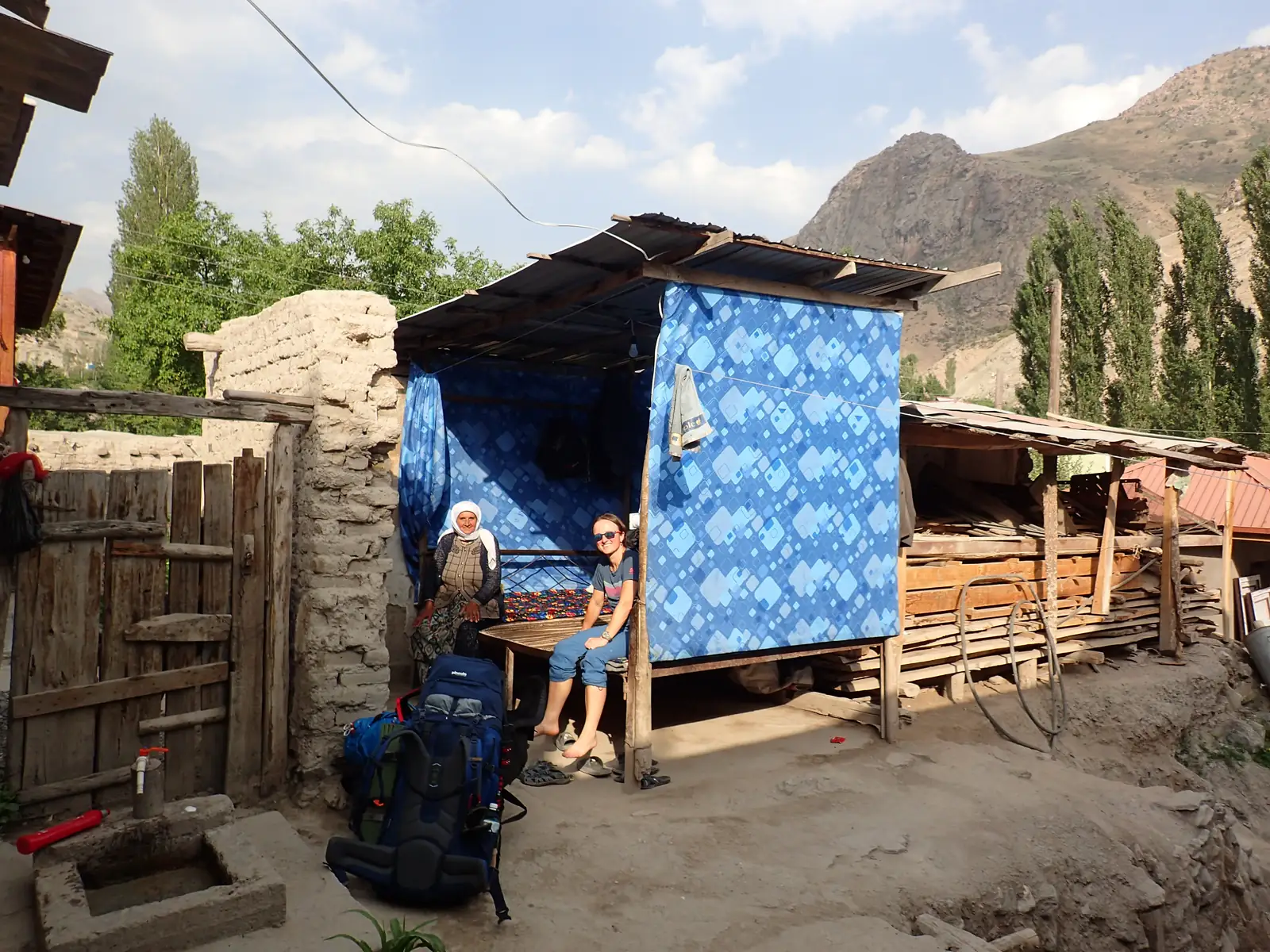
Invitations for tea accompanied us from the start of the trip. Children from shepherds’ settlements ran out to meet us. Our hosts spread out a rug, and bread and bowls of nice, cold yoghurt or kefir immediately appeared on it. We talked in Russian, in English and with gestures.
We observed the local culture and the (not always positive) influences from outside. We travelled through the five-kilometre Anzob Tunnel, part of Iran’s vision for a new Silk Road. We saw flocks of cranes building up Dushanbe with yuan, then Chinese drilling rigs and excavators digging up the mountains in search of rare minerals. We stayed in post-Soviet tourist centres. We spent a long time walking the streets of Panjakent looking for a traditional restaurant, because the town was flooded with cafés serving hot dogs, burgers and Coca-Cola.